Greek eye society calls for diagnosis before vision correction
Protecting vision is a fundamental pillar of public health, the Hellenic Ophthalmological Society (HOS) said, stressing that primary vision care involving diagnosis is, by definition, a medical act and requires a comprehensive ophthalmological examination.
In a press release, the HOS clarified that its position is not about claiming professional responsibilities but about ensuring safe patient care, CE Report quotes ANA-MPA.
The society emphasized that the prevention, early diagnosis, treatment and rehabilitation of vision disorders require cooperation among all professionals working in the field, with clearly defined scientific and institutional roles and a primary focus on patient safety.
The HOS said it aims to contribute constructively to the public discussion on the safe provision of vision care services, acting responsibly toward public health and promoting cooperation with all professionals involved in eye care.
The society also acknowledged and respected the role of opticians and optometrists in the proper selection, fitting and dispensing of prescription glasses, sunglasses, contact lenses and other optical aids, noting that these responsibilities are legally recognized.
According to the HOS, the selection, fitting and responsible provision of optical aids are an essential part of vision care, and it supports every initiative that contributes to this goal.
However, the society stressed that a clear distinction must be maintained between the technical and commercial act of supplying optical products and the medical act of clinical evaluation and diagnosis.
Diagnosis is a medical act
The HOS noted that vision assessment in both children and adults goes far beyond measuring refractive errors or improving visual acuity. Instead, it is a complex medical process designed to detect or rule out underlying eye diseases at an early stage.
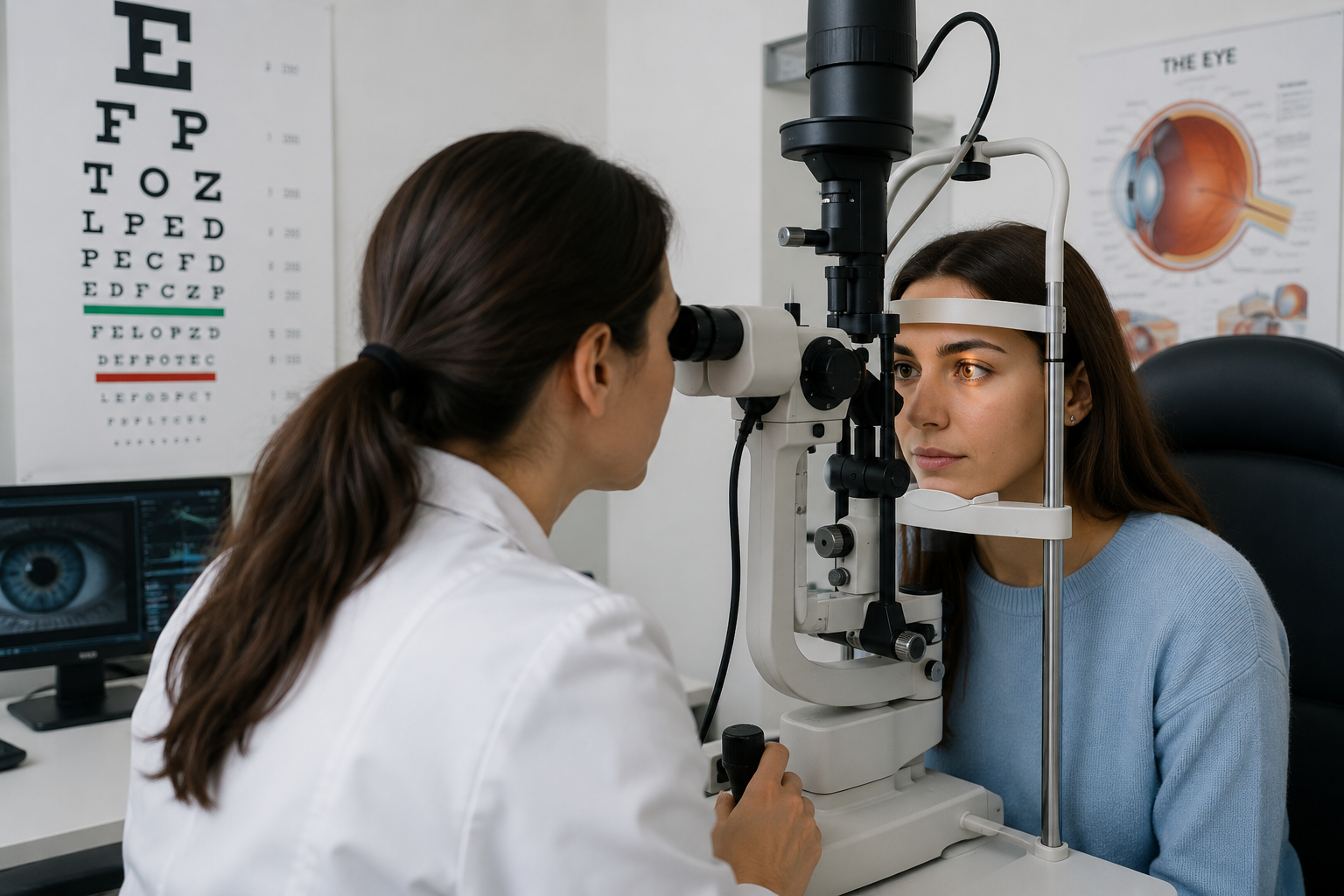
An ophthalmological examination is a medical procedure that evaluates the overall function and health of the eye through clinical assessment and, where necessary, diagnostic testing, with the aim of diagnosing or excluding both eye diseases and systemic conditions.
The society warned that even a slight improvement in vision may create a false sense of security, potentially allowing a serious underlying condition to go unnoticed, as good visual acuity alone does not rule out disease.
In children, the early detection of refractive errors is essential to prevent amblyopia, a condition that may become irreversible if left untreated, while a full eye examination is also crucial for identifying congenital or acquired eye diseases.
In adults, simply correcting vision is not enough, as progressive or urgent conditions such as glaucoma, age-related macular degeneration, diabetic retinopathy, optic nerve disorders and retinal detachment may also be present. Eye examinations can additionally reveal systemic diseases whose first signs appear in the eyes.
Photo: Chat GPT