Slovenia expands hiking tourism with new 20-stage mountain trail
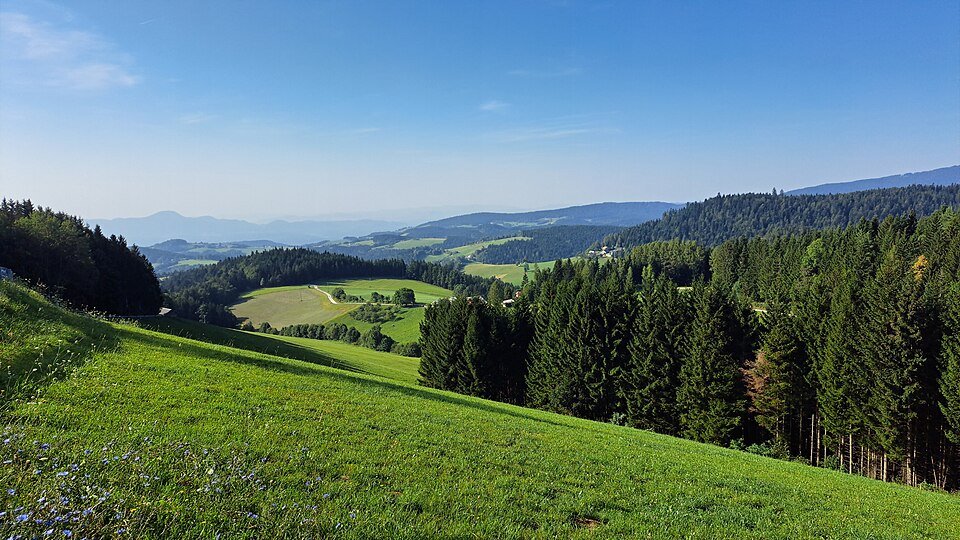
Hikers looking to explore nature in Slovenia tend to head to the Alps, but there is another, often overlooked part of the country with nature just as pristine, views just as amazing, and a kind of serenity that is often difficult to experience on overcrowded Alpine trails.
The twin mountain ranges of Pohorje and Kozjak hug the Drava River in northeast Slovenia, CE Report quotes The Slovenia Times.
Long popular among locals, they have now been connected by a new 187-kilometre long-distance Pohorje-Kozjak Trail that offers an unparalleled experience to fans of the great outdoor.
The trail is divided into 20 stages. The entire route utilizes well-maintained, pre-existing mountain paths, but it has been newly upgraded with over 150 waypoints and 1,200 trail markers and designed such that it lets visitors explore all the main landmarks of the area rather than just giving them the fastest route through the ranges.
Serene Pohorje
The Pohorje part on the right bank of the Drava, covering 85 kilometres, takes roughly 27 hours of hiking across ten stages. Most of the trail winds its way through the top of the range, which, because of its sheer size, feels more like a plateau.
While there is well developed tourism infrastructure around popular ski resorts including Mariborsko Pohorje, Trije Kralji and Rogla, much of the trail is a forest therapy of sorts, as paths wind through sparsely populated areas with thick spruce and beech forests.
Pohorje is never about views - though there are some spectacular panoramas - it is about immersion into the deep quiet of the forest along gently sloping terrain.
These meditative trails are interspersed with dozens of landmarks, some of which require hikers to do little detours from the main trail.
The Šumik primeval forest is a rare remnant of what forests in the area looked centuries ago, before humans started exploiting the wood for charcoal production and glassmaking. The highlight here is the Veliki Šumik waterfall, 25 metres tall and hidden in a deep gorge.
Then there is the lakes. The Black Lake (Črno jezero) and its lesser known cousin the Silent Lake (Tiho jezero) were once reservoirs for loggers who used the mountain streams to get wood into the valley. Now they are shelters for rare bird and plant species.
Even more impressive are the Lovrenc Moor, a rare and protected high-altitude peat bog dotted with two dozen lakes and lakelets.
Pohorje was also a major hiding place for the Partisan resistance during the Second World War and there are dozens of monuments to fallen victims, including one of the most famous memorials to the Pohorje Battalion.
Unknown Kozjak
Kozjak, connected to Pohorje with a short valley stage through the town of Dravograd, offers a completely different experience across its 120 kilometres of trails.
Geologically distinct from its bigger cousin across the river, it has lower peaks and is more jagged and steeper, but it is a mosaic of forest, meadows and isolated farms.
Hikers here can look forward to spectacular open views, not just of Pohorje on the other side of the river but also of Austria to the north, as part of the trail runs right along the Slovenian-Austrian border.It is also dotted with centuries-old churches, including the famous and picturesque 17th century Church of the Holy Spirit at Sv. Duh na Ostrem Vrhu, a popular site for pilgrims from Austria and Slovenia.
Unlike Pohorje, where accommodation is restricted to mountain huts and hotels, Kozjak also has a plethora of tourist farms providing not just rest but also fresh local food and beverages.
The Kozjak section is more about experiencing local culture and connecting with the people and the landscape than about pristine nature, but it offers a unique insight into a part of rural Slovenia that is rarely on the tourism map.
Practical information
The trail is designed such that it starts in Maribor, from where visitors can go either clockwise and take in Pohorje first, or counter-clockwise to tackle Kozjak first.
But few are likely to attempt the entire trek, so some of the endpoints of stages are accessible by public transportation making it easy for visitors to tackle just one or several stages at once.
Both ranges are much lower than Alpine peaks and the trails are well marked and mostly easy, but much of the route is well over 1,000 metres above sea level and requires good hiking equipment as well as rain gear.
Those planning to do multi-day are advised to book accommodation in advance. There are many mountain huts on both ranges, but some are permanently closed and others are open only Friday through Sunday. Wild camping is not allowed.
Photo Wikipedia