Bulgaria advances Black Sea motorway project in cooperation with Türkiye - EXCLUSIVE
Bulgaria is advancing key transport infrastructure projects aimed at strengthening north–south connectivity and deepening cooperation with Türkiye, while also preparing to integrate advanced Intelligent Transport Systems (ITS) into its national road network.
This was said by the source in the Ministry of Regional Development and Public Works of the Republic of Bulgaria, in an exclusive interview with CE Report.
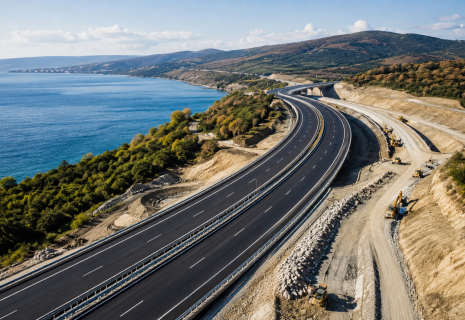
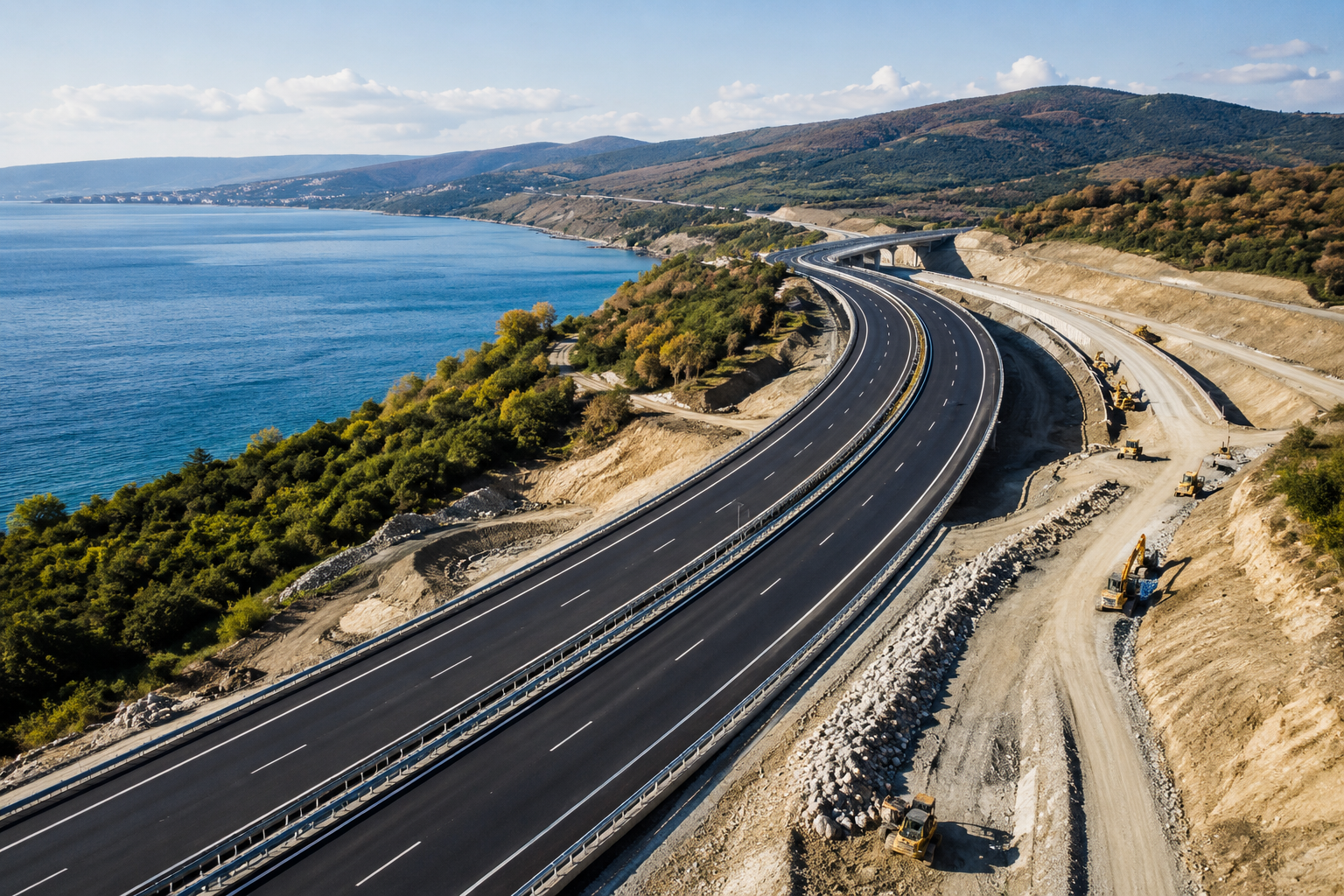
According to the Ministry, the construction of the Black Sea Motorway remains one of Bulgaria’s top infrastructure priorities. The planned motorway, approximately 113 kilometers long, is currently undergoing preparatory procedures, including environmental assessments that will determine the future route of the project.
The Road Infrastructure Agency has commissioned Environmental Impact Assessment (EIA) and Appropriate Assessment reports, which represent the first major step toward project approval. Subsequent phases will include technical design preparation, land acquisition planning, and expropriation procedures. The final stage will involve either state procurement for construction works or the concession of the project to a private investor.
The Black Sea Motorway has been included in Bulgaria’s list of priority concession projects. Once completed, it will provide fast and uninterrupted transport connections between the major Black Sea ports of Varna and Burgas and Road I-9, creating improved links to both Türkiye and Romania.
The Ministry also highlighted progress on the Ruse–Veliko Tarnovo Motorway, a major north–south transport corridor that forms part of the Trans-European Transport Network (TEN-T) and the European “Baltic Sea–Black Sea–Aegean Sea” transport corridor.
The nearly 133-kilometer motorway is divided into three sections: Ruse–Byala, the Byala bypass, and Byala–Veliko Tarnovo. Construction is currently underway on the Byala bypass, while work on the Ruse–Byala section officially began on May 27. Meanwhile, a tender committee is evaluating bids submitted for the design and construction of the Byala–Veliko Tarnovo section.
Preparations are also progressing for a new route connecting the Ruse–Veliko Tarnovo Motorway with the Maritsa Motorway. The approximately 126-kilometer corridor is considered strategically important for improving connectivity between northern and southern Bulgaria, while strengthening transport links to Greece and Türkiye.
According to the Ministry, the project will increase traffic capacity, improve road safety and travel efficiency, support regional economic growth, and contribute to a more integrated European transport network. Extending the motorway corridor toward the Makaza border crossing is also expected to reduce freight transport times significantly.
Beyond physical infrastructure, Bulgaria is also looking to modernize its transport management systems by drawing lessons from Türkiye’s Northern Marmara Motorway, one of the region’s most advanced examples of intelligent road infrastructure.
The Road Infrastructure Agency has prepared a draft Strategy for the Deployment of Intelligent Transport Systems in Road Transport and Interfaces with Other Modes of Transport until 2030. The strategy outlines plans for implementing smart mobility technologies across Bulgaria’s road network.
Officials noted that the Northern Marmara Motorway demonstrates the effective use of numerous ITS components, including Variable Message Signs, Variable Traffic Signs, traffic monitoring cameras, vehicle counting and classification sensors, weather monitoring systems, oversized-load detection technologies, and automated tunnel incident detection systems. The motorway is supported by multiple tunnel operation centers and a central traffic management control center.
The Ministry believes many of these technologies could be adapted to Bulgarian motorways and expressways, although implementation will depend on the specific characteristics of each road section.
In mountainous regions and areas with rapidly changing weather conditions, such as the Sofia–Botevgrad section of the Hemus Motorway, the area near Ihtiman on the Trakia Motorway, and sections of the Struma Motorway near Sandanski, authorities are considering the deployment of fog warning systems and other advanced traffic management technologies.
The Ministry also identified centralized management through a unified software platform as a particularly valuable practice. Such a system would enable the integration and coordination of ITS components regardless of their manufacturer, improving operational efficiency and network-wide traffic management.
As Bulgaria continues to develop both new transport corridors and smart mobility solutions, officials see enhanced cooperation with Türkiye as an important factor in strengthening regional connectivity, facilitating trade flows, and supporting long-term economic growth across southeastern Europe.
Photo: Chat GPT
This interview was prepared by Laura Hoffman