Croatian municipalities offer up to €26,000 for fifth child
The Municipality of Sali on Dugi Otok (Croatia) has once again recorded the highest newborn support payments this year, offering nearly €8,000 for a first child, while the Municipality of Vir leads in the category of support for larger families, providing €26,000 for a fifth child.
This is according to the 2026 overview of demographic measures, which reveals significant differences among Croatian cities and municipalities, CE Report quotes HINA.
The overview of demographic measures for 2026 was published by the Ministry of Demography and Immigration, which has been collecting the data for the eighth consecutive year. This year's report is the most comprehensive to date, as all 576 local and regional government units submitted data. Last year, six failed to do so.
Top rankings largely unchanged
The top of the ranking remains almost unchanged compared with 2025. The highest one-time payment for a first child, amounting to €7,963, continues to be provided by the Municipality of Sali on Dugi Otok. It is followed by the Municipality of Ražanac near Zadar, which pays €7,000, and the municipalities of Povljana and Kolan on the island of Pag, which each provide €3,000. Among cities, Imotski offers the most generous support, with €2,500 for a first child.
Sali and Ražanac also lead in support for a second child, with payments of €7,963 and €7,000, respectively. They are followed by Povljana with €6,000, Imotski with €5,000, and Kolan and Pašman with €4,000 each.
For a third child, the leaders are Imotski and Novska, both paying €10,000 to parents. They are followed by Stari Grad with €9,310, the Municipality of Lovreć near Imotski with €9,290, and Povljana with €9,000.
For a fourth child, the highest payment is provided by Vela Luka at €13,300, followed by Vir with €13,000. Imotski, Novska, and Biograd na Moru each pay €10,000 for a fourth child.
The absolute record-holder for support payments for a fifth and every subsequent child is Vir, where parents can receive as much as €26,000. It is followed by Pašman with €14,000, Vela Luka with €13,300, Bol with €12,000, and Biograd na Moru with €11,000. Novska and Imotski also provide €10,000 for a fifth child.
Fewer local authorities without support measures
At the other end of the scale are 14 local and regional government units—four fewer than last year—that do not provide any one-time financial support for childbirth.
Among the counties, these are Brod-Posavina, Istria, Koprivnica-Križevci, Lika-Senj, Međimurje, Primorje-Gorski Kotar, Varaždin, Virovitica-Podravina, and Vukovar-Srijem. Last year, the list also included Dubrovnik-Neretva, Sisak-Moslavina, and Šibenik-Knin counties, as well as the Municipality of Peteranec.
As of January 1 this year, Dubrovnik-Neretva County introduced a €1,000 payment for every newborn child and allocated €1 million in its budget for the measure. Šibenik-Knin County also grants €1,000 for every third and subsequent child born from January 1, 2026.
The municipalities of Donji Vidovec, Kotoriba, Mala Subotica, Orehovica, and Petrijanec still do not provide financial support for newborns.
Croatia’s largest cities
Among Croatia’s four largest cities, Zagreb offers the highest one-time payment for a first child, amounting to €800. However, Zagreb does not increase the amount according to the number of children, meaning parents receive the same sum for each child. Osijek follows a similar model, paying €700 per child.
Rijeka provides €660 for a first child, €850 for a second child, and €1,225 for a third and every subsequent child.
Split, on the other hand, pays only €265 for a first child, but the support rises to €7,300 for a third and every subsequent child.
Croatia loses 52 residents per day
High financial support does not necessarily translate into the strongest demographic performance. According to the latest data from the Croatian Bureau of Statistics for 2024, the highest vital index—showing how many children are born per 100 deaths—is recorded in Podstrana near Split, with 201.5. It is followed by Imotski (155.1), the Municipality of Zmijavci near Imotski (153.8), the Municipality of Đulovac in Bjelovar-Bilogora County (147.1), and Solin (136.3).
Podstrana is not among the leaders in newborn support payments, while Imotski ranks near the top both in terms of the vital index and the level of support for newborn children. Zmijavci and Đulovac also have very high vital indices, despite not offering record-level financial incentives.
The lowest vital index is recorded in the Municipality of Biskupija in Šibenik-Knin County, at 2.9, with only one child born in 2024 compared with 35 deaths. It is followed by Ervenik (5.0), Lećevica (7.7), and the municipalities of Lokve (10.0) and Mrkopalj (10.0) in the Gorski Kotar region.
According to the Croatian Bureau of Statistics, the number of live births fell from 41,197 in 2011 to 32,069 in 2024, a decline of 9,128 children, or around 22%.
During the same period, the natural population decrease nearly doubled, from 9,822 to 19,011 people. This means Croatia is losing approximately 52 residents per day, or around 19,000 people annually. Meanwhile, the number of deaths has remained relatively stable at about 51,000 per year.
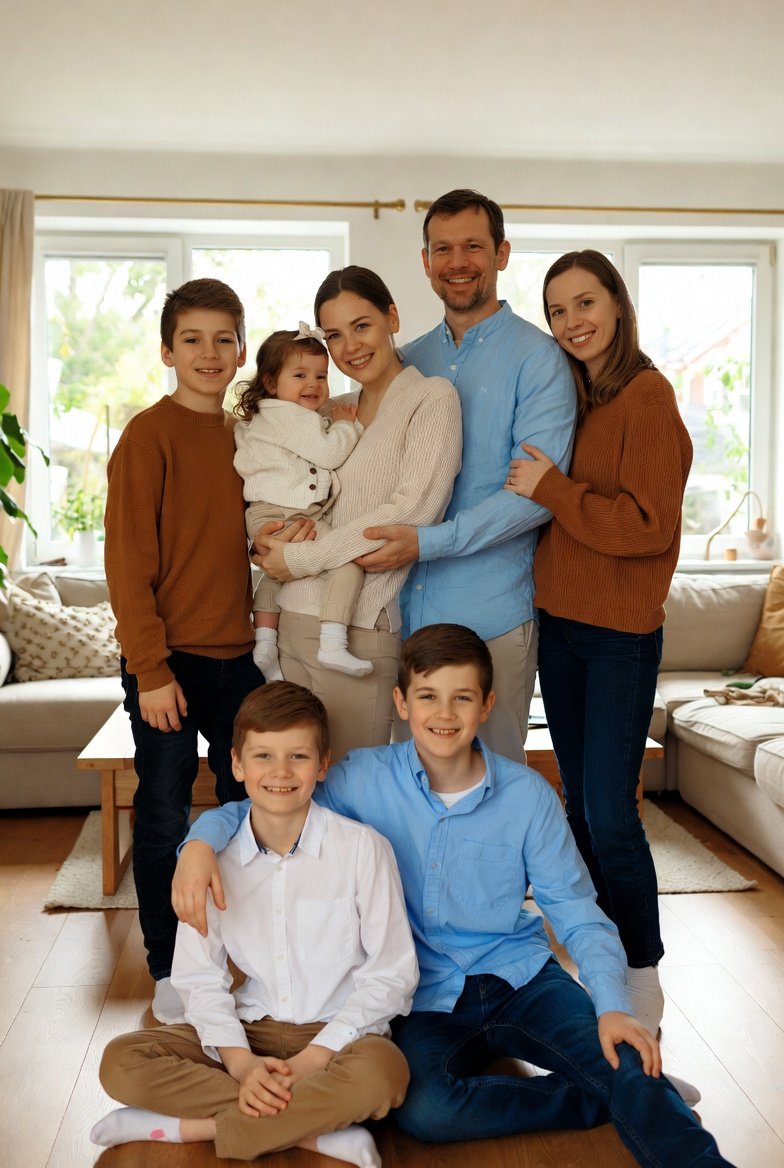
Photo AI