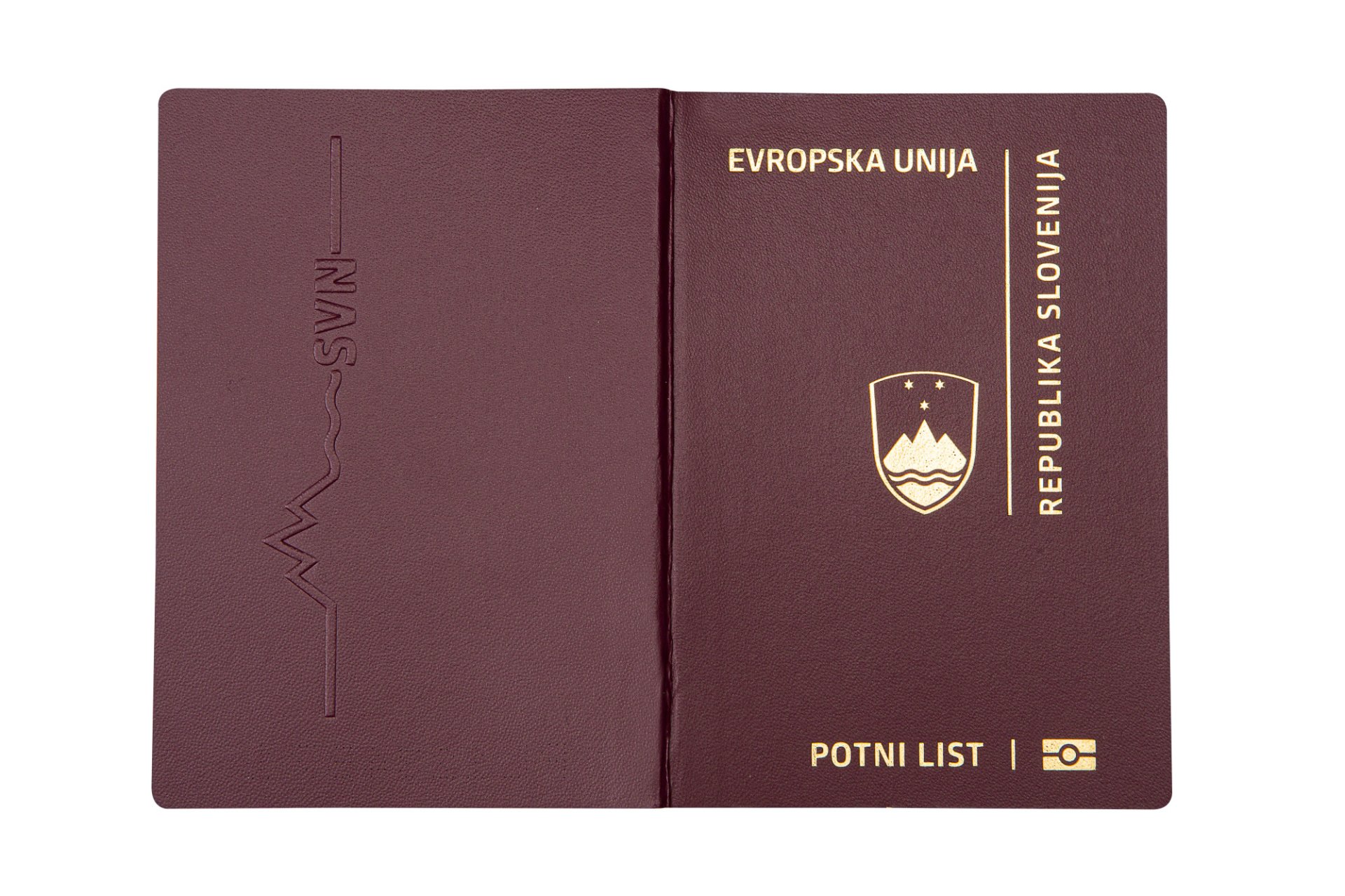
Slovenia begins issuing fifth-generation passports
Slovenia began issuing a new, fifth-generation passport document form.
It is emphasized that valid passports do not need to be replaced, but citizens may do so if they wish, CE Report informs via the Slovenian government website.
The passport is a travel document and an identity and citizenship document used both domestically and abroad, which is why its quality and protection against counterfeiting and alteration are of utmost importance for identity security.
The new fifth-generation Slovenian passports follow technological advances over the past decade, while the design has also been modernized. It still follows the overall visual identity of Slovenian travel documents, ensuring recognisability abroad, and is closer in design to the latest version of the national identity card.
The design solution reflects the distinctive features of the Republic of Slovenia and highlights its national identity, cultural heritage, and state symbols. The state symbols—the Slovenian coat of arms and the text of the anthem—are interwoven with motifs of Slovenian history, culture, architecture, geography, and nature, which also serve as the basis for numerous security elements.
A special role is given to the use of Zdravljica, a poem by Slovenia’s greatest poet France Prešeren. According to the Constitution of the Republic of Slovenia and special legislation, the seventh stanza of Zdravljica is the national anthem. The poem appears in manuscript form (held by the National and University Library) and in transcription, integrated as ultraviolet security features on each page of the passport, as well as in microtext flowing along Slovenian rivers within the biographical page map. The anthem text also appears in spiral form and as a tactile and relief element.
Modern design trends are clearly reflected in the redesigned front cover. On the back cover, a new security feature has been added—a stamped stylised image of Slovenia’s highest mountain, Triglav, transitioning into a curve symbolising the sea and rivers, along with the inscription “SVN,” the country’s three-letter ISO 3166 code.
The graphic design is enhanced with a changing triangular composition of Triglav, appearing as an intaglio background on the inner cover pages and all visa pages. For UV printing and microtext, contour lines of Slovenia’s terrain are used as guilloché patterns in the background.
Strong symbolism is also expressed through the constellations Cancer and Capricorn, used on the inner covers and in the hologram. These represent the positions of Capricorn on 23 December 1990, when Slovenia decided on independence, and Cancer on 25 June 1991, when independence was declared.
Security elements also include depictions from the Vače Situla, particularly a horse rider symbolising travel. The rider appears in optically variable ink, in watermarks, and dynamically when flipping visa pages. The design also incorporates the linden leaf, an important national symbol, and the outline of the Robba Fountain.
The Vače Situla is a Bronze Age ceremonial vessel from the 5th century BCE, discovered in 1882 near Vače near Litija, and is one of the most important archaeological finds in Slovenia. The Robba Fountain (Fountain of the Three Carniolan Rivers) is a marble fountain in Ljubljana completed in 1751 by Francesco Robba, depicting the personifications of the Sava, Krka, and Ljubljanica rivers. The linden leaf is deeply associated with Slovenian identity and tradition.
The passport’s color scheme features blue-green tones reflecting Slovenia’s natural beauty and its association with national sports identity.
Many of the visa page motifs were originally selected by renowned Slovenian graphic designer Miljenko Licul and have been used since 2001, now updated with additional information about each motif and its location. Among them is a portrait of Srečko Kosovel on pages 28 and 29. The year 2026 has been declared the Kosovel Year by the Government of Slovenia.
The passport contains more than 100 security features across its components, combining advanced technologies to prevent forgery and misuse. A major technological advancement is the integration of a fully polycarbonate data page, significantly improving durability and security.
A notable feature is a transparent window in the shape of Slovenia’s outline, one of the most advanced security elements recommended by ICAO, allowing quick visual verification and making counterfeiting extremely difficult.
For the first time, a color photograph of the holder is used, appearing in multiple forms within the document and protected with various security overlays, including UV markings and laser-engraved data. The image is present five times in different technical formats to strengthen identity verification.
The color photograph improves visual identification, supports modern biometric systems, and enhances interoperability with facial recognition technologies. It also makes forgery more difficult due to the complexity of multi-layer personalisation.
The new series also includes a QR code for checking passport validity, directing users to Slovenia’s e-government portal for real-time verification.
Finally, security printing on the edge of the booklet creates a continuous UV-visible pattern (“SVN”) across all pages, making tampering or page replacement easily detectable and further enhancing document security.
Photo: Slovenian government website