Meloni announces plans to ban burkas, niqabs in Italian schools
Italy will ban burkas and niqabs in schools, Italian Prime Minister Giorgia Meloni announced.
Speaking at a gathering of the youth wing of her Brothers of Italy party, she also said the government would limit the number of foreign students in classrooms, CE Report quotes STA.
According to Meloni, the government is expected to discuss both proposals soon, foreign news agencies reported.
“You go to school with your face uncovered. In Italy, no one can decide, in the name of a real or alleged tradition, that a young woman must cover herself,” Meloni told her supporters.
The burka and niqab are traditional Islamic garments worn by women that cover the entire body, including the face. The main difference between them is that the eyes are visible through a niqab, while they are covered by a mesh in a burka.
Although Italy has no law explicitly banning burkas in schools or public places, a 1975 law prohibits wearing helmets or clothing that makes identification difficult without a justified reason. In 2008, Italy’s highest administrative court clarified that wearing clothing covering the face is permitted for religious or cultural reasons, provided the face is uncovered when identity verification is required.
Limiting the Number of Foreign Students per Class
The Italian prime minister also announced on Sunday that the government would limit the number of foreign students in classrooms, saying this would help accelerate their integration into Italian society.
“If there is only one child in a class who does not understand Italian, that child will probably learn the language with the help of other children and teachers and will quickly integrate,” she said.
She added that Italian children should not find themselves marginalized in Italian classrooms because they have become a minority. Meloni also wants knowledge of Italian to be mandatory for parents of children who are struggling to integrate into society.
Italy, which due to its location in the Mediterranean and proximity to Africa serves as an entry point to Europe for many migrants, has made integration one of the main issues of the election campaign ahead of next year’s general election, according to Agence France-Presse (AFP).
Meloni is under pressure ahead of the election. Although her Brothers of Italy party, which won the previous election in part by promising tougher migration policies, leads in opinion polls, the even more right-wing National Future party is gaining support and advocates an even stricter approach to immigration.
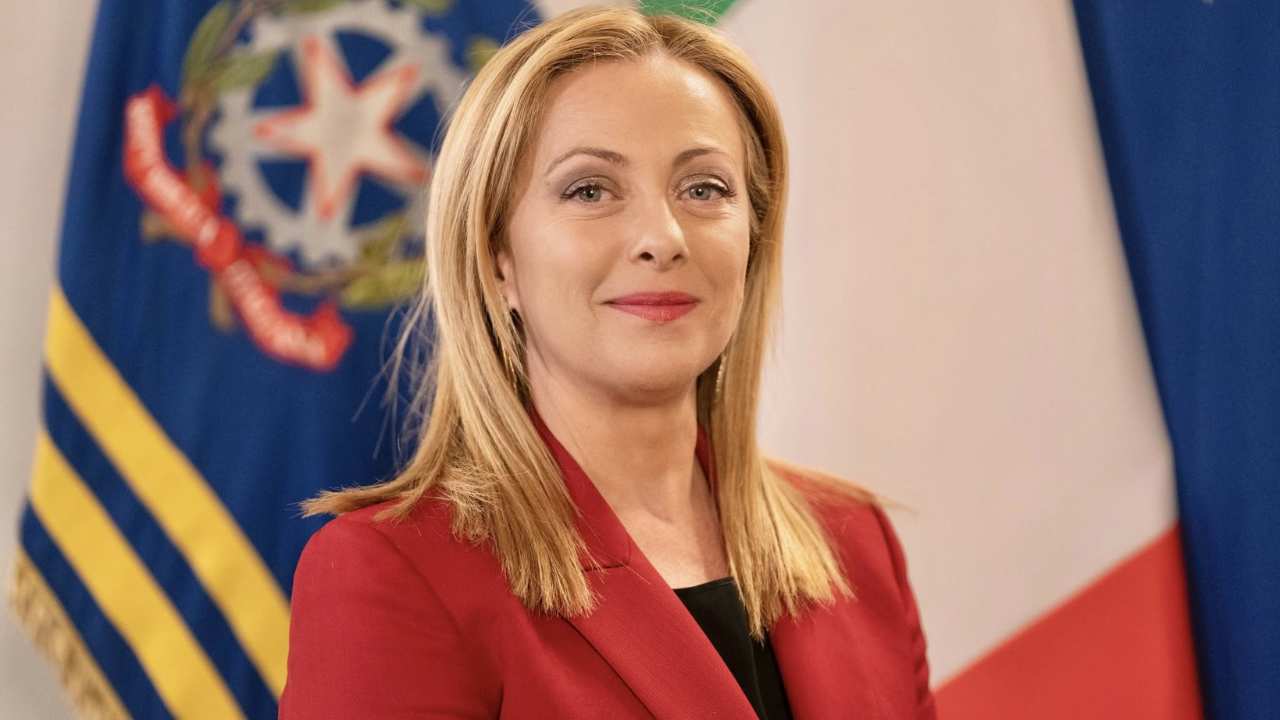
Photo Facebook/giorgiameloni.paginaufficiale