Türkiye completes restoration of Ancient Orient Museum
Turkish Minister of Culture and Tourism Mehmet Nuri Ersoy has provided an update on the extensive restoration, structural reinforcement, and exhibition-renovation works being carried out at the Istanbul Archaeology Museums.
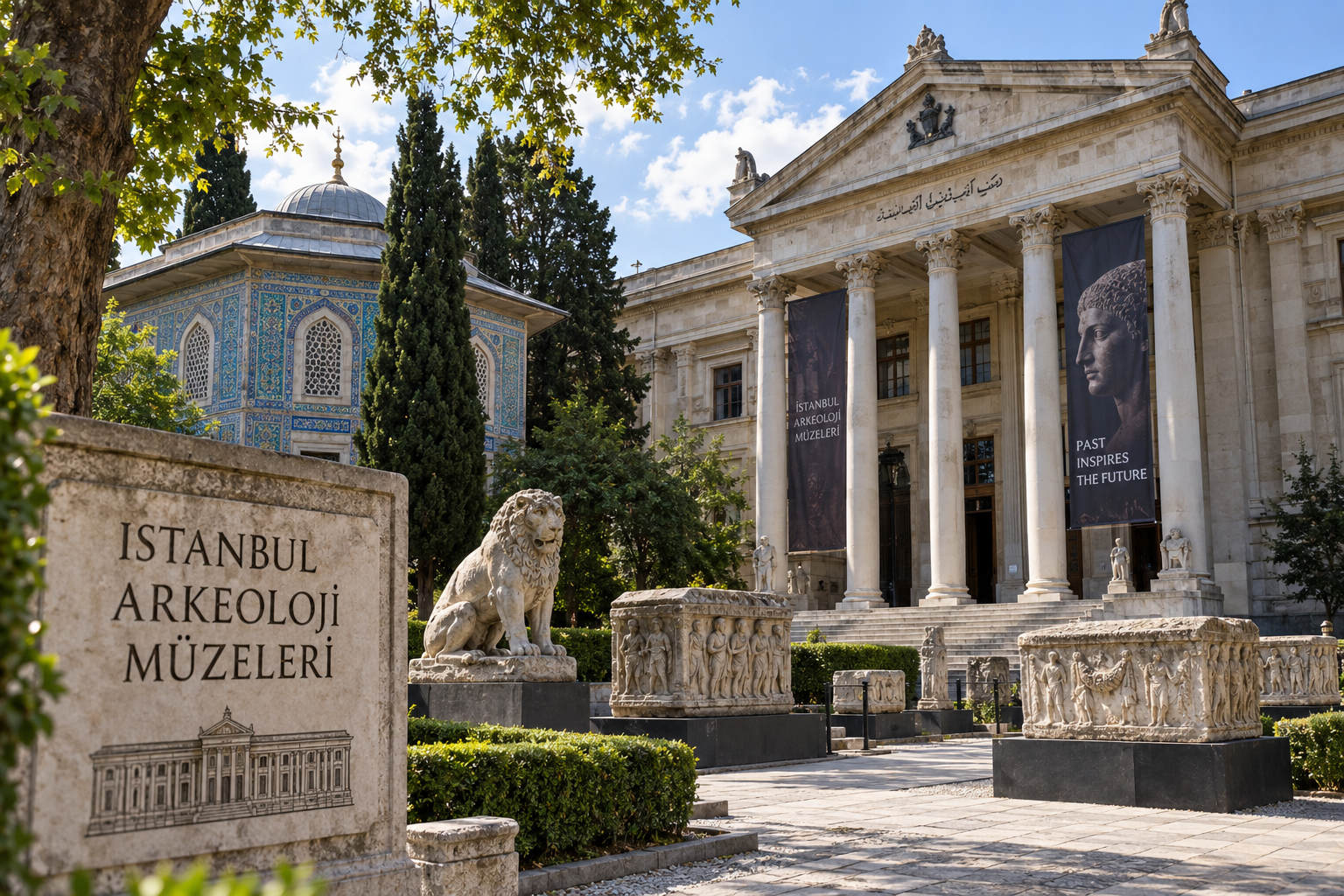
According to a statement from the Ministry of Culture and Tourism of Türkiye, the project covers the entire museum complex, from the main Archaeological Museum building and the Museum of the Ancient Orient to the Tiled Kiosk, the museum courtyard, and Gülhane Square, creating a renewed visitor experience throughout the site, CE Report quotes Anadolu Agency.
Individual restoration plans were prepared for approximately 54,000 tiles on the exterior of the Tiled Kiosk. In addition, 38 archaeological artifacts have been placed on open-air display along Osman Hamdi Bey Slope, while around 140 artifacts are now being exhibited in the museum courtyard.
“We are carrying out the most extensive restoration and reconstruction projects in the history of the Republic”
During a visit to the Istanbul Archaeology Museums, Ersoy said preserving historic buildings and passing their original architectural character on to future generations remains a key priority.
He said the ministry is also seeking to incorporate the innovations required by modern museum practices while preserving the historic structures. The projects at the Istanbul Archaeology Museums have been designed and implemented in stages with this approach in mind.
“We are carrying out some of the most extensive restoration, revitalization and construction projects in the history of our Republic and, for many of our monuments, in their centuries-long history. The Istanbul Archaeology Museums, the jewel of our museum and archaeological heritage and undoubtedly one of the world’s most important museum complexes, are also part of this process,” Ersoy said.
Reinforcement works completed at the Museum of the Ancient Orient
Ersoy said the first phase of the Istanbul Archaeology Museums project began in 2011, focusing on the main museum building. Restoration and structural reinforcement works were carried out on the section built in 1891 and the southern wing known as the second annex.
Under the second phase, reinforcement and exhibition-renovation projects began in 2017. Following the completion of the works, the main museum building reopened to visitors in 2021.
The third phase, covering the Tiled Kiosk and the Museum of the Ancient Orient, began in January 2023.
At the Museum of the Ancient Orient, structural reinforcement of the reinforced-concrete and jack-arch ceiling systems and masonry walls has been completed. The roof was renewed, while the plasterwork, decorative moldings and sculptures on the façade underwent cleaning and conservation.
The interior was also redesigned in line with a new exhibition plan. The Assyrian, Sumerian, Sumerian-Akkadian, Arabian, Babylonian, Hittite, Urartian and Egyptian galleries were reorganized according to modern museum practices.
Ersoy said the placement of artifacts was determined using scientific sources and with the guidance of academic experts. Lighting systems were redesigned to highlight the exhibits, while new systems were introduced to provide the highest possible level of artifact security.
The Museum of the Ancient Orient reopened to visitors on July 6 following the completion of the works.
54,000 tiles individually treated at the Tiled Kiosk
Ersoy said a particularly extensive and delicate restoration process was carried out at the Tiled Kiosk. Added roof structures and old lead coverings were removed, and new applications compatible with the building’s original design were installed.
New display cases and exhibition systems were introduced to present the artifacts using contemporary exhibition techniques. The exhibition arrangements in the İznik, Kütahya, Çanakkale, Early Ottoman and Seljuk galleries were also renewed.
A special interactive panel featuring a depiction of Osman Hamdi Bey was introduced to visitors in the Selsebilli Room on July 14.
Ersoy also highlighted the restoration and conservation of the tiles on the building’s exterior. An inventory of approximately 54,000 individual tiles was prepared, with separate intervention plans created for each tile.
Cleaning, consolidation, completion and coloring work was then carried out through a highly sensitive and meticulous restoration process.
Museum entrance moved to Gülhane Square
Ersoy said the project goes beyond the restoration of individual buildings and represents a transformation of the entire museum complex.
As part of the project, the museum’s main entrance was moved to Gülhane Square, where a new visitor reception center was established.
The Osman Hamdi Bey Slope, which connects Gülhane Square with the museum, was also redesigned. A total of 38 archaeological artifacts are now displayed along the route.
The museum courtyard has undergone extensive renovation as well. Following landscaping works, approximately 140 artifacts have been placed on open-air display for visitors.
“We see it as a living cultural space”
Ersoy emphasized that the Istanbul Archaeology Museums, with their extensive collections, represent a cultural treasure of global significance.
He said the museum has become safer, more modern and more accessible following the restoration and renewal works.
“With the work we have carried out, we have made this unique treasure safer, more modern and more accessible. We also see this not simply as a museum complex where artifacts are displayed, but as a living cultural space where visitors can engage with history, art, architecture and culture, and we are taking the necessary steps to support this vision,” Ersoy said.
“We will continue our efforts with the same care and determination to preserve this great heritage and pass it on to future generations.”
Ersoy also thanked the scientists, experts, workers and ministry staff who contributed to the project.
Photo: Chat GPT