Former Slovak President urges EU to accelerate Balkan enlargement - EXCLUSIVE (VIDEO)
By Aytan Aliyeva
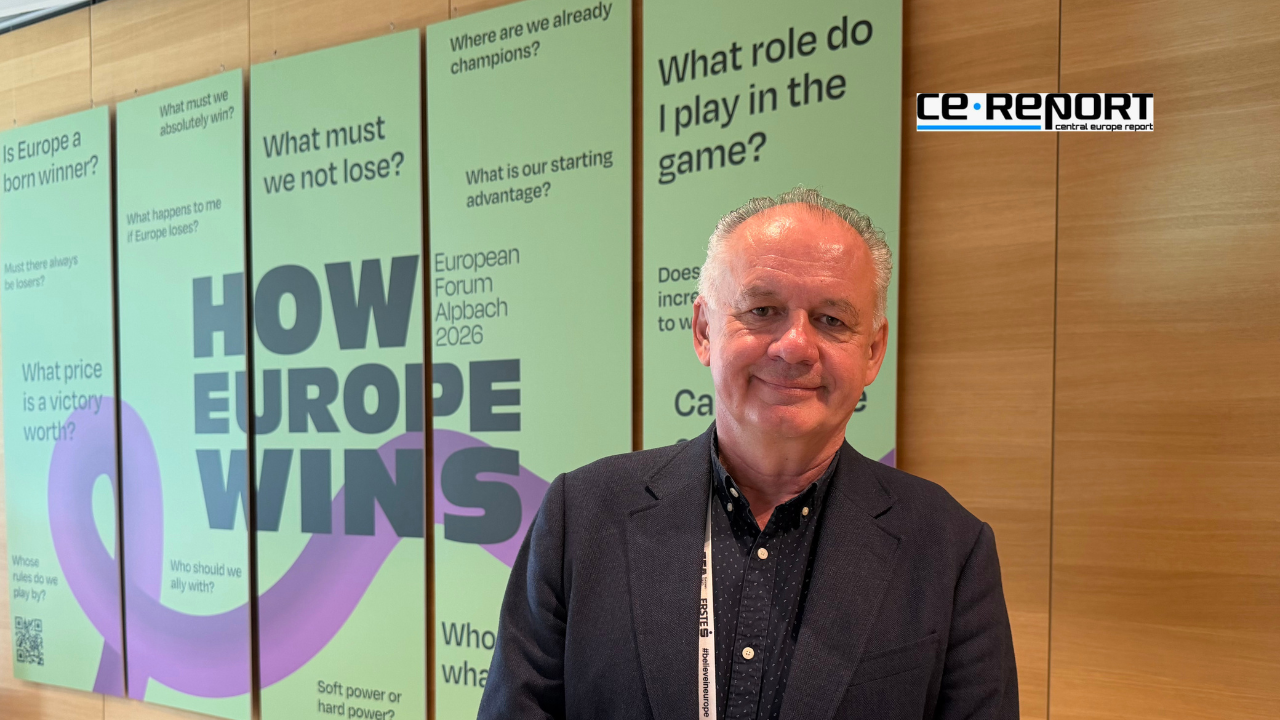
In an exclusive interview with CE Report, Andrej Kiska, Slovak entrepreneur and philanthropist who served as President of Slovakia from 2014 to 2019, shared his perspective on European integration, enlargement, innovation and the political leadership needed to strengthen Europe’s position in a changing world.
President Kiska described Slovakia’s membership in the European Union as one of the country’s most important achievements since the end of socialism. He emphasized that for a small country such as Slovakia, EU membership provided not only economic and practical benefits but also a strong sense of belonging to a wider European community. Mr. Kiska recalled that freedoms now considered normal - travelling, working, studying, and doing business across Europe without major restrictions would have seemed almost unimaginable during the socialist period. He also pointed to Slovakia’s presidency of the Council of the EU as evidence that even a relatively small member state can participate meaningfully in European decision-making. At the same time, President Kiska expressed concern that younger generations, having grown up with these opportunities, may not always fully appreciate the significance and value of the European project.
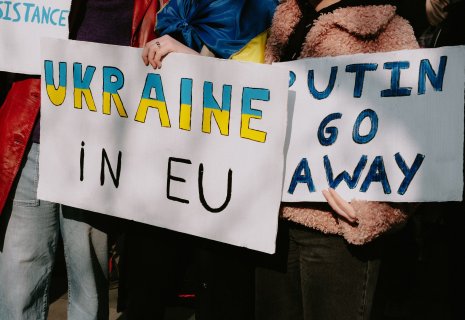
On EU enlargement, President Kiska strongly supported accelerating the integration of the Balkan candidate countries. He argued that enlargement should be regarded not only as an institutional process but also as an important geopolitical instrument. In his view, keeping candidate countries waiting for many years without a sufficiently credible prospect of membership risks creating frustration and weakening public support for European integration. Such frustration, Mr. Kiska warned, can create fertile ground for extremism, anti-EU attitudes, and greater Russian or Chinese influence. He therefore called on European leaders to send stronger and more credible signals that candidate countries have a genuine future within the EU. At the same time, he stressed that responsibility also lies with the candidate countries, which must implement the necessary reforms, strengthen their institutions, ensure political stability, and meet the conditions required for membership.
On European competitiveness, Mr. Kiska identified the incomplete single market and Europe’s relatively weak entrepreneurial culture as two major challenges. Drawing on his own experience as an entrepreneur, he argued that although the EU formally operates as a single market, significant barriers continue to make it more difficult for individuals and companies to operate across borders than in the United States. Removing these obstacles, in his view, would allow European companies to grow more easily and compete globally. President Kiska also emphasized the importance of changing attitudes toward entrepreneurship, particularly among young people. European universities and education systems, he suggested, should do more to encourage students to develop their own ideas, establish companies, take risks, and accept failure as a normal part of the entrepreneurial process.
Regarding Europe’s geopolitical position, President Kiska argued that the EU already largely understands what needs to be done. The central problem, in his assessment, is not a lack of ideas but insufficient implementation and political leadership. Mr. Kiska warned that without decisive action, Europe risks falling further behind the United States and China in innovation, business, and global influence.
President Kiska identified national fragmentation as one of the principal obstacles to stronger European action. He argued that national leaders too often prioritize domestic political interests and the next election over the strategic interests of Europe as a whole. He therefore advocated much deeper European integration and suggested that, in the longer term, some form of federalization could enable Europe to use its economic and political potential more effectively. He also highlighted defense as an area where greater European coordination and specialization could reduce duplication and strengthen Europe’s collective capabilities.
Looking toward the next decade, Mr. Kiska expressed particular optimism about Europe’s younger generation, emphasizing the talent and determination of young people to build a better future. His principal concern was political short-termism and the tendency of politicians to focus on the next election rather than long-term priorities. Overall, President Kiska conveyed confidence in Europe’s underlying potential. In his view, Europe already possesses the human capital, economic strength, knowledge, and institutional foundations required to remain a major global actor. The decisive question is whether European leaders will demonstrate the political courage to deepen integration, strengthen competitiveness, support enlargement, and pursue Europe’s long-term collective interests.