NATO’s Multi-Domain strategy seeks to redefine future warfare - EXCLUSIVE
The 2026 NATO Multi-Domain Operations (MDO) Conference reinforced the Alliance's commitment to becoming fully MDO-enabled by 2030, with a focus on accelerating implementation and translating concepts into operational capabilities.
This was said by a NATO International Civilian representative in an exclusive interview with CE Report.
The conference identified several priorities for continued implementation, including strengthening trust in data sharing and interoperability among Allies; advancing Alliance-wide command and control that fully integrates space and cyberspace; enhancing cooperation between military headquarters, civil authorities, academia and industry; and ensuring operational resilience when networks and technologies are contested or degraded.
These priorities build on work already underway, including NATO's MDO Roadmap and maturity model, which provide a framework for implementation towards 2030. Progress on this roadmap (including its key gaps, barriers, and recommendations) is reported to alliance nations twice a year through an update brief to NATO’s Military Committee, and as part of Allied Command Transformation’s update on the Strategic Framework for Transformation.
The MDO Conference provided valuable input to help advance work on several of these challenges, including insights generated during the Conference Tabletop Exercise conducted at the end of the event.
Implementation is a collective effort involving Allied Command Transformation, Allied Command Operations, NATO Headquarters and the Nations. NATO continues to develop, test and refine its approach through operational planning, wargaming, experimentation, training and exercises, using lessons identified to inform capability development and improve operational effectiveness.
The conference helped align stakeholders on the way ahead, with NATO's existing implementation framework guiding progress towards its 2030 ambition.
NATO's ambition to become fully Multi-Domain Operations-enabled by 2030 requires Allied forces to operate effectively together across all five operational domains synchronized with non-military activities.
To support this ambition, NATO has developed an MDO maturity model and an MDO Roadmap to guide implementation and assess progress towards 2030. Through the NATO Defence Planning Process, the Alliance also establishes capability targets for individual Allies, identifying the capabilities needed to meet collective defence requirements.
In addition to these critical capability targets, Nations are also held accountable for achieving agreed interoperability objectives, articulated through NATO’s interoperability “Spirals.” These Spirals provide an incremental and measurable approach to improving interoperability across the Alliance, helping Nations align capabilities, standards, data exchange, command and control processes, and digital integration over time.
Progress against these interoperability objectives is tested and validated through major NATO exercises and experimentation events, including the Coalition Warrior Interoperability eXploration, eXperimentation, eXamination Exercise (CWIX). Such events provide a practical environment to assess whether national systems, processes, and data can operate effectively together in a multi-domain context, identify remaining technical and procedural shortfalls, and inform future capability development priorities.
NATO uses wargaming, experimentation, training and exercises to assess how effectively capabilities, procedures and personnel work together across national boundaries and operational domains. These activities test not only whether systems can exchange information securely, but also whether common standards, decision-making processes and teams function effectively under realistic conditions. They help identify interoperability gaps and inform improvements in operational planning, training and capability development.
The objective is to ensure that Allied forces can plan, coordinate and conduct multi-domain operations effectively, with interoperable capabilities, established ways of working and the resilience to remain effective in contested or degraded environments.
NATO’s implementation of Multi-Domain Operations must account for differing levels of technological maturity, financial resources, and industrial capacity across the Alliance. The objective is not for every Ally to possess identical capabilities, but for all Nations to contribute effectively to a federated and interoperable MDO construct. This will be advanced through common standards, agreed interoperability Spirals, capability targets, and validation in exercises and experimentation such as CWIX. Multinational cooperation, common-funded enablers, joint procurement opportunities, and framework-nation approaches can help support Allies with more limited capabilities. Any additional funding mechanisms or major joint procurement initiatives would require Allied agreement, but should be explored where they improve burden sharing and accelerate MDO implementation.
NATO's approach to Multi-Domain Operations recognises that Allies bring different capabilities, resources, geography and areas of expertise. Becoming an MDO-enabled Alliance does not require every nation to possess the same technologies. It requires the ability to combine complementary national capabilities effectively across all five operational domains, while Nations retain appropriate control of their forces and data.
Through the NATO Defence Planning Process, the Alliance identifies capability requirements and establishes targets for individual Allies, taking into account the need for collective defence. Multinational cooperation, common standards and interoperability by design help ensure that capabilities developed by different nations can operate together effectively.
NATO also supports multinational capability development and procurement initiatives that allow Allies to pool resources, share expertise and pursue common solutions. These approaches can help reduce duplication, improve interoperability and make advanced capabilities more accessible.
Ultimately, the strength of Multi-Domain Operations lies in bringing together the capabilities of 32 Allies to generate effects that no single nation could achieve alone.
Effective Multi-Domain Operations require close coordination between military and relevant non-military actors. For this reason, NATO is committed to engagement with Allied member states on civil military planning alignment through the resilience committee within the framework of the Concept for the Deterrence and Defence of the Euro-Atlantic Area (DDA) family of plans.
Military operations depend on civilian systems and services: medical support may rely on hospitals, ambulances and blood banks, while the movement and sustainment of forces depend on transport networks, energy supplies and communications infrastructure. Understanding these dependencies is essential to critical infrastructure protection, cyber resilience and crisis response.
The aim is not to militarise civilian society, but to identify vulnerabilities, improve shared situational awareness and prepare together before a crisis so essential services and military operations can remain resilient.
A key enabler is NATO's ongoing digital transformation, including the development of its Transatlantic Warfighting Cloud and Alliance Data Sharing Ecosystem. These initiatives aim to make relevant information more accessible across national and organizational boundaries while maintaining appropriate security controls.
Importantly, information sharing does not mean unrestricted access. Different users and organizations will have access to information according to their authorization, operational requirements and applicable security policies. Allies will retain control over their data, with access governed by established information protection requirements.
The objective is to ensure that military and civilian stakeholders can access the information they need to coordinate effectively, while protecting sensitive information and strengthening the resilience of the Alliance as a whole.
Croatian Armed Forces have adopted Multi Domain Operations concept as the future of warfare; this is the way we will wage the next war.
Orchestration of military (and non-military) effects from all domains, enabling quick decision making, requires data from all sensors which are making battlefield of today transparent, to be collected, analyzed and disseminated to the right place at the right time. An adequate digital backbone capable to transfer huge amount of data, and an adequate analysis tool able to separate important from non-important, in relation to specific customer. This will be the main technological investment that Croatia will make in preparation for an MDO-enabled future.
NATO's digital transformation projects such as Transatlantic Warfighting Cloud or Alliance Data Sharing System will enhance both the processes of orchestration and synchronization. Achieving faster info sharing not only affects the decision-making of Croatian Armed Forces' commanders but also enables non-military actors to find their appropriate place in modern warfare, be it in the field of resilience, logistical and medical assistance, or commercial entities providing specific services.
Croatia expects its defense industry to be able to adapt quickly and deliver at scale. Sharing these requirements with defense industry will enable them to be more efficient in developing, testing and delivering modern technologies to the MDO enabled environment.
This kind of revolution in military affairs requires significant changes throughout the doctrinal landscape of Croatian Armed Forces, but primary recipient and enabler of the MDO concept remains the Croatian people. Multi Domain Operations concept will enable more decentralized decision-making, in conjunction with ability to pull sensor data or engage effectors from different domains. Croatian Armed Forces' commanders need to understand how assets from different domains can be engaged in their operation. Simultaneously, as decision-making authority will move towards lower echelons, our commanders on all levels will need to understand higher operational and strategic-level effects their actions can produce. These requirements ask a lot from Croatian education, training and exercises, but also from Croatian personnel management system. Recruiting and retaining the best and the brightest will become even more important.
Involving non-military actors in the MDO planning processes will be an important line of effort in the next period. A great example of this was the TTX conducted during the Conference which has shown to be an eye-opener for the participating Croatian civil authorities.
Finally, as an Ally, interoperability is crucial. Croatian Armed Forces will become an MDO-capable force as a part of NATO, having in mind interoperability requirements not only during equipment acquisition process, but also during education, training and particularly during multinational and NATO exercises.
Next year Croatia is hosting its biggest international military exercise COMBAT POWER 27, which will be a great opportunity to test the implementation level of MDO within Croatian Armed forces as well as Croatian interoperability with participating Allied nations in the MDO-enabled environment.
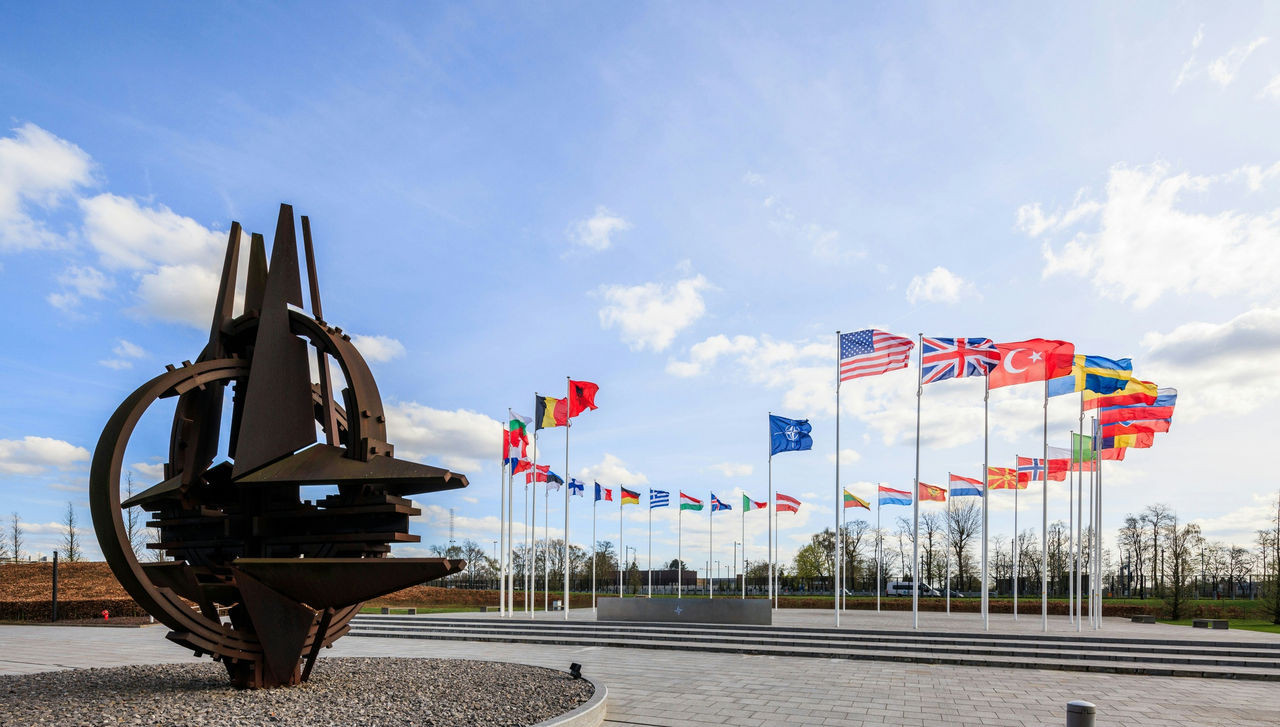
Photo: NATO
This interview was prepared by Julian Müller