US considers pulling up to 40,000 troops from Europe
The Pentagon is considering the possibility of withdrawing at least 25,000 U.S. troops from Europe, and the reduction of the contingent could reach 40,000 personnel, according to NBC News, which cites current and former U.S. and Western officials.
The findings of the review of the U.S. military presence in Europe are due to be presented to U.S. Secretary of Defense Pete Hegseth, CE Report quotes MOLDPRES.
Currently, approximately 80,000 U.S. troops are stationed in Europe. A withdrawal of 25,000 troops would reduce the contingent by nearly one-third, while the 40,000 scenario would mean a reduction of roughly half. NBC News notes that no final decision on a withdrawal has been made at this time.
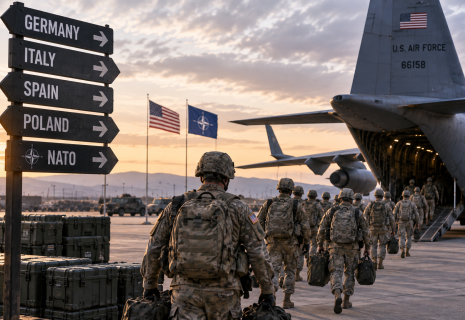
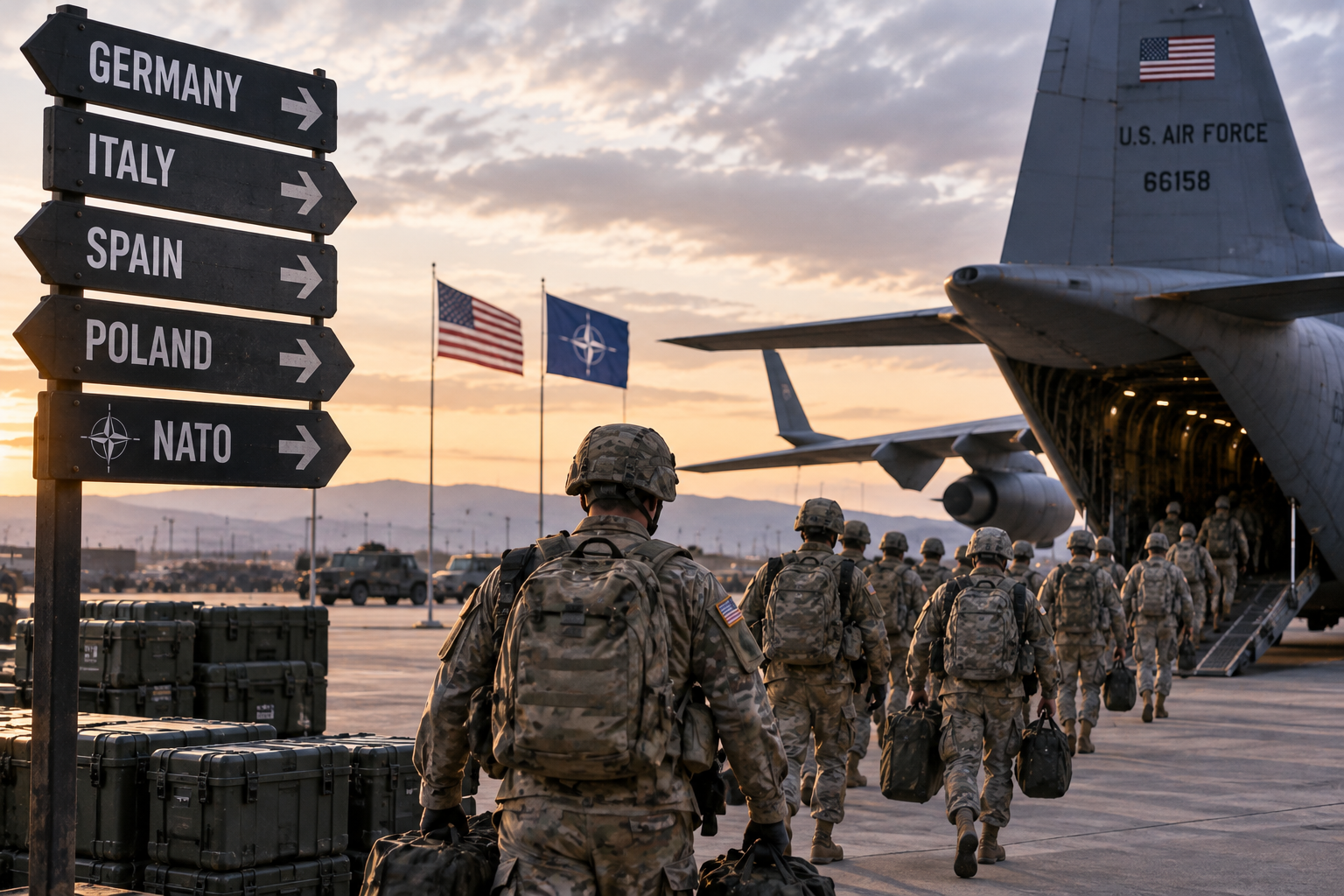
According to information cited by NBC News, the measures could particularly affect Germany, Italy, and Spain, countries where some of the largest U.S. troop concentrations and military facilities in Europe are located. Germany hosts approximately 36,000 U.S. troops, Italy about 12,000, while southern Spain is home to important U.S. Air Force and Navy bases.
The Pentagon review is part of a six-month assessment of the U.S. military presence in Europe, launched by Pete Hegseth in June. The process is being coordinated by General Alexus Grynkewich, commander of U.S. European Command and Supreme Allied Commander Europe of NATO.
According to NBC News, the options under consideration include reducing the number of Air Force, Navy, and Army personnel, as well as redeploying some troops within Europe, including to NATO’s eastern flank. The review also covers aircraft, ships, and other military equipment.
A large-scale withdrawal, if carried out, would take place in the context of the administration of President Donald Trump arguing that European countries should assume greater responsibility for the continent’s conventional defense, while the United States focuses more resources on other regions and threats, including China, Iran, and the Western Hemisphere. The Pentagon officially announced in June that the review had no predetermined outcome.
The possibility of a reduction in the U.S. presence has raised concerns among some allies and U.S. lawmakers. Critics of a withdrawal argue that a rapid reduction in troop levels could undermine NATO’s deterrence capabilities and reduce the logistical infrastructure available to the United States for rapidly deploying forces to the Middle East or Africa.
At the same time, some U.S. forces could be redeployed rather than completely withdrawn from Europe. One of the options under consideration is strengthening the U.S. presence on NATO’s eastern flank. In parallel, the United States has recently announced progress toward the possibility of establishing a permanent U.S. Army base in Poland.
Hegseth is expected to receive a final recommendation at the beginning of November, before any proposals are presented to President Donald Trump. Until a decision is made, the figures involving the withdrawal of 25,000–40,000 troops should be treated as scenarios under consideration, rather than as an adopted decision, NBC News reports.
Photo: Chat GPT