Slovenian team to study black holes in groundbreaking astronomy project
Researchers from the University of Nova Gorica (UNG, Slovenia) are playing a key role in a groundbreaking ten-year astronomical survey that will create the most comprehensive cinematic record of the universe to date, the Legacy Survey of Space and Time (LSST) at the Vera C. Rubin Observatory in Chile.
As the only university in Slovenia with direct access to the project's data, its Centre for Astrophysics and Cosmology has been involved in the LSST since 2016, joining experts from 26 other countries, CE Report quotes The Slovenia Times.
Andreja Gomboc, who leads the centre's collaboration, noted that their extensive involvement grants researchers "access to all data on billions of stars and galaxies and trillions of changes in the night sky, which it [the project] will detect in the ten-year sky survey".
The UNG team will specifically search the vast datasets for tidal disruption events, instances where a star wanders too close to a black hole and is torn apart.
"We are on the threshold of major changes in astrophysics, both in terms of the vast amount of data and the way it is analysed, where AI methods are indispensable," Gomboc stressed as the collaboration was announced on 1 July.
She also mentors researchers on the European TALES and COFUND SMASH projects, refining machine learning methods for use with the observatory's data.
Fellow researcher Tanja Petrushevska highlighted the unprecedented scientific potential.
"LSST will change the way we search for strongly lensed supernovae - rare cosmic events that allow us to explore the expansion of the universe. For our group at the university, the start of the project opens the door to discoveries that simply weren't possible before," she said.
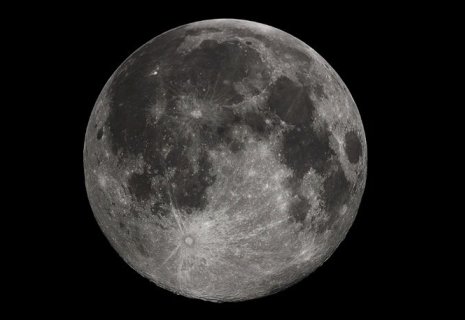
Operating from a mountain peak under the clear Chilean night sky, the observatory features the world's largest digital camera and a wide field of view equivalent to 40 full moons.
Taking a detailed image every 40 seconds, it will collect roughly ten terabytes of data each night. Over the next decade, this rapid, high-resolution scanning of the entire southern sky will yield a dataset of tens of billions of objects and trillions of measurements, helping to unravel the mysteries of dark energy, dark matter, and previously unseen cosmic phenomena.
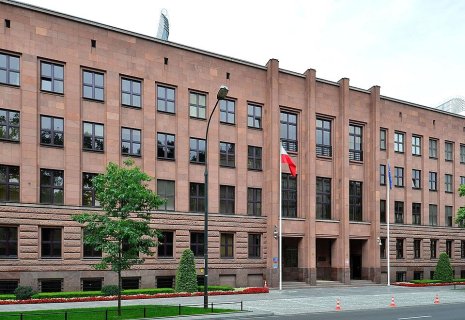
Photo: University of Nova Gorica