Women victims of war demand full enforcement of Ratko Mladić's sentence
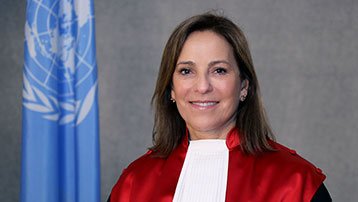
The Association “Women – Victims of War” has sent a letter to the President of the International Residual Mechanism for Criminal Tribunals, Graciela Gatti Santana, expressing concern over increasingly frequent public appearances and initiatives coming from Serbia and Bosnia and Herzegovina's entity of Republika Srpska, as well as from members of the family of convicted war criminal Ratko Mladić.
The letter states that these initiatives openly and directly seek to exert pressure on the International Residual Mechanism for Criminal Tribunals with the aim of securing his early release, CE Report quotes FENA.
“We consider unacceptable any attempt to relativize the final verdict by which Ratko Mladić was sentenced to life imprisonment for genocide, crimes against humanity, and war crimes. That verdict represents one of the key pillars of international justice, and questioning it — directly or indirectly — constitutes a serious attack on the legal order established after the crimes committed.
We particularly emphasize that references to ‘humanitarian reasons’ must not be misused in a way that would lead to the effective avoidance of serving the sentence. A life sentence must mean exactly that — the full and unquestionable execution of the imposed sanction.
In this context, we remind that the standards for early release must remain extremely restrictive, based solely on rigorous, independent, and transparent assessments.
For victims and their families, any potential release would represent a profound humiliation and a new trauma, and would seriously undermine confidence in international judicial institutions, including the Mechanism itself.
We call on the Mechanism to remain consistent with its own principles, protect the integrity of its judgments, and ensure that Ratko Mladić’s sentence is carried out in full, without yielding to any external pressure.
Justice for victims must not be the subject of negotiations or political initiatives. We remind the public that Ratko Mladić’s victims did not have the right to invoke ‘humanitarian reasons.’ Freedom was not offered to them, nor did they have the right to seek it — their lives were taken away, and they ended up in mass graves,” the letter from the Association “Women – Victims of War” states.
Photo United Nations