Global Neighbours' CEO warns global cooperation system under growing strain - EXCLUSIVE
By Aytan Aliyeva
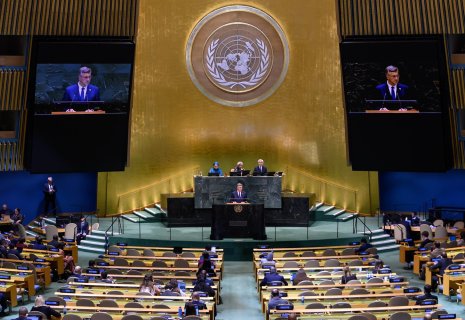
At a time when the role of major international organizations is increasingly being debated, smaller regional groups and international platforms are becoming more important. Questions about the effectiveness and future of some international institutions have led to greater attention being paid to new forms of cooperation between countries and regions.
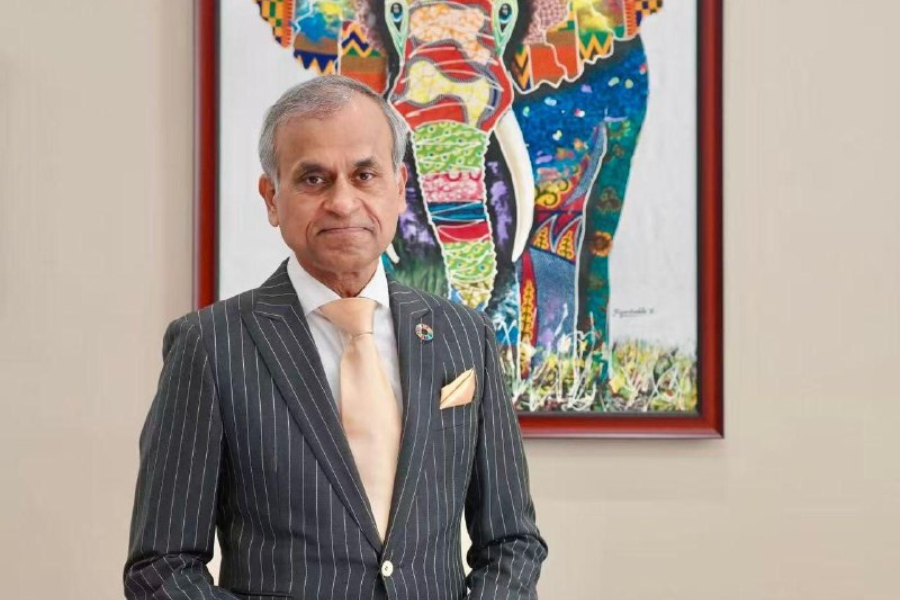
Siddharth Chatterjee, CEO of Global Neighbours, is among those working to strengthen connections between Europe, Asia, and other regions. After nearly three decades of service within the United Nations system, he now focuses on promoting international dialogue and cooperation through Global Neighbours.
Against this backdrop of systemic shift, the following conversation with Siddharth Chatterjee explores the fracturing of global consensus and the rising importance of 'connective tissue' in international relations.
CE Report presents the whole interview:
I have spent nearly three decades inside the multilateral system — as a UN Resident Coordinator in Kenya and China, as well as serving across 4 continents in some of the most fragile and unstable parts of the world. Before that, I served as a soldier in the Indian Army Special Forces.
From those vantage points, I can say with some confidence: the system is under greater strain today than at any point since its founding. This is not because the challenges are unprecedented — they are not — but because the political will to address them collectively is fracturing precisely when we need it most.
Climate change, health crises, food insecurity, and geopolitical competition are not separate files on a diplomat’s desk. They are one crisis, mutually reinforcing, with no national solution. I watched this in Kenya, where a drought did not stay a drought, it became a displacement crisis, a governance crisis, and a security crisis.
I witnessed it in China, where decisions made in Beijing on green energy investment ripple through supply chains from Lagos to Leipzig.
What I have learned is that governments alone cannot carry this weight across political cycles. Foundations, think tanks, and civil society organizations — entities like Global Neighbours — provide what formal diplomacy often cannot: continuity, intellectual independence, and the ability to sustain a conversation even when official channels are frozen. We are not a substitute for the UN. We are part of the connective tissue that keeps it functioning when formal mechanisms seize up.
When I served as a UN Resident Coordinator, I had the privilege, and the frustration, of working at the sharp end of SDG implementation. The goals are not the problem. The gap between aspiration and action is.
In Kenya, I saw communities that understood exactly what they needed. The challenge was not vision; it was the plumbing: the financing mechanisms, the institutional coordination, and the ability to translate a global framework into a school built, a borehole drilled, a girl in a classroom rather than being married off at fourteen.
In China, I saw a country that had lifted hundreds of millions out of poverty on its own terms, using instruments the SDG architecture was still arguing about.
The honest assessment is this: uneven political commitment is the core problem, and no amount of new global commitments will fix it. What will fix it is making implementation more local, more targeted, and more honest about where capacity actually lies. The SDGs need fewer grand declarations and more serious work on the means of implementation: financing, technology transfer, and the kind of institutional coordination that only happens when people trust each other.
That trust is not built at summits. It is built over years, at the working level, often in difficult places. That is where the real work happens.
In 2001, I led the demobilization of 3,551 child soldiers in South Sudan — boys and girls who had known nothing but war. That experience has never left me, and it shapes everything I believe about peacebuilding.
The first lesson is that the window for early action is always smaller than it looks and always closes faster than anyone admits. By the time the Security Council convenes, the moment to prevent has usually passed. The UN Security Council’s increasing paralysis under great power competition has made this worse. We are slower, more constrained, and more cautious than we were twenty years ago, at precisely the moment when speed matters most.
The second lesson is that stabilization is not the same as peace. Once the cameras leave and the international attention shifts, the real peacebuilding work begins — and it is almost always underfunded, understaffed, and under-prioritized.
In South Sudan, we demobilized children who had nowhere to go. Reintegration was an afterthought. We paid for that neglect for years.
Regional organizations such as the African Union, ASEAN and the SCO are filling some of the gap left by weakened global consensus mechanisms. This is not always elegant, but it is real. The future of conflict prevention will be more regional, more networked, and more dependent on partnerships between formal institutions and organizations that can operate in the spaces formal diplomacy cannot reach.
I have been asked versions of this question throughout my career, and my answer has evolved. Twenty years ago, I would have defended the multilateral system more reflexively. Today, I defend it more honestly.
The system is under real stress — not existential, but serious. The question is not whether multilateralism remains necessary; it does, because global interdependence has not receded. The question is whether it remains functional. And the answer, increasingly, is: only partially, and only in certain domains.
Formal diplomacy is necessary but no longer sufficient. Track 2 and Track 1.5 formats, where experts, former officials, and non-governmental actors can engage without the weight of official positions, are no longer nice-to-haves. They are load-bearing structures of the international system.
Global Neighbours exists precisely because of this reality. We are not trying to replicate what the UN does. We are trying to sustain the connective tissue: the relationships, the shared analytical frameworks, and the human trust that formal institutions require to function but cannot themselves generate. In a fragmented world, that work is not marginal. It is essential.
Five years in China gave me a perspective on this relationship that I think is sometimes missing from the European debate. China is not a problem to be managed. It is a civilization — one with its own logic, its own historical memory, and its own legitimate interests — that has become indispensable to every major challenge of our time.
The EU-China relationship is simultaneously one of the world’s most important economic partnerships and one of its most politically complicated. Both things are true, and the temptation to resolve that tension by choosing one frame over the other, pure competitor or strategic partner, leads to bad policy.
What I observed in Beijing is that cooperation is still possible, often at the technical and institutional level, even when political temperatures are high. Joint research, people-to-people exchange, and shared work on climate finance or AI governance act as what I would call diplomatic shock absorbers; they keep the relationship from fully stalling when political relations are difficult.
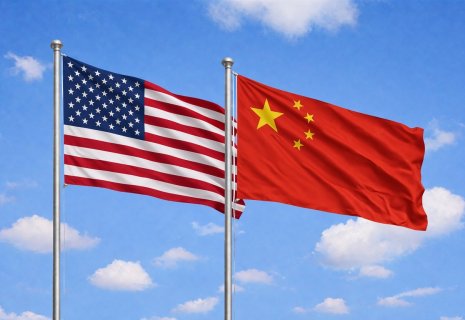
The EU-China-US triangle is the central geopolitical axis of our era. When it functions poorly, global governance suffers, from climate frameworks to pandemic preparedness to financial stability. Platforms like Global Neighbours, and initiatives like our Tracks to the Future journey from Europe to China, exist to sustain exactly this kind of multi-layered engagement when formal diplomacy is insufficient.
The framing of “competition versus cooperation” is understandable, but I think it is ultimately a false binary, and acting as if it were real risks becoming a self-fulfilling prophecy.
Economic interdependence between Europe and China is not a strategic vulnerability to be unwound. It is a structural reality that, managed well, can be a source of stability rather than fragility. The question is not whether to engage, but how — on what terms, in which domains, with what transparency.
In my experience, the most durable form of engagement between parties with different strategic interests is concrete, technical, and forward-looking. Not declarations of partnership, but joint work on problems that neither side can solve alone: climate innovation, digital infrastructure, AI governance, pandemic preparedness. This is where progress is possible even when trust at the political level is limited.
This is precisely what Global Neighbours’ Tracks to the Future initiative is designed to do — to create a structured, multi-stakeholder dialogue along the modern Silk Road, connecting European, Central Asian, and Chinese voices around shared practical challenges. The train does not wait for political consensus. It moves.
The most important conversations I have witnessed in diplomacy were not the ones in formal meeting rooms. They were the ones in the margins, over dinner, on the sidelines of a conference, between people who trusted each other enough to speak honestly because the setting was neutral and the conversation was not on the record.
Neutral platforms provide something that state-to-state diplomacy structurally cannot: the freedom to explore, to test ideas, to acknowledge complexity without committing to a position. For EU-China dialogue specifically, where every official statement is parsed for signals, this kind of space is extraordinarily valuable.
At Global Neighbours, we bring together policymakers, economists, academics, and practitioners — not to produce joint communiqués, but to build intellectual convergence and personal trust. The theory of change is simple: people who understand each other are less likely to misread each other, and less likely to stumble into conflicts that neither side actually wants.
My strategic priority is deceptively simple: keep the conversation going when everything else is pushing toward silence.
Geopolitical fragmentation is not abstract. It manifests as cancelled conferences, frozen exchanges, relationships that atrophy for lack of a venue. My goal for Global Neighbours is to be that venue — structured, credible, and genuinely neutral — at a moment when such spaces are scarce.
Concretely, this means building sustained networks of trust across Europe and Asia through our Fellowship Program and regular dialogue formats, including the Breakfast Club. It means developing policy research that is useful to decision-makers, not just academics. And it means flagship initiatives that demonstrate what multi-layered engagement can look like in practice.
The most ambitious of these is Tracks to the Future — a traveling dialogue platform along the modern Silk Road, connecting Europe, Central Asia, and China through a transcontinental journey of conferences, expert exchanges, and substantive discussions on investment, development, and cooperation. The idea is as old as the Silk Road itself: that movement creates encounter, and encounter creates understanding.
I have spent my career in the field in South Sudan, in Kenya, in Iraq, in Indonesia and Somalia. I believe in the power of being present, of going to the place rather than talking about it from a distance. Tracks to the Future embodies that belief at an institutional level.
I want to answer this honestly, not optimistically.
My confidence in the future of international cooperation does not come from believing the system is working well. It comes from something more fundamental: the problems that require cooperation are not going away, and no country, however powerful, can solve them alone. That interdependence is structural. It is not a choice.
I have seen the system at its worst — in conflict zones, in the aftermath of famines, in the bureaucratic paralysis of institutions that lost their sense of purpose. I have also seen it at its best — a UN team in Kenya building something meaningful out of almost nothing; a group of Chinese and European experts, in a quiet room in Beijing, finding genuine common ground on a problem that their governments were publicly fighting about.
What gives me confidence is the people — the practitioners, the thinkers, the quiet diplomats who keep showing up regardless of the political weather. And what gives me hope is that the next generation seems to understand, better than mine sometimes did, that the alternative to imperfect cooperation is not no cooperation, it is catastrophe.
My role, through Global Neighbours, is to give those people a home - to sustain the architecture of trust and dialogue so it is there when the political moment finally turns, as it always does, back toward engagement.