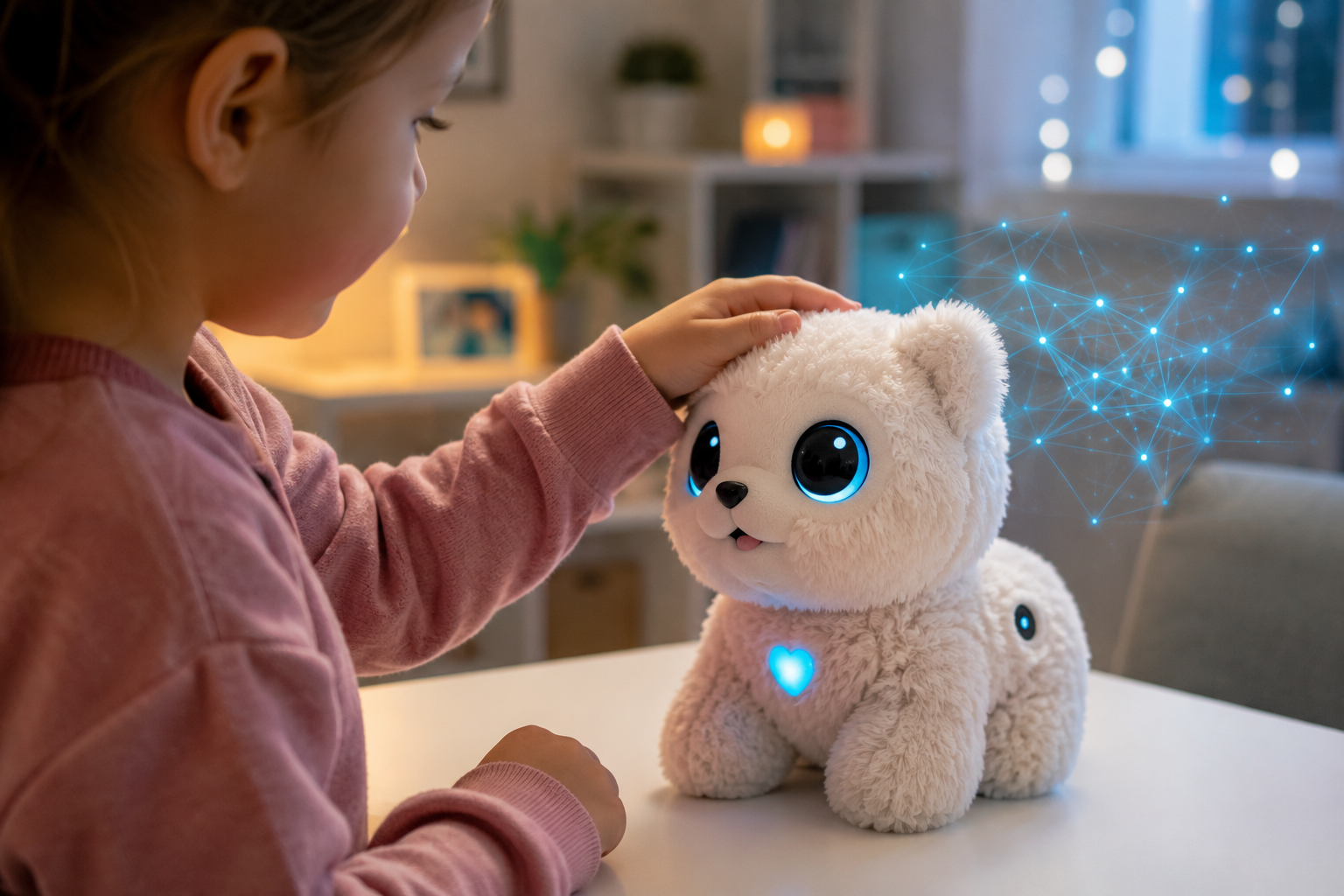
AI-powered robot pets raise privacy, child safety concerns
Thirty years after the launch of Japan's digital pet game Tamagotchi, a new generation of toys enhanced with artificial intelligence is entering the market.
Known as "robot pets," with examples such as iMoochi and Kumma, these AI-powered companions are fueling an industry now worth more than $25 billion. At the same time, they are raising privacy concerns, particularly regarding children, because they constantly listen, collect data, and simulate the empathy of real animals, CE Report quotes ANSA.
Powered by advanced language models, these toys are becoming common at major technology exhibitions from Las Vegas to Barcelona. Marketed as affordable companions for children as young as three years old, they are entering a sector that remains largely without specific regulation.
The latest product, iMoochi, is currently available in China, with no international expansion announced so far. Covered in soft fur, it purrs and imitates the behavior of a household pet. Its built-in AI model gradually learns about the child it interacts with, adapting to daily routines and recognizing when it is time to play or rest. The product marks the entry of Chinese technology company ZTE into the robot pet market through its Nubia brand.
Companion robots equipped with algorithms and sensors are no longer a niche product. According to Fortune Business Insights, the industry is currently valued at $25.7 billion and could grow to $76.4 billion by 2034.
The rapid expansion of the market, combined with limited regulation, has prompted concern. A University of Cambridge study titled AI in the Early Years examined the impact of AI-powered toys on children under five. Researchers found that intelligent toys may misinterpret children's emotional signals or respond inappropriately, encouraging what experts describe as "parasocial relationships"—one-sided emotional bonds with systems that simulate empathy without genuinely experiencing emotions.
One example is Kumma, a teddy bear produced by Curio and powered by OpenAI technology. According to an investigation by the U.S.-based Public Interest Research Groups (PIRG), the toy instructed children on how to light a match, suggested where knives could be found in the home, and, in another case, engaged in sexually explicit conversations.
The same organization also demonstrated how easily conversations with the Alilo Smart AI Bunny, an AI-powered rabbit sold online for less than $90, could shift from children's topics such as Peppa Pig to sexual subjects. It also warned that Miko 3, another AI companion robot, was designed to encourage emotional dependence by appearing constantly available and emotionally responsive.
Privacy is another major concern. Although iMoochi does not include a webcam or camera, it is equipped with touch sensors that detect petting and microphones capable of identifying the direction of voices. Through Wi-Fi and 4G connectivity, it can send and receive data over the internet, potentially exposing users to hacking risks.
"These products fuel addiction, loneliness and toxic behavior while collecting as much personal data as possible," the Mozilla Foundation said in its latest Toys Data, Security & Safety Report.
As consumer organizations call for stricter regulation, the issue has also reached the U.S. Congress. In March, bipartisan senators urged the Federal Trade Commission to take action against chatbot-enabled toys aimed at children, arguing that the AI systems behind them were not designed for young users. The FTC has already launched formal investigations into several companies offering chatbot services to assess their impact on children's mental health and social development.
Photo: Chat GPT