Moldova to introduce emergency measures
The Moldovan government will introduce additional targeted measures to ensure stability in the petroleum products market and protect consumers.
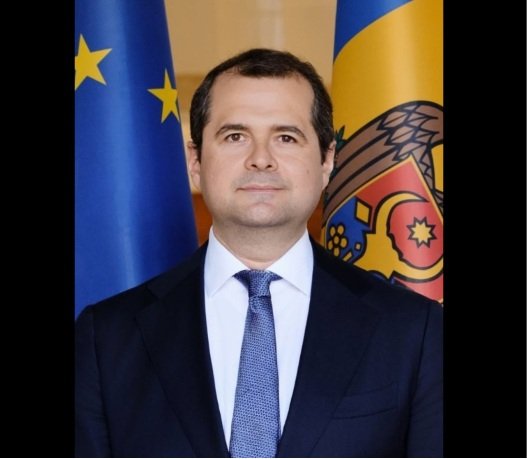
The measures were announced today by Prime Minister of Moldova Vasile Tofan following a meeting of the National Crisis Management Commission (CNMC), CE Report quotes MOLDPRES.
The prime minister said the authorities' main objective is to ensure sufficient diesel supplies across the country while protecting consumers, including farmers, from unjustified price increases.
Tofan stressed that authorities must act quickly with preventive measures before problems escalate.
"We came into government to build, implement reforms and move the economy forward. But a responsible government must also know how to respond to crises. We are facing many crises that emerge rapidly. We must intervene before problems grow and begin affecting people. This will remain a guiding principle of this government," Tofan said at a press conference.
The prime minister announced that Moldova will temporarily modify the diesel import pricing formula to keep imports both feasible and attractive.
"For the next 30 days, we will switch from the FOBMed quotation to the CIFMed quotation. The formula will reflect the cost of diesel delivered to our region, rather than prices at a Mediterranean port. This means moving from FOB to CIF pricing, including transport and insurance costs," Tofan explained.
Another temporary measure increases the commercial margin for diesel sales for a period of 30 days.
"For 30 days, we will raise the margin by the equivalent of $25 per ton, or about 0.37 lei per liter. Importers requested much larger increases—up to 1.20 lei per liter, one leu or at least 0.60 lei. We cannot allow such increases. We are approving only 0.37 lei per liter, and only for 30 days. We will monitor the situation and intervene again if necessary," Tofan said.
The government also postponed a previously planned increase in the commercial fuel margin of 0.48 lei per liter, which had been scheduled to take effect on August 1.
Tofan explained that the state of alert in the energy sector was declared because the regional fuel market remains under significant pressure and international prices have risen sharply within a short period.
"We all see the effects at fuel stations following the accident on the Caspian pipeline that supplies most of the crude oil to Romanian refineries from which we purchase fuel. In addition, the conflicts affecting the Gulf and the Red Sea have disrupted supply routes. Low water levels on the Danube are limiting barge traffic. Several countries are restricting re-exports, including Bulgaria, while Romania is expected to follow. In Moldova, some filling stations have already begun experiencing diesel shortages. Their number is still small but continues to grow every day," he said.
The prime minister also addressed fuel importers directly, urging companies to continue bringing diesel into Moldova and ensure uninterrupted supplies.
"We understand that profit margins may temporarily be smaller. We understand that for some shipments and for a short period, companies may even sell at a loss. But we ask you to think about the long term. I believe in a free market, but also in responsibility, long-term thinking and economic patriotism. We are counting on companies to continue importing diesel and maintaining fuel supplies," Tofan stated.
The government also approved additional measures aimed at facilitating fuel deliveries, including priority customs clearance for petroleum products, dedicated border lanes for fuel tankers and priority access to railway transport.
The authorities will also temporarily limit fuel exports and re-exports beyond minimum levels.
"Fuel imported for the Moldovan market must remain in Moldova. We will also limit diesel sales in containers larger than 40 liters to prevent stockpiling, while making exceptions for farmers who need to refuel harvesting equipment in the fields," Tofan explained.
At the same time, public institutions have been instructed to reduce diesel consumption by at least 20 percent.
"The state must lead by example. We do not want artificially low prices combined with empty filling stations, but neither will we accept uncontrolled prices and excessive profits generated by the crisis," the prime minister emphasized.
Tofan said the current situation requires discipline, coordination and rapid action across all state institutions.
"The situation is difficult, but it remains manageable. There is no need for panic. We need discipline, coordination and swift action from all public institutions, including local authorities. We will monitor diesel stocks, imports, fuel station supplies, the flow of the Dniester River and water availability on a daily basis. We will intervene before problems become larger crises. Our goal is to protect people, maintain essential services and ensure the country continues functioning normally," he concluded.
According to the prime minister, Moldova's regulated fuel pricing system provides some of the lowest fuel prices in the region but also increases the risk of lower fuel stocks because suppliers naturally prioritize liberalized markets where prices are higher.
"Unlike Romania and Ukraine, Moldova has a regulated fuel market. Every day, the National Agency for Energy Regulation (ANRE) sets the maximum diesel price. This system keeps prices low, but it also carries risks. Diesel currently costs around 31 lei per liter in Moldova, compared with about 35 lei in Ukraine and nearly 40 lei in Romania. These lower prices benefit consumers, farmers and transport companies, but when regional prices rise rapidly, suppliers naturally prefer markets where prices are higher. That creates the risk of diesel shortages in Moldova. We therefore need to find a balance. Despite pressure from market participants, we will not liberalize the market at this time. We will maintain regulated pricing to protect consumers, especially during the agricultural season, and continue applying the daily maximum prices established by ANRE," Tofan said.
Earlier today, the government declared a 30-day state of alert in the energy sector to prevent fuel supply disruptions amid ongoing instability in the regional petroleum market.
Photo: Wikipedia