Beyond energy: Azerbaijan-EU partnership reshapes Middle Corridor - OPINION
By Aytan Aliyeva
From Energy security to Strategic connectivity
For much of the past two decades, relations between the European Union and Azerbaijan have been defined primarily through the prism of energy security. Azerbaijan has become a reliable supplier of natural gas to Europe via the Southern Gas Corridor, especially following the EU's acceleration of efforts to diversify away from Russian energy in the context of the Russia-Ukraine war. Energy cooperation continues to be a cornerstone of bilateral relations, but recent political developments demonstrate that the partnership is entering a new phase.
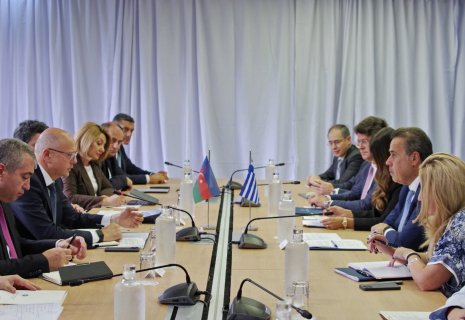
The visit of European Commission President Ursula von der Leyen to Baku on 1 July 2026 is a key strategic milestone in this transformation. During the visit, the European Union announced its intention to establish an EU-Azerbaijan Connectivity Partnership, accompanied by a Global Gateway package of up to 200 million euros in grant financing, expected to leverage up to 2 billion euros in public and private investment for transport, energy and digital connectivity across the South Caucasus. The initiative is designed not only to strengthen bilateral cooperation, but also to promote regional integration and long-term stability.
The implications of this development extend well beyond the borders of Azerbaijan. This shift is indicative of a major change in European strategic thinking. Brussels is increasingly aware that Europe's long-term resilience depends not only on secure energy supplies but also on diversified transport corridors, resilient supply chains, digital infrastructure and geopolitical partnerships. In this rapidly changing framework, Azerbaijan is no longer regarded merely as an energy exporter; it is fast becoming one of the EU's most noteworthy connectivity partners, establishing crucial links between Europe and the South Caucasus, Central Asia, and eventually China.
Connectivity has become Europe's new strategic priority
Recent geopolitical developments have led to a shift in European strategic priorities.
The global supply chain has been exposed as vulnerable to disruption in the context of the pandemic. Russia's invasion of Ukraine demonstrated the vulnerability of overdependence on single transport routes and energy suppliers. At the same time, the growing geopolitical competition between China and the West has highlighted the risks associated with concentrated trade dependencies.
Consequently, the European Union has expanded its strategic agenda from energy diversification to comprehensive economic resilience.
The Global Gateway initiative is a testament to this transition. Rather than relying solely on trade agreements, the EU is now seeking to enhance physical connectivity through investments in transport infrastructure, ports, railways, digital networks and renewable energy projects across neighbouring regions.
Within this broader strategy, the South Caucasus has gained unprecedented geopolitical importance. The South Caucasus has traditionally been considered a peripheral region. However, it is increasingly recognized as one of Eurasia's most crucial transit crossroads. The region is well-positioned to serve as a strategic hub, connecting European markets with the Caspian basin, Central Asia and East Asia while bypassing both Russia and Iran. The visit to Baku by von der Leyen is indicative of a shifting perception. She described Azerbaijan as well-positioned to drive regional connectivity, citing its strategic geography, infrastructure and growing regional influence. The proposed EU-Azerbaijan Connectivity Partnership formalizes this new understanding of Azerbaijan's geopolitical role.
The Middle Corridor is becoming central to Europe's strategy
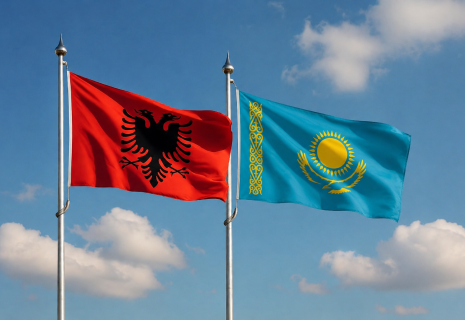
The new partnership has significant implications, particularly for the growing importance of the Trans-Caspian International Transport Route (TITR), also known as the Middle Corridor. Until recently, the corridor was considered one of several potential Eurasian transport routes. In the current business climate, it has become a key strategic priority on the European agenda. The Middle Corridor is a transportation route that connects China and Central Asia with Europe via Kazakhstan, the Caspian Sea, Azerbaijan, Georgia, and onward to European markets.
Its geopolitical importance has increased for a number of reasons.
- Firstly, the imposition of sanctions against Russia has diminished the appeal of the Northern Corridor.
- Secondly, maritime shipping through the Suez Canal remains vulnerable to geopolitical disruptions.
- Thirdly, European companies are increasingly seeking diversified logistics routes capable of supporting resilient supply chains.
In response, European institutions are allocating increased political and financial resources to the development of the Trans-Caspian route. In contrast to previous infrastructure initiatives, current European engagement is increasingly coordinated through the Global Gateway framework, linking transport investments with digital infrastructure, customs modernization, renewable energy cooperation and trade facilitation. Brussels sees the Middle Corridor as more than a transport project: a strategic economic corridor for Europe's competitiveness.
Azerbaijan is the corridor's key hub
Azerbaijan is the country that holds the most strategic importance within the Middle Corridor. Its geographic location naturally connects the Caspian basin with the Black Sea and European transport networks, making it an ideal location for business and trade.
Over the past decade, Azerbaijan has systematically invested in infrastructure that strengthens this role. The Port of Baku at Alat has evolved into one of the Caspian region's largest logistics centers. Modern railway links, including the Baku-Tbilisi-Kars railway, facilitate the transportation of goods to Turkey and Europe. Customs modernization has also improved transit efficiency. Combined with expanding logistics services, these investments position Azerbaijan as the operational backbone of the Middle Corridor.
European policymakers are aware of this reality. Von der Leyen clearly stated that potential Global Gateway investments will support projects such as the development of the Port of Baku and regional railway connections. The proposed High-Level Connectivity Dialogue will further institutionalize transport cooperation between Brussels and Baku. Azerbaijan's role is not limited to geographical considerations. Transit corridors require political reliability, regulatory coordination and stable governance. The combination of geography, infrastructure and state capacity makes Azerbaijan increasingly indispensable for the success of the Middle Corridor.
Beyond Gas: Energy and Transport interconnected
Energy cooperation continues to be a key component of EU-Azerbaijan relations.
Following the signing of the 2022 Memorandum of Understanding on Strategic Partnership in the Field of Energy, Azerbaijani gas exports to Europe have expanded significantly. However, the relationship is no longer confined to hydrocarbons.
Azerbaijan is investing in renewable energy generation, offshore wind projects in the Caspian Sea and electricity interconnections linking the South Caucasus with Europe. Transport infrastructure plays a key role in facilitating this transition. Efficient logistics corridors facilitate not only trade but also the movement of energy equipment, critical minerals and future green energy technologies. As a result, transport security is becoming increasingly linked to energy security. This is part of a bigger change in how Europe thinks about strategy.
While earlier policy debates centred mainly on securing gas pipelines, current discussions are placing increasing focus on securing entire connectivity networks, encompassing ports, railways, fibre-optic infrastructure and electricity interconnections.
Energy and transport security are therefore becoming mutually reinforcing dimensions of European resilience.
Global Gateway provides concrete substance
Strategic relationships aren't transformed by political declarations alone. The key distinction of the July 2026 announcements is the financial commitment that is associated with them. The EU has announced a series of investment opportunities totalling up to 2 billion euros through the Global Gateway framework. Grants of up to 200 million euros are available to be used in transport, energy and digital connectivity.
The scale of the financing is significant for several reasons.
- Firstly, grants serve to mitigate investment risk for large infrastructure projects.
- Secondly, public funding has been shown to encourage private-sector participation.
- Thirdly, European involvement introduces regulatory standards that facilitate deeper integration into European transport networks.
Global Gateway aims to boost infrastructure, not replace national investment.
For Azerbaijan, this creates opportunities to accelerate the modernization of its logistics infrastructure and integrate more deeply into European value chains. For the EU, it strengthens strategic connectivity without requiring exclusive political alignment.
The initiative is thus a pragmatic model of geopolitical engagement, based on shared economic interests.
Strategic opportunities and remaining challenges
Despite considerable momentum, several structural challenges remain. Infrastructure along the Middle Corridor still requires substantial modernization.
Investment in port capacity, railway interoperability, customs harmonization and digital border management is required to ensure the continued smooth functioning of these systems. Maritime logistics across the Caspian Sea continue to present a significant challenge, impacting the overall efficiency of the transport corridor. Competition with alternative Eurasian routes remains strong. The Northern Corridor may regain its attractiveness under different geopolitical circumstances, while southern routes continue to evolve. Furthermore, attracting sustained private investment requires predictable regulatory environments and coordinated regional governance. The success of the EU-Azerbaijan Connectivity Partnership will therefore depend not only on financing, but also on effective implementation, institutional coordination and long-term political commitment from all participating actors.
The developments in July 2026 represent a key turning point in EU-Azerbaijan relations, with a shift from a partnership based mainly on energy security to a broader strategic alliance focusing on connectivity, transport, digital infrastructure, renewable energy and regional integration. The European Union recognizes Azerbaijan as both a reliable energy supplier and a pivotal gateway linking Europe with the South Caucasus, Central Asia and wider Eurasia.
Photo AI