Women in Croatia bear brunt of household management, study finds
Women make most or all decisions regarding household management and childcare, particularly when it comes to communicating with schools and kindergartens, while men take the lead primarily in organising household repairs, according to the latest research by the B.a.B.e. association.
The KEUK 2 study (Cognitive-Emotional Household Management), conducted in December last year, confirms the significant gender inequality previously identified by earlier research, to the detriment of women, CE Report quotes HINA.
However, it now pinpoints and reveals more precisely its less visible dimensions, Petra Kontić, president of the B.a.B.e. association, told HINA.
“In our 2022 study, we had already established a very clear gender-based division of household work. Routine, everyday tasks such as cooking, washing dishes, cleaning, doing laundry and maintaining clothing were predominantly performed by women. Between 90 and 97 per cent of the women surveyed carried out these tasks several times a week or daily,” Kontić said.
She added that the new KEUK study goes a step further by examining not only who physically performs a task, but also who has to notice that something needs to be done, remember it, plan it, organise and coordinate it, and check whether it has been completed. These responsibilities, the study concludes, still fall predominantly on women.
Women Do More Planning and Monitoring of Children's Obligations
“Earlier research showed that women perform more unpaid work, while the new study provides a more detailed picture of how women also bear a greater responsibility for managing the day-to-day functioning of the household and family relationships. This is precisely the type of work that is most difficult to see, measure and address through public policy,” Kontić said.
The study also shows that women perform a greater share of cognitive and mental labour, particularly when it comes to planning and monitoring children's obligations involving schools, kindergartens and the healthcare system.
For example, among women for whom this activity is relevant, as many as 78.5 per cent said that they alone or predominantly coordinate communication with their children's school or kindergarten, while only 17.8 per cent reported an equal division of responsibility.
The figures are similarly unfavourable when it comes to monitoring children's activity schedules: women carry out this task predominantly or exclusively in 72.2 per cent of cases. Men reported taking the lead in this area in only 10.8 per cent of cases.
Data revealing pronounced gender inequality and the imposed leading role of women also concern arranging children's medical appointments, a responsibility handled predominantly or exclusively by women in 78 per cent of cases, compared with just 10 per cent of men. Women also take greater responsibility for meal planning, at 64.5 per cent compared with 18.3 per cent of men, as well as preparing shopping lists, where the division is approximately 70 to 30 per cent.
The study also reveals a striking disparity in the performance of invisible mental and emotional labour: women overwhelmingly dominate the organisation, planning and care-related tasks involving children, while men focus primarily on technical maintenance and occasional financial decisions.
Organising Household Repairs Is the Only Area Dominated by Men
Specifically, organising household repairs and maintenance is the only activity in which men take the lead. Some 28.1 per cent of men said they handle these tasks exclusively, while another 35.3 per cent said they do so predominantly. Women generally identify their partners as the main people responsible for this work.
Interestingly, there is no statistically significant gender difference in the routine planning of utility payments and bills, suggesting that day-to-day financial administration is distributed relatively equally.
However, when it comes to planning major financial expenditures, such as taking out loans or purchasing a car, men are more likely to report being exclusively or predominantly responsible, at 44.9 per cent. Nevertheless, nearly half of couples, or 46.5 per cent, make these decisions equally and jointly.
The invisible work of maintaining a family's social connections, including remembering important dates and maintaining relationships with relatives, once again falls disproportionately on women.
More than 69 per cent of women said they exclusively or predominantly remind family members of important dates, while 34.4 per cent of men acknowledged that their partners perform this task.
Within relationships themselves, however, the findings suggest an apparently high degree of equality. Most respondents said they provide emotional support to their partners equally during stressful situations (68.5 per cent) and share responsibility for initiating conversations about family matters (63.5 per cent).
Nevertheless, a closer examination of the division of responsibilities shows that women more frequently take the initiative and actively manage the emotional climate of their relationships. This includes looking after their partners' health habits and reminding them to maintain an appropriate appearance, an area in which 48 per cent of women take the lead, compared with only 5.1 per cent of men.
“There has been progress, and it is important to acknowledge it. However, there is still a significant gap between the formal advancement of rights and their actual impact on the everyday lives of families and the division of care responsibilities between women and men,” the head of the B.a.B.e. association said.
Women's Workload Limits Their Full Participation in the Labour Market
The latest study shows that the highly unequal distribution of cognitive and emotional labour continues to burden women in Croatia and restrict their full participation in the labour market.
To achieve long-term demographic sustainability and social cohesion, public policies must stop viewing household work solely in terms of the hours spent performing physical tasks.
The study calls for systematic measures and public policies that encourage men to participate more equally in parenting and the invisible administrative work of family life, thereby improving the overall quality of family life in Croatia.
“Progress has been made since 2023 in terms of rights, funding and the strategic framework, but the next step must be to assess whether these policies are changing the actual distribution of time, care and responsibility between women and men.
“If women continue to remain the people who predominantly manage children's obligations, caregiving, household affairs and the emotional life of the family, formal improvements to the system have not yet fully translated into gender equality in everyday life,” Kontić concluded.
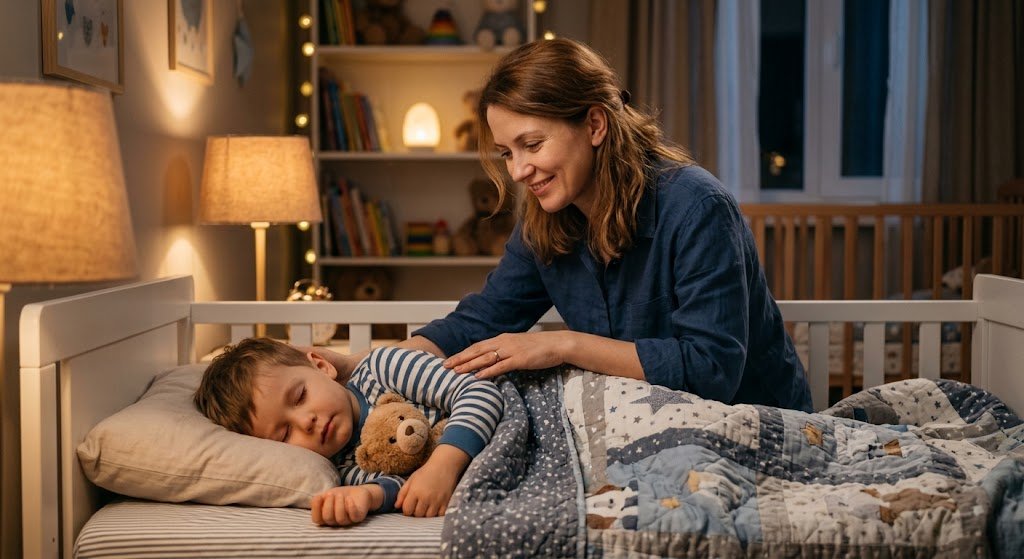
Photo AI