Croatia seeks expanded US cooperation in energy, technology, infrastructure
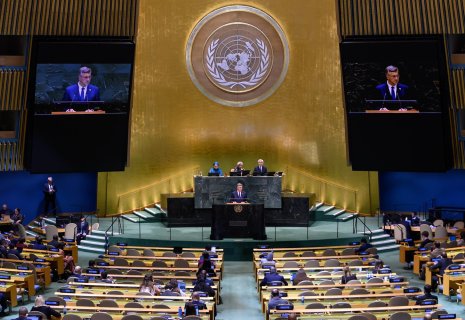
On the sidelines of the United Nations General Assembly, Croatian Prime Minister Andrej Plenković took part in a forum on cooperation between the Gulf countries and the European Union, organised by the Atlantic Council, as well as the Croatia-US Economic Forum.
As Croatia currently chairs MED 9, the group of nine Mediterranean EU member states, and works with the European Commissioner responsible for the Mediterranean, it has an important role in strengthening the partnership between the European Union and the Gulf countries, Prime Minister Plenković said following the forum, CE Report informs via the Croatian government website.
He announced that the second EU-Gulf Cooperation Council summit will take place in Riyadh, Saudi Arabia, in one month.
The key topics of the forum were security, energy and exports of petroleum products, oil and gas, Plenković said. He also highlighted the solidarity expressed with the leaders of the Gulf states over the war in the Middle East and its impact on the region.
Further strengthening the EU-Gulf partnership
Disruptions to shipping through the Strait of Hormuz and the Red Sea, key routes for the transportation of oil and gas, are having a major impact on global markets, economies and energy security, Plenković said.
He stressed the need to ensure freedom of navigation and implement the UN Convention on the Law of the Sea, which provides the basis for freedom of navigation and the security of global trade.
Plenković also highlighted the interest in further strengthening the partnership between the EU and the Gulf countries, particularly given Croatia's strong bilateral relations with several Gulf states.
Plenković comments on Vučić's criticism of Croatia
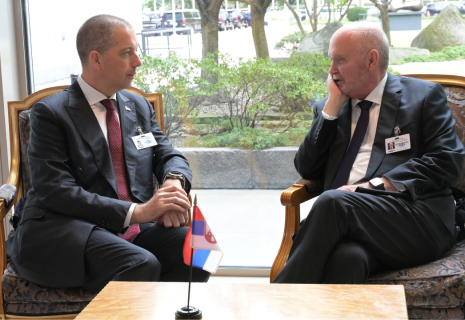
Asked to comment on a speech by Serbian President Aleksandar Vučić, Plenković said he had expected such remarks after he criticised Serbia's handling of the funeral of convicted war criminal Ratko Mladić and the state and military honours accorded to him.
Plenković said Vučić was continuing what he described as an unfounded campaign against Croatia, adding that such statements represented a further step away from the values shared within the EU and from Serbia's EU membership.
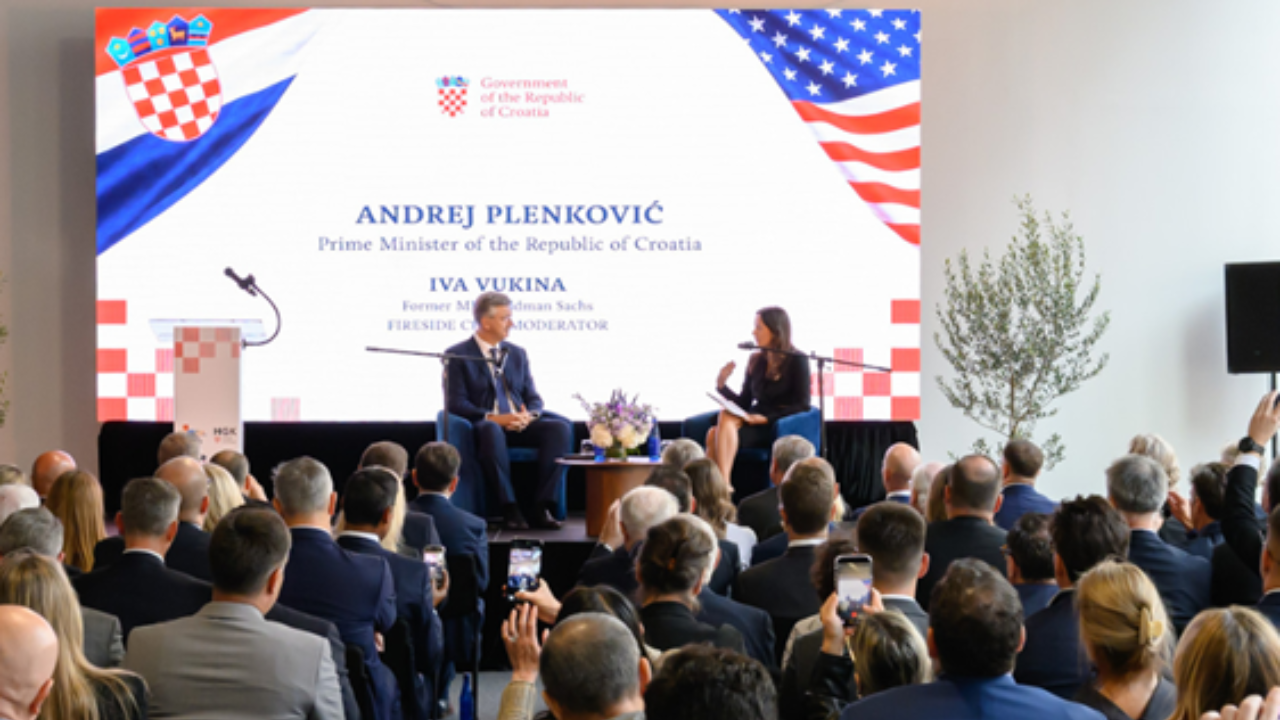
Croatia-US Economic Forum
Plenković also participated in the opening of the Croatia-US Economic Forum, titled “Strengthening Our Partnership – A Step Forward,” where he discussed the Croatian economy and the country's position after a decade marked by multiple challenges.
He recalled the collapse of Agrokor, the COVID-19 pandemic and two major earthquakes, as well as the economic consequences of Russia's war against Ukraine, including higher energy prices and inflationary pressures that were further intensified by the war in the Middle East.
Plenković said Croatia had faced numerous external shocks while simultaneously pursuing economic growth, higher employment and lower unemployment, as well as integration into the core structures of the European Union, including the Schengen Area and the euro area.
He said Croatia's economy is currently growing at 3.4%, while employment has reached a record level and the country's convergence with the EU average has strengthened, rising from 61% a decade ago to 78% today. He also said Croatia's credit rating had risen by six notches to investment grade.
Croatia seeks to improve investment climate
Plenković said Croatia had improved its overall investment climate and that weaknesses in the system could be addressed through better legislation, lower debt, reducing the tax burden on businesses and providing services that encourage investment.
He said Croatia's location at the heart of the European Union gave the country a strong long-term perspective, while further efforts would be aligned with European and global trends, including through a new industrial development plan.
Tourism remains an important growth driver
Speaking about tourism, Plenković said Croatia had recorded another exceptional year in terms of tourist arrivals, with results exceeding those of the previous year despite strong competition across the Mediterranean.
He said Croatia had developed a sustainable tourism model, while acknowledging that there are limits to further growth. He stressed the importance of investment in hotels, private accommodation, diversified tourism offerings, infrastructure and higher-quality services.
Plenković also called for stronger economic links with the United States.
US described as key economic partner
Plenković said Croatia offers political and macroeconomic stability and highlighted its location at the crossroads of Central Europe and the Adriatic.
He said Croatia had reinforced this position through major investments in railways, ports and energy infrastructure.
The United States is a key economic partner for Croatia, Plenković said, noting that bilateral trade reached $1.6 billion last year and had already approached $1 billion in the first six months of 2026.
He highlighted the energy sector in particular, pointing to Croatia's liquefied natural gas terminal on the island of Krk. The expanded terminal is expected to reach a capacity of 6.1 billion cubic metres per year, while more than two-thirds of the gas arriving at Krk comes from the United States, according to Plenković.
He also referred to plans for the construction of Croatia's largest data centre and to cooperation between the United States and Croatia on the gasification of the Federation of Bosnia and Herzegovina through the Southern Gas Interconnection project.
Plenković said the project was strategically important and aligned with US policy in the region, adding that Croatia also relies on cooperation with major Croatian exporters to the US market and companies importing from the United States.
Importance of the ICT sector
Plenković highlighted the growing added value of Croatia's ICT sector and praised the country's entrepreneurs, noting that Croatia's first unicorn companies had emerged from the technology sector.
He also praised Croatia's education system and the country's engineering talent, particularly graduates of technical universities.
Plenković invited US investors and businesses to consider Croatia as a place to establish and develop companies.
He said Croatia should be viewed from the US perspective as a politically stable country and a dynamic democracy offering access to the EU's market of 450 million consumers, alongside developed infrastructure, a favourable geographic position and a high level of security.
He cited a survey by the Croatian-German Chamber of Commerce showing that 83% of German companies currently operating in Croatia would choose to come to Croatia again.
Plenković acknowledged that Croatia still had shortcomings, saying the government was working to remove obstacles and combat corruption at all levels.
He also said Croatia had needed to recruit 150,000 foreign workers to meet labour-market needs, while EU and NATO membership, and the country's expected future OECD membership, provided important credentials for doing business.
Meetings with business leaders
Ahead of the Croatia-US Economic Forum in New York, Plenković met with Jure Šola, co-founder, chairman and CEO of Sanmina Corporation; Gordan Kolak, CEO of Končar; Alex Cranberg, chairman of Aspect Energy USA; and Ryan Rich, managing partner of Pantheon AI.
They discussed opportunities for further investment in Croatia and stronger links between Croatian and US companies.
Plenković also met Ian Bremmer, founder and president of Eurasia Group. Their discussions covered transatlantic relations amid geopolitical uncertainty, efforts to strengthen energy security, the role of artificial intelligence, the situation in Ukraine and the Middle East, and investment in defence technology.
“Croatia is committed to nurturing transatlantic relations based on mutual respect and shared responsibility,” Plenković said following the meeting.
Plenković meets Ronald Lauder
On the occasion of the 90th anniversary of the World Jewish Congress, Plenković met with its president, Ronald Lauder.
They discussed the consequences of the conflict in the Middle East and further efforts to strengthen the position of Croatia's Jewish community through cooperation with the Coordination of Jewish Communities in the Republic of Croatia.
Croatia, as a recent chair of the International Holocaust Remembrance Alliance (IHRA), firmly condemns any relativisation of the Holocaust, Plenković said, adding that the country was strengthening Holocaust remembrance and education as part of efforts to combat antisemitism.
Photo Croatian government website