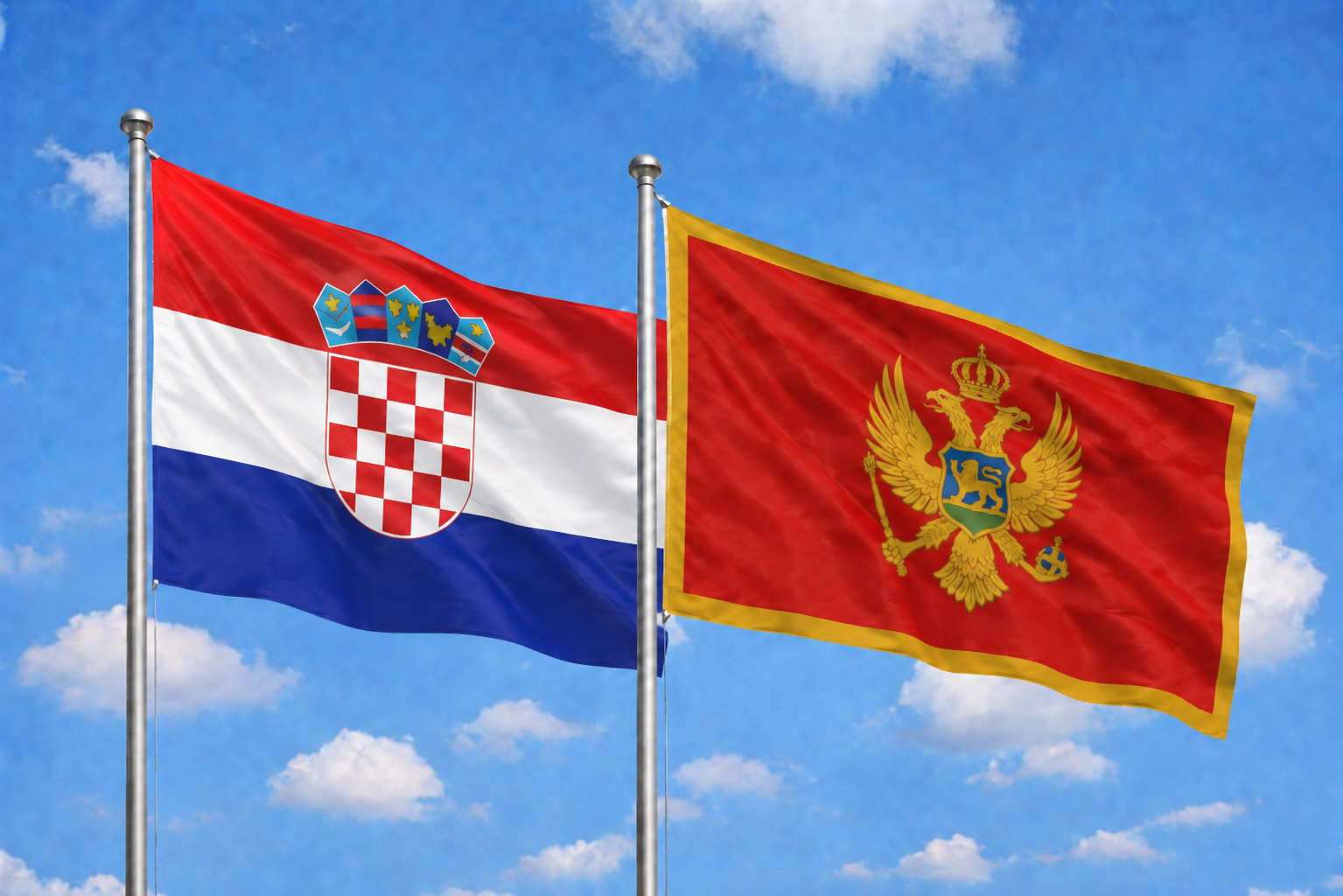
Montenegro accepts Badinter principles, respects Croatia's territorial integrity
Montenegro accepts the principles of the Badinter Commission and respects Croatia's territorial integrity, Montenegrin Minister of European Affairs Maida Gorčević said in Brussels.
"As far as Montenegro is concerned, we accept the principles of the Badinter Commission and respect Croatia's territorial integrity," Gorčević said following an accession conference at which Montenegro closed two negotiating chapters.
She said the two sides were engaged in intensive dialogue on the matter and that Montenegro would like to address both the land and maritime borders. This appears contradictory, as the Badinter Commission's conclusions established the land borders, CE Report quotes HINA.
"We will see how the negotiations proceed. From our perspective, we would like to cover both the maritime and land borders. Ultimately, if we fail to find a solution, we will have arbitration or some form of international court," Gorčević said.
"We will continue our dialogue with Croatia in order to find a solution, particularly on border issues. If we cannot find a solution acceptable to both Montenegro and Croatia, we can turn to an international court or international arbitration," the minister added.
Croatia has outlined eight requirements that Montenegro must fulfil if it wants to conclude its accession negotiations and join the European Union. These include the issue of maritime delimitation.
In a document submitted to EU member states, Zagreb said it particularly expects Montenegro to confirm that it respects the former internal republican land border between the Socialist Republic of Croatia and the Socialist Republic of Montenegro, in accordance with the principle of uti possidetis juris, as established by the Arbitration Commission of the Conference on Yugoslavia, commonly known as the Badinter Commission.
Under this principle, the borders between the former constituent republics became international borders when they gained independence and can only be changed through an agreement between the states concerned.
There were no maritime borders between the constituent republics within the former Yugoslavia.
Podgorica and the European Commission aim to conclude the negotiations by the end of the year, which requires the consent of all EU member states.
Photo AI