Ukraine urges EU to accelerate accession (PHOTO) - EXCLUSIVE
By Aytan Aliyeva
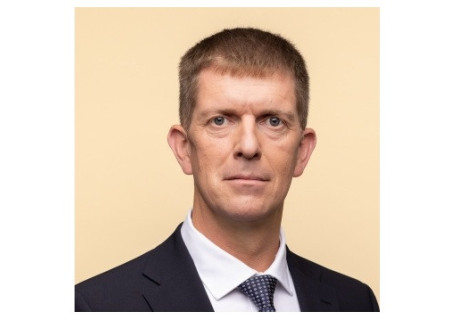
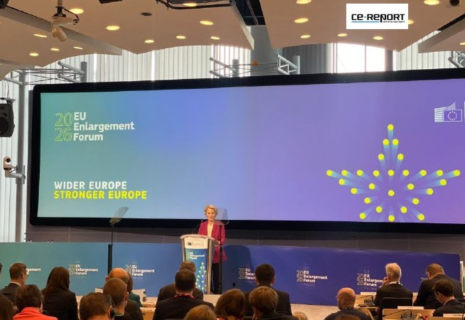
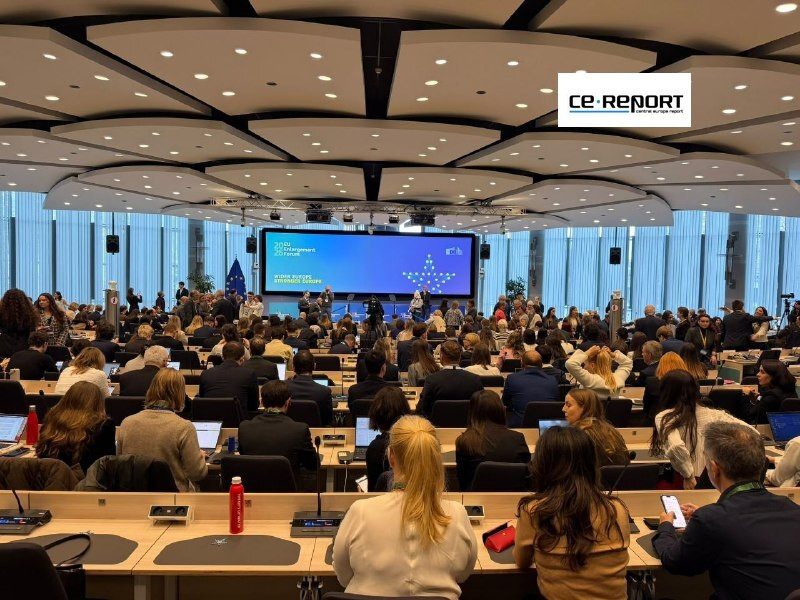
Ukraine is seeking a faster, more predictable path towards European Union membership and urgent commitments to cover a financial gap in 2027, Prime Minister Sergii Koretskyi said in the EU Enlargement Forum 2026, warning that Russia was counting on winter attacks against critical infrastructure and political uncertainty in Europe to weaken Kyiv's resistance. Koretskyi argued that Ukraine's accession and the continent's security were inseparable. “EU accession and security guarantees for Ukraine and Europe are a single project, and they must move forward at the same pace,” he said.
The prime minister outlined the challenge of defending Ukraine against Russian attacks while maintaining essential services, financing the state and implementing the reforms required for EU membership. He called for faster progress in accession negotiations, including the possibility of beginning to close negotiating chapters in 2027, and indicated that Kyiv was prepared to consider unconventional approaches to European integration without abandoning its objective of full membership.
Russia is targeting Ukraine's ability to survive the winter
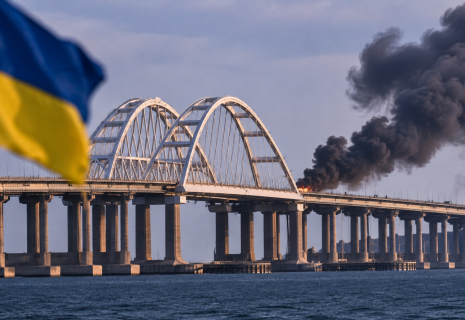
Koretskyi described Russia's continued attacks on Ukraine's energy system, railways, schools, hospitals and public utilities as an attempt to undermine the country's economic resilience and civilian life. Referring to electricity outages in Dnipro and the vulnerability of communities across the country, he said the attacks were designed to deprive Ukrainians of heating, electricity and water, particularly during the approaching winter. Although Ukraine's air defences can intercept some drones and cruise missiles, he acknowledged that ballistic missiles remain especially difficult to stop. The destruction of infrastructure therefore presents not only an immediate humanitarian challenge but also a threat to the functioning of the economy and the government's ability to sustain the war effort. According to Koretskyi, Moscow sees two principal vulnerabilities that it hopes to exploit: the coming winter and Ukraine's growing dependence on international financial assistance. He argued that Russia was attempting to intensify both pressures to force Ukraine into surrender, making predictable European support an essential component of the country's security.
211 billion euros requirement...
The prime minister presented a stark assessment of Ukraine's financial outlook for 2027,estimating its combined budgetary and defence-related expenditure requirements at 211 billion Euros. He said domestic revenues, including taxes and dividends, would cover only approximately one-third of that amount, leaving the remaining two-thirds dependent on international partners. Despite substantial assistance through EU programs and other international mechanisms, Koretskyi estimated that 70 billion Euros in financing needs for 2027 remained uncovered. He expressed gratitude for the exceptional support Ukraine had already received but insisted that the scale of the remaining shortfall required a clear political decision and a practical roadmap for securing the necessary funds. His appeal came in response to questions about the political risks facing Ukraine's accession, particularly elections scheduled in several EU member states. Referring to France, where Marine Le Pen's opposition to Ukrainian membership could complicate the political outlook. Koretskyi acknowledged the potential challenges posed by changes in European governments but argued that Ukraine could not afford to make its financial planning dependent on future election results. Instead, he urged European partners to establish a predictable framework for Ukraine's budgetary and defence financing before political developments made decisions more difficult. The 211 billion Euros requirement and 70 billion Euros gap were figures presented by the prime minister during the discussion, rather than verified funding estimates.
Ukraine wants to start closing EU negotiating chapters in 2027
Alongside his appeal for financial support, Koretskyi defended Ukraine's progress in implementing the reforms required for EU accession despite the continuing war. He stressed that the government was not starting from scratch and pointed to the work of Ukrainian anti-corruption institutions as evidence of institutional progress. “We are not beginning from scratch,” he said, while acknowledging that further legislation, administrative decisions and improvements were necessary. He pledged continued support for the obligations included in the fundamentals cluster, which covers areas such as the rule of law, judicial independence, fundamental rights and democratic institutions. Ukraine had made advances in its negotiating process during 2026, he said, and wanted the remaining negotiating clusters opened as soon as possible. According to the Ukrainian government's account of the forum, four of the six clusters had been opened, with Kyiv seeking to open the final two, accelerate the assessment of interim rule-of-law benchmarks and begin closing individual negotiating chapters in 2027. Koretskyi argued that the technical demands of accession should not be separated from the exceptional conditions under which Ukraine was fulfilling them. The government was continuing to adopt European legislation and strengthen institutions while defending the country against a full-scale invasion, he said, and expected its progress to be matched by timely decisions in Brussels. He also emphasized the importance of public confidence in the accession process. A credible timetable and visible progress, he suggested, would demonstrate to Ukrainians that their reforms and sacrifices were bringing the country closer to membership, rather than leaving its European future uncertain.
Open to unconventional EU accession arrangements, but not a substitute for membership
One of the most significant exchanges concerned whether Kyiv would consider an intermediate form of EU membership as part of a broader settlement to end the war. According to the proposals for associate membership and other forms of gradual integration, noting that President Volodymyr Zelenskyy had previously rejected the idea of Ukraine being confined to a halfway arrangement instead of obtaining full membership. Koretskyi did not endorse associate membership, but neither did he rule out unconventional arrangements that could accelerate accession. “It's not typical, not usual times, not typical situation in Ukraine,” he said, adding that Kyiv wanted to work with EU member states and the European Commission to find similarly unconventional solutions.“We would like to find jointly with European Union members, with the Commission, also not typical decisions,” he said, expressing willingness to consider all possible steps that could help Ukraine join the Union. The question by referring to earlier American peace proposals in which EU membership had been discussed as a possible element of a settlement involving territorial compromises in practice, though without formal legal recognition of territorial changes. He asked whether such a scenario would require a separate membership category, given that immediate full accession could not simply bypass the EU's established procedures.The prime minister avoided committing to a particular model, instead reiterating Kyiv's determination to work with European institutions on an effective accession path. His answer left room for flexibility over the sequencing and structure of integration, but did not constitute an agreement to accept permanent second-tier membership or exchange territory for an accelerated European perspective. The discussion reflected a wider debate among European leaders over how to reconcile the geopolitical urgency of enlargement with the legal, institutional and political conditions required for full EU membership.
“Peace, but not surrender”: Kyiv wants Europe at the negotiating table
On negotiations to end the war, Koretskyi insisted that Ukraine was more interested than anyone in achieving peace and would pursue any opportunity to secure a ceasefire and a durable settlement. However, he drew a clear distinction between stopping the fighting and accepting Russia's demands. “No one in the world wants to get this war over more than Ukrainians,” he said. “We want to get ceasefire. We want to get just and lasting peace, but not surrender.” The prime minister said President Zelenskyy was personally leading the diplomatic process and referred to recent contacts in Abu Dhabi, expressing hope that European partners would be included in future negotiations. He argued that European participation was both important and justified, given the implications of any settlement for the continent's security. At the same time, Koretskyi expressed scepticism about Moscow's intentions, saying Russia had not demonstrated a genuine readiness to end the conflict. “It seems to me that Russians didn't show any real tangible signal that they are ready to stop this war,” he said. His position combined support for diplomacy with a warning against mistaking negotiations for evidence of Russian willingness to compromise.
Koretskyi also presented Ukraine as a contributor to European security rather than a country seeking protection and assistance. He highlighted the military experience, defence technologies and institutional resilience Ukraine had developed during the war, arguing that these capabilities could strengthen the EU as a whole. Ukraine's armed forces have gained operational experience in drone warfare, modern battlefield technology and defence against sustained Russian attacks, while the country has developed practical expertise in protecting and restoring energy and transport infrastructure under bombardment. In the Ukrainian government's account of his remarks, Koretskyi described Ukraine as possessing Europe's most battle-hardened army and advanced defence capabilities.
“Ukraine and the EU can make each other significantly stronger,” he said.
. A child born in Kharkiv or Kherson and a child born in Lisbon, he argued, would grow up in one Europe, whose security would ultimately be shared. The question was whether that Europe would be safe or unsafe. For Koretskyi, this was why accession and security guarantees needed to advance together, rather than being treated as separate diplomatic processes.
The unresolved question: can Europe act before the political window narrows?
Koretskyi's appearance exposed the distance between the EU's strategic commitment to Ukraine and the practical decisions required to make accession and long-term support credible. Kyiv wants the remaining negotiating clusters opened, faster evaluation of its reform benchmarks and the possibility of closing its first negotiating chapters in 2027. It is also prepared to discuss more flexible forms of integration, provided they support rather than replace the objective of full membership. But the prime minister's most immediate concern was financial. With an estimated requirements for 2027, continued Russian attacks on critical infrastructure and elections approaching in several EU countries, he warned that delays in European decision-making could have consequences well before Ukraine completes its accession negotiations. Even if Kyiv fulfils all the required reforms, membership will depend on the agreement of all 27 EU member states and ratification of an accession treaty. Koretskyi acknowledged that political developments within the Union could complicate that process, but insisted that Ukraine must continue delivering reforms and strengthening its institutions while seeking concrete commitments from its partners.
His message in Brussels was therefore both an appeal and a warning: Ukraine is prepared to keep reforming, defending itself and negotiating for peace, but Europe must provide the financial predictability and political decisions to sustain that effort.
For Koretskyi, enlargement is no longer a question of when Ukraine might join the EU. It is a test of whether the Union can align its accession policy, security commitments and financial support with the urgency of a war that continues to shape the future of the entire continent.