Serbia set to end Jared Kushner's real estate project in Belgrade
Serbia is in the process of terminating its contract with a company owned by Jared Kushner, son-in-law of US President Donald Trump, concerning the “revitalisation” of the site of the former General Staff of the Yugoslav People's Army (JNA) in Belgrade.
The project envisaged the construction of a multi-million-euro residential and commercial complex, Croatian news agency Hina reported, citing Serbian media.
Serbia's Ministry of Construction, Transport and Infrastructure confirmed to Radio Television of Serbia (RTS) that the termination of the contract was “in the process of being formalised” and was expected to be completed early next week, CE Report quotes FENA.
Previously, the weekly magazine Vreme, citing sources within the Serbian government, reported that the “contract had been terminated, with both parties waiving any potential mutual claims”.
Such an outcome would mean that Serbia would not face international arbitration or potential penalty payments for failing to fulfil its obligations under the agreement.
The “General Staff case” has been under public scrutiny for almost two years, ever since the government at the time signed an agreement in May 2024 with Jared Kushner's company, Affinity, on the “revitalisation” of the former JNA General Staff complex in central Belgrade. Parts of the complex were destroyed during the months-long NATO bombing campaign in 1999.
Under the agreement, which has not yet been made public, Serbia leased the site to the company for 99 years, with plans to construct two high-rise buildings containing apartments and hotels on the ruins.
The redevelopment of the buildings, constructed between 1955 and 1965 and protected as cultural heritage due to their architectural value, faced opposition from professional institutions, organisations, the Serbian opposition and civil society.
The weekly magazine Radar later revealed that Serbia had committed to removing the complex's protected cultural heritage status, demolishing the existing damaged buildings at its own expense and granting the land to the investor free of charge for 99 years.
According to Vreme, under the contract Serbia had until May 2026 to fulfil its commitments, failing which the investor could seek compensation of up to €50 million.
In November 2024, the government revoked the complex's cultural heritage status, a decision followed by controversy over allegations that it had been made under pressure. The Prosecutor's Office for Organised Crime (TOK) subsequently established that the government had based its decision on a falsified proposal.
Goran Vasić, who served as director of the Republic Institute for the Protection of Cultural Monuments, admitted during questioning in May 2025 that he had falsified the document.
As a result, on 15 December of that year, TOK filed an indictment proposal against Culture Minister Nikola Selaković, Ministry Secretary Slavica Jelača and the heads of two relevant institutes, Goran Vasić and Aleksandar Ivanović.
On the same day, it was announced that Kushner had withdrawn from the project.
Earlier, during the campaign for Donald Trump's second presidential term, an investigation into the business activities of his son-in-law Jared Kushner's company had been launched in the United States.
The investigation was initiated by the US Congress Senate Finance Committee. According to Voice of America, Democratic Senator Ron Wyden, who led the investigation, said that officials from Serbia and Albania had approached Affinity with business proposals for investment.
According to Voice of America, Wyden requested details of all agreements between Affinity and the Serbian government concerning real estate development projects in Serbia.
In June 2024, then Serbian President Aleksandar Vučić announced that he had met Jared Kushner in Belgrade. In a post on Instagram, he described the meeting as an “inspiring exchange of ideas”, adding that he had shown his guest around Belgrade and presented some of the plans for the city's “even faster growth”.
Vučić and the Serbian Progressive Party (SNS) lost the parliamentary elections in Serbia on 25 October this year. Following the victory of the student movement's electoral list, numerous contracts concluded under the SNS government that may be linked to corruption are expected to come under increased scrutiny.
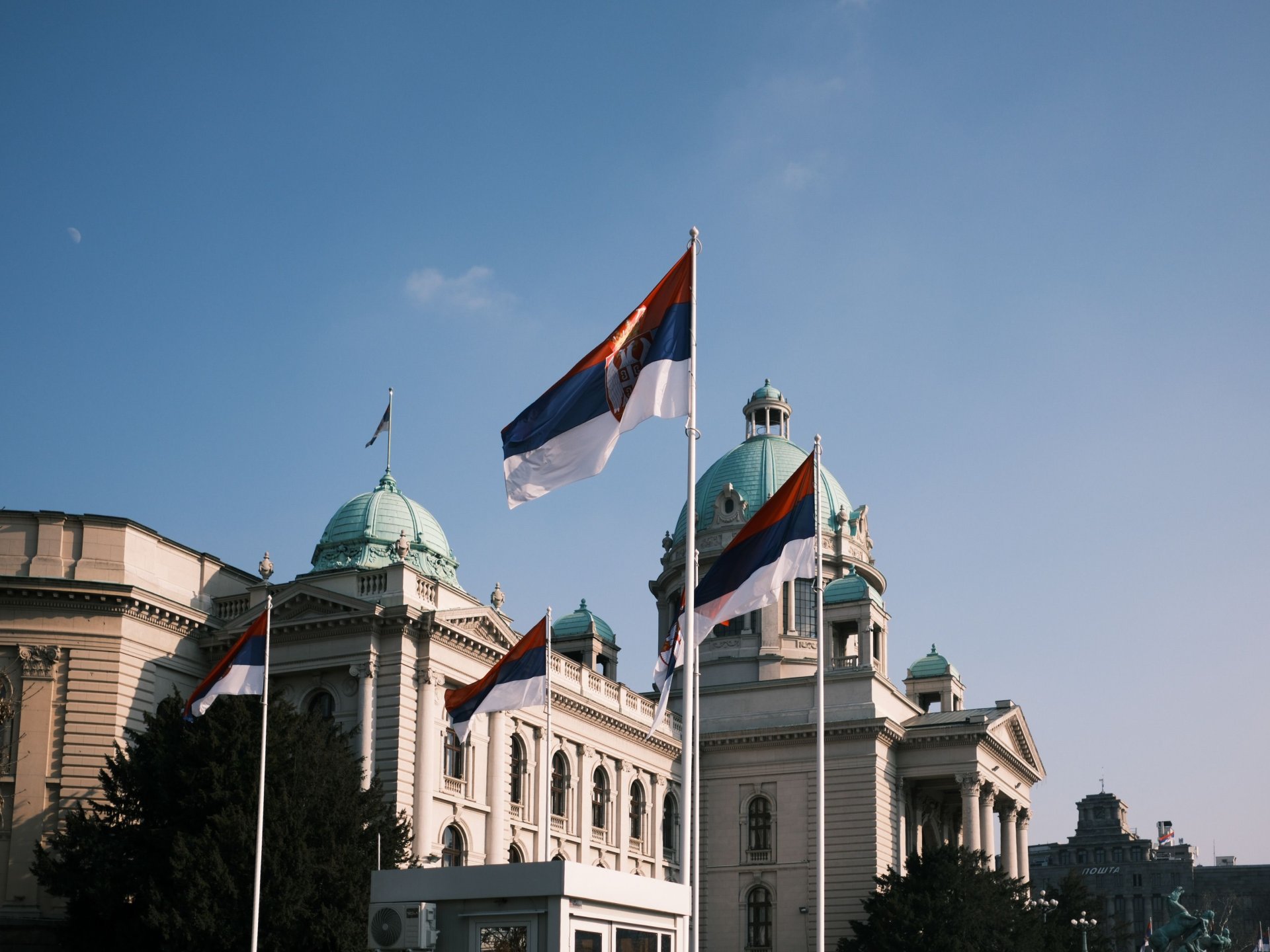
Photo: Pexels (Free Stock Photos)