Slovenia’s foreign policy shift on Israel sparks heated parliamentary debate
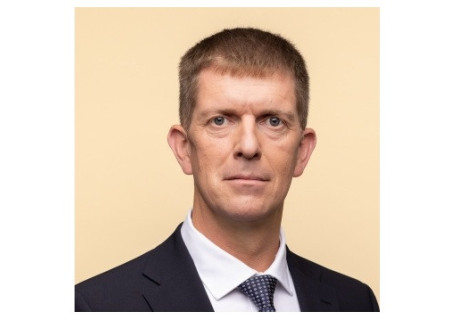
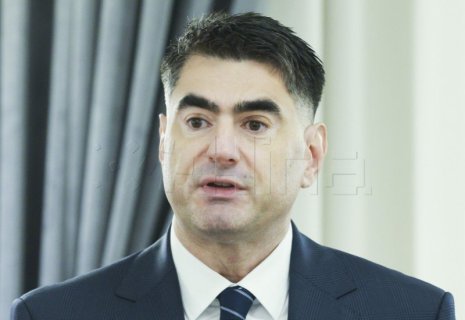
Foreign Minister of Slovenia Tone Kajzer survived an opposition attempt to oust him after a day-long debate in parliament highlighted profound partisan differences over Slovenia's ties with Israel and the foreign policy direction of the new right-wing government.
A total of 47 MPs voted against the no-confidence as the coalition and the Truth party deflected the left-wing opposition's motion and 30 supported it. At least 46 votes were needed for it to pass, CE Report quotes The Slovenia Times.
The motion, filed in September, was the first attempt to remove a minister in the government that took office earlier this year. It accused Kajzer of undermining Slovenia's commitment to international law by blocking a joint EU statement condemning the expansion of Israeli settlements in the occupied West Bank in August, and of failing to properly inform parliament about the decision.
But given the new government's sea-change in its policy on Israel, the debate was broader, focusing on whether the government had departed from Slovenia's traditionally strong support for international law and Palestinian rights, and whether major foreign policy decisions were being made without adequate parliamentary oversight.
Speaking for the motion's sponsors, Andreja Katič of the Social Democrats (SD) said parliament was not merely debating an individual minister or a diplomatic decision, but what kind of country Slovenia wanted to be.
"Foreign policy is not the private policy of the prime minister, it is not the policy of an individual political party, and it is not the personal policy of the foreign minister," she said, questioning whether Slovenia was prepared to undermine EU unity to accommodate the interests of other governments.
Kajzer rejected the accusations, saying Slovenia remained committed to international law, human rights, the protection of civilians and a lasting peace in the Middle East.
"Our principles have not changed; what has changed is the way in which we implement them," he told MPs.
He said the decision not to join the EU statement did not amount to a rejection of international law or support for Israeli violations. Instead, it was intended to avoid further escalating an already complex situation ahead of elections in Israel and Palestine and prevent the entrenchment of extremist positions on either side.
Kajzer also rejected claims that the decision had violated foreign policy legislation or Slovenia's international obligations. He argued that the government had made an operational diplomatic decision, not changed the country's foreign policy strategy or its commitments under international treaties.
Responding to criticism that parliament had not been informed, he said the duty to provide information did not mean the government needed prior parliamentary approval for every diplomatic initiative.
Bitter divide over thawing of ties
Coalition MPs defended Kajzer, arguing that the opposition had failed to provide sufficient evidence of legal or procedural violations.
Democratic Party (SDS) deputy Franc Breznik said foreign policy should adapt to the country's development ambitions rather than remain caught up in ideological disputes and political polemic, a reference to the left's staunch support for Palestine, which has its origins in the 20th-century non-aligned movement.
Similarly, Janez Žakelj of New Slovenia (NSi) said Kajzer had their full support in leading a foreign policy that put security and Slovenia's interests first. Ana Cajhen of the Democrats praised Kajzer for restoring calmness and predictability in foreign policy after the "activism" of the former government.
The opposition attacked Kajzer and by extension the government for casting aside international law in favour of pragmatic policy that they framed as a betrayal of values.
Left party co-leader Asta Vrečko said "Slovenia has sided with genocide", arguing the country had never before pursued such a cowardly foreign policy subservient to Israel.
Robert Golob, the leader of the Freedom Movement and former prime minister, wondered about the economic impact of "making friends with war criminals", alleging that Algeria had started scaling down natural gas supplies to Slovenia, an allegation that Kajzer denied.
The debate capped an intense several months during which the government took several steps to forge closer ties with Israel, which it said were neglected by the previous government due to its ideological anti-Israeli fervour.
Since the current government took office in June, Slovenia has reversed sanctions against Israel put in place by the previous government, and in return Israel has opened its first embassy in the country after then-Prime Minister Benjamin Netanyahu praised Prime Minister Janez Janša and his cabinet for rescuing the relations from an all-time low.
Photo AI