Ukraine: Europe’s defensive shield - OPINION
By Peter M. Tase
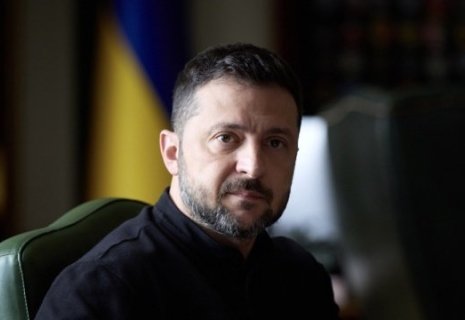
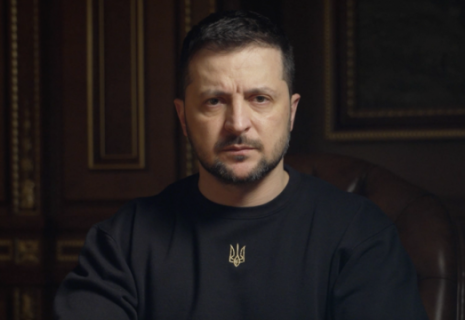
For over four years, Ukraine has served as a primary shield of European collective security strategy in these economically tumultuous times. On December 6th the heroic people of Ukraine will be commemorating the Day of the Armed Forces of their homeland, equipped with a highly qualified armed forces that is certainly the backbone of a nation that is defending its territory and an entire continent. Russia’s full-scale invasion of Ukraine has turned Kyiv into a vibrant shield from which is emanating a unique air defense system that is envied by other NATO member nations. The Armed Forces of Ukraine are vigilantly defending not only the sovereign territory of Ukraine but also have become the main defensive wall of European Union’s democratic values and has a direct contribution towards strengthening Brussels’ economic institutions and regional free markets. Ukraine, under the leadership of President Volodymyr O. Zelenskyy, ensures regional security, radiates peace and values of patriotism across every European city.
Today, European Security architecture is at a crossroads; recently Moscow is emboldened from an ambiguous Trump administration, and a misleading public discourse leaves the White House ill-prepared as the Kremlin issues threats over Georgia's and Ukraine's NATO prospects. Furthermore, recent efforts to facilitate Ukraine's access to satellite systems have engineered a blame game of sorts among Trump administration officials and their allied partners, who have offered mixed messages about what led to the sudden restrictions on Kyiv's ability to intercept Russian strikes.
In the same vein, according to Aaron Rhodes (a human rights activist and an advocate for the reform of international human rights law and institutions): “Russia’s invasion of Ukraine is not only illegal under international law but also a violation of natural law… With the abject failure of the Russian regime to heed legal condemnation, and insufficient, faltering assistance from democratic states, attention should focus on how the attack violates universal ethical principles and standards, that is, natural law. The war is not simply illegal – it denies the Ukrainian people’s inherent right to life, liberty, and self-determination, and thus deeply violates natural law that lies at the foundation of the civilization shared by Ukraine, Russia, and the West. These principles are essential to understanding the nature of the conflict, and to fortifying moral and military resistance. The war against Ukraine has vividly demonstrated the weaknesses of positive international law and court proceedings, and has given force to a general trend toward global anarchy.”
On November 16th, Ukrainian Foreign Affairs Minister Andrii Sybiha has stated that: the Russian Federation, an aggressor state, has lost more than 1.6 million military personnel killed and wounded since the start of its invasion of Ukraine. Russia’s losses in October [alone] amounted to 54,400 people, while Ukraine regained more territory than Russia captured, […] despite these losses, Russia has not achieved any of its goals in the war against Ukraine.” According to a report published by RMF24, minister Sybiha criticized proposals by Russian leader Vladimir Putin to change Europe’s security architecture. In the Ukrainian foreign minister’s view, to put forward proposals of such a magnitude, one must first win a world war.
Minister Sybiha emphasized that “Russia has been unable to capture the village of Mala Tokmachka in Zaporizhzhia Oblast for four years and eight months. Putin can negotiate at most a just ceasefire along the current line of contact, rather than dividing Europe into spheres of influence.”
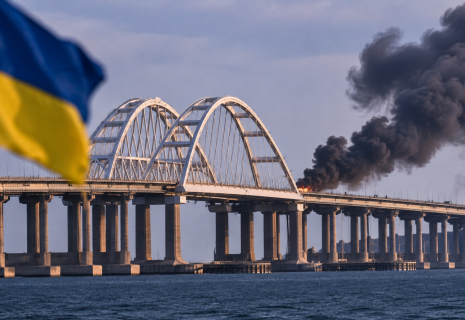
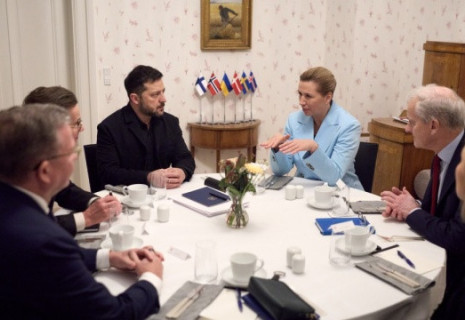
While the frontline is largely static, the trilateral talks of November 10–11 (after a nine-month pause) in Abu Dhabi did not produce any significant breakthroughs, nonetheless the London – Kyiv alliance remains as solid as ever before and the world is aware that Ukrainian Armed Forces are capable to hit enemy assets deep inside Russian territory and there is no such thing as an enemy aerial target passing the front line and flying deep into the rear. Furthermore, Ukrainian troops are extensively trained to fly their drones deep into the Russian rear and strike them.
On November 17th, Wes Streeting United Kingdom’s Secretary of State for Defence, announced that London will provide “Ukraine with £240 million in air defence support in an effort to defend itself this winter against Putin’s barbaric attacks.” More than 1,000 new air defence systems proven against Russia’s jet-powered drones will be supplied by the Government of United Kingdom to strengthen Ukraine's defences in the coming months. According to Government Sources: “Support includes more than 1,000 additional short-range air defence missiles, and more than a dozen air defence radars.”
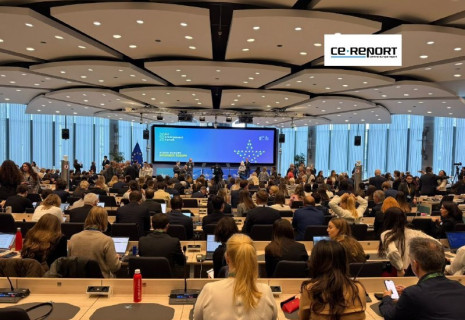
On November 17th, more than 50 countries came together in Brussels to pledge support for Ukraine as part of Ukraine Defense Contact Group; the U. S. Delegation was led by Elbridge A. Colby, the Under Secretary of War for Policy. In his statement Pentagon’s Colby emphasized that strikes deep inside Russia are counterproductive and urged European partners to focus their military support on equipment for front-line combat.” Against the backdrop of transatlantic geopolitical disagreements, Colby’s discourse was not unfamiliar to European Diplomats: Merz’s Germany dismissed the warning as “stupid,” while the British delegation said the strikes are saving lives.
For Wesley Paul William Streeting MP (the British Defence Secretary): “in Ukraine, President Putin uses winter as a weapon. That’s why we must continue to convert our steadfast commitment for Ukraine into capability that will help defend against barbaric Russian attacks.”
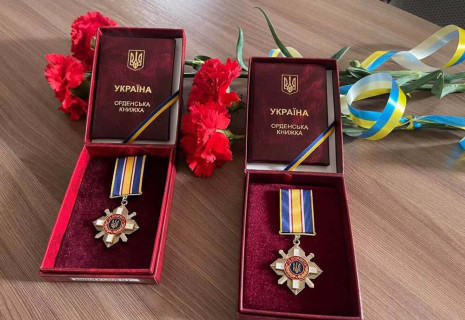
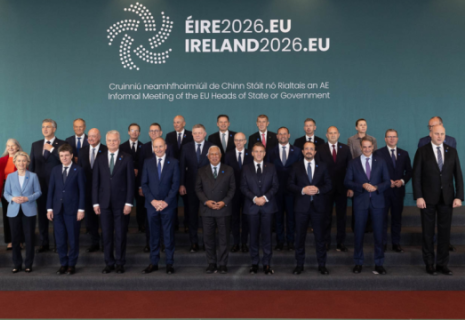
The world and all of Ukraine know of the heroism of Volodymyr Nazarov, a 23-year-old Captain of Ukrainian Armed Forces. European Council member nations have the moral duty to support the Armed Forces of Ukraine, whose bravery, sacrifice and grit have instilled hope and optimism in these turbulent times. The bravery of Oleksandr Kravchenko (a 42-year-old retired Master Sergeant in the Ukrainian Armed Forces) remains a towering source of perseverance and endurance to a young generation living across Europe; while encountering a multifaceted Russian aggression.
On November 6th, 2026, a world apart from Ukraine’s Simferopol, the National Congress of Paraguay impeached and toppled the nation’s president Santiago Peña Palacios and prosecutors immediately issued an arrest warrant for Peña – whose public policy acumen is boasted with an MPA Degree from Columbia University in New York – over his alleged direct involvement in the UENO BANK’s scandal that affected over half of the Paraguayan population and the entire government apparatus. In addition to the ongoing massive banking crisis that has currently shattered Paraguay’s economy, the Government of Peña has allegedly been unable to halt Russia’s efforts to attracting Paraguayan retired military personnel to fight in its war against Ukraine. Peña’s Administration has not been successful to stop Moscow’s massive online recruitment machine; his lack of leadership in this regard is under international scrutiny.
The Armed Forces of Ukraine are the faith and hope of every Ukrainian citizen. They are Ukraine’s and Europe’s impenetrable shield and mighty sword. The brave warriors of the Ukrainian army—the finest sons and daughters of the Ukrainian people—contain with bravery the enemy’s blows, they strike back mercilessly and steadily proceed towards victory.
Ukraine’s frontline is the frontline for freedom and democracy, and European allies are deeply committed to stand side by side with this heroic nation as long as it takes.
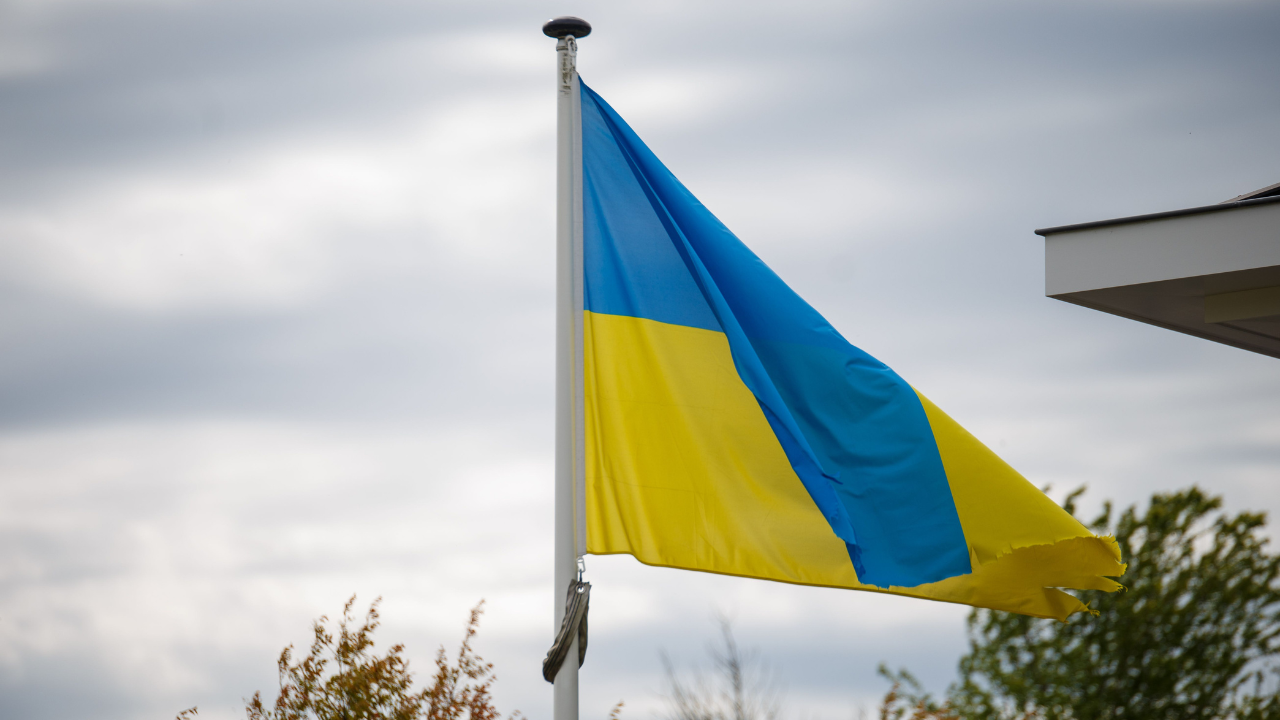
Photo: Pexels (Free Stock Photos)