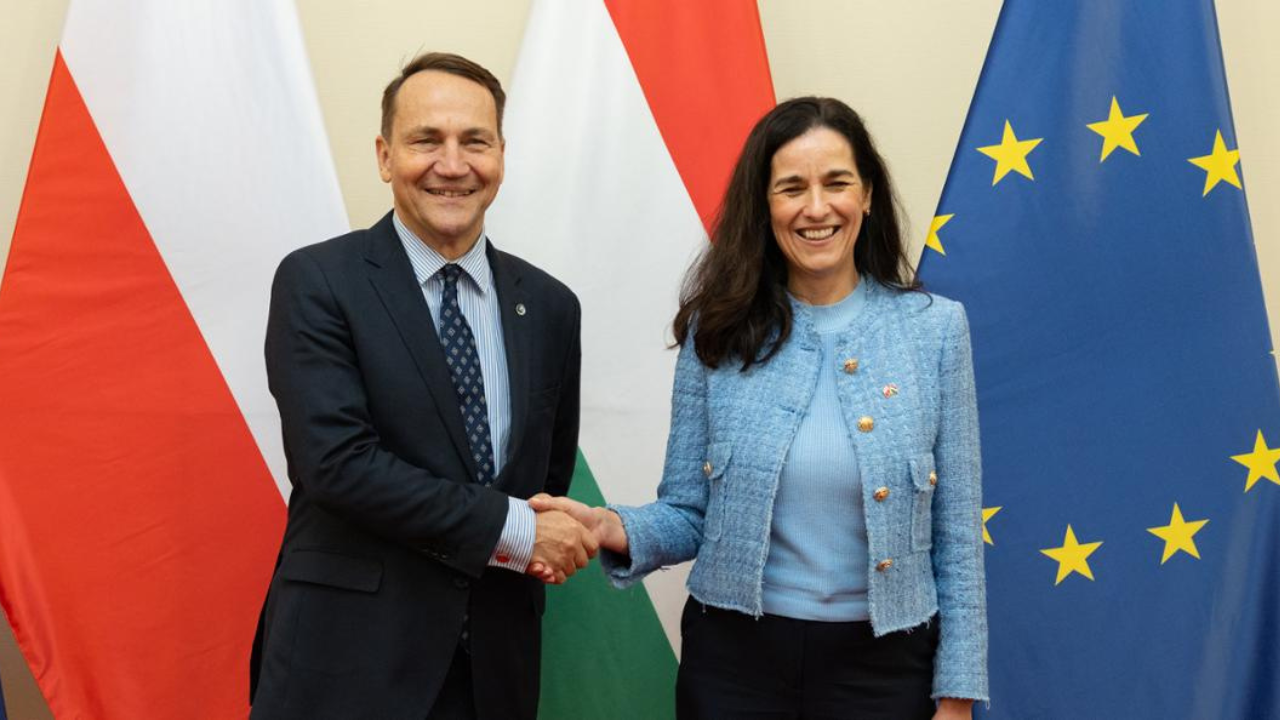
Poland, Hungary aim to renew cooperation within Visegrad Group
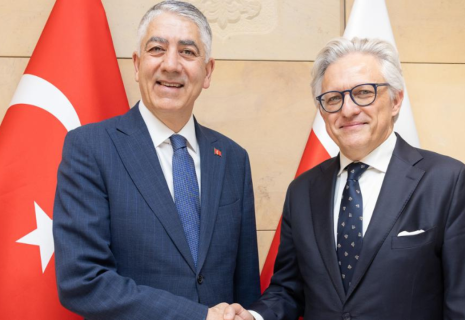
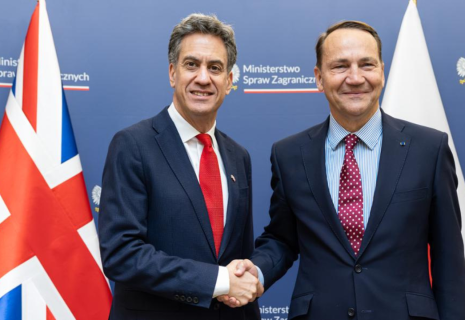
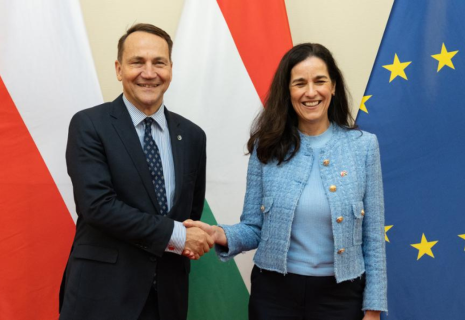
Consultations with Hungary’s Deputy Prime Minister and Minister of Foreign Affairs Anita Orbán, a meeting with representatives of Polish businesses, and participation in the Budapest Security Forum were the main highlights of the visit to Budapest by Poland’s Deputy Prime Minister and Minister of Foreign Affairs, Radosław Sikorski.
Poland’s top diplomat visited Budapest on November 19 at the invitation of Hungary’s foreign minister, CE Report informs via the Ministry of Foreign Affairs of Poland's official website.
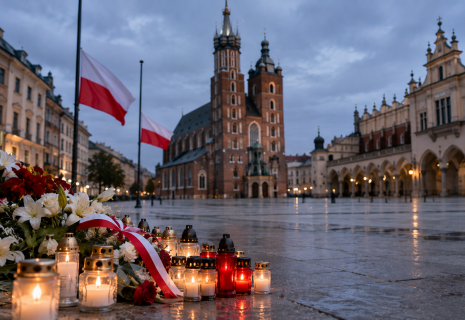
Together with Deputy Prime Minister Orbán, Sikorski laid wreaths at the monument to Józef Bem and at the Monument to Polish Solidarity and Assistance to Hungary during the 1956 Revolution,
“Warsaw and Budapest have stood shoulder to shoulder on numerous occasions. I am convinced that we are united not only by our shared past but also by a future in a free and secure Europe,” said Deputy Prime Minister and Foreign Minister Radosław Sikorski.
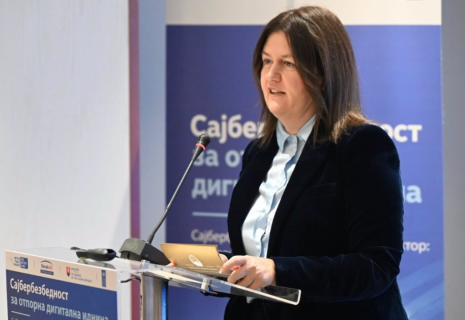
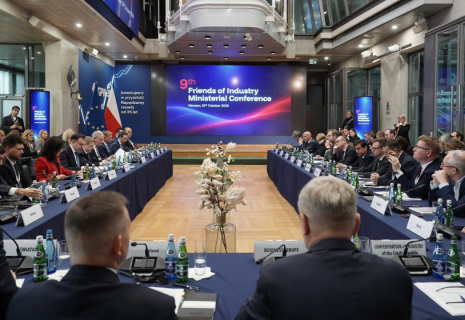
In the Hungarian capital, Minister Sikorski delivered a lecture at the Budapest Security Forum on “European Security and Defence Autonomy”. He also participated in a seminar entitled “The Polish Defence Industry and Dual-Use Technology Sector: Their Offerings”.
The Polish foreign minister also attended a meeting with representatives of Hungarian think tanks at the Polish Institute in Budapest.
A New Stage in Bilateral Cooperation and Dialogue
The Polish foreign minister’s visit to Budapest is part of efforts to intensify high-level political dialogue between Poland and Hungary following the formation of Prime Minister Péter Magyar’s government in May this year.
“We are meeting in Budapest after 12 years. This is a symbolic expression of the renewal of the 1,000-year-old Polish-Hungarian friendship,” said Hungary’s Deputy Prime Minister and Foreign Minister Anita Orbán.
“Today’s discussions confirmed our shared commitment to strengthening bilateral relations, revitalising cooperation within the Visegrad Group (V4), and working together towards a safer and more competitive Central Europe. We also discussed opportunities to deepen cooperation in countering hybrid threats and strengthening energy security, including potential access to global gas markets through Poland’s LNG terminals,” the Hungarian minister wrote on X.
The Polish foreign minister’s visit offers an opportunity to intensify bilateral economic and regional cooperation, particularly within the Visegrad Group (V4) and the Three Seas Initiative, as well as cooperation at the EU level, including in the defence and energy industries.
During consultations with her Hungarian counterpart, Minister Sikorski stressed that Poland was ready to support the modernisation of the Hungarian armed forces.
“We discussed opportunities to develop bilateral cooperation, including strengthening economic ties between Poland and Hungary. I brought along a delegation of prominent Polish business representatives. The Polish defence industry has much to offer in terms of modernising the armed forces. Hungary is an important trading partner for Poland. Our bilateral trade reached €15 billion last year,” said Minister Radosław Sikorski.
The discussions also addressed plans to intensify cooperation between the two foreign ministries and strengthen dialogue between think tanks and cultural institutions. The Polish-Hungarian Friendship Day, celebrated on March 23, could serve as an excellent platform for these efforts.
Regarding regional cooperation, the ministers discussed how to translate the revitalisation of political dialogue within the V4 into tangible benefits for the people of Central Europe. One way to achieve this could be through intensified efforts to develop regional transport infrastructure, particularly rail connections.
The talks also covered key issues on the European political agenda, including negotiations on the EU’s Multiannual Financial Framework for 2028–2034, EU enlargement policy and the bloc’s energy policy. Regional cooperation in the energy sector has enormous potential, and Poland could play an important role in this emerging energy landscape.
Security and the Fight Against Disinformation
Minister Sikorski emphasised that Poland, which is joining peace negotiations aimed at ending Russia’s invasion of Ukraine as part of the E5 format, would present a previously coordinated position of Central European countries, taking into account the security concerns of NATO’s Eastern Flank.
Regarding the importance of transatlantic relations for ensuring the security of Poland and Hungary, both sides agreed that a strong US military presence on NATO’s Eastern Flank is crucial to maintaining an adequate level of deterrence against Russia.
The Polish foreign minister stressed that the threat posed by Russia must remain the main point of reference in efforts to strengthen European security.
He also welcomed Hungary’s renewed determination to cooperate in this area and called for closer bilateral cooperation in countering hybrid threats, including disinformation, to become an important part of relations between the two countries.
Photo: Ministry of Foreign Affairs of Poland