Poland pushes for new European investment model to boost competitiveness
How can Poland and Europe strengthen their competitiveness in a changing economic and geopolitical environment?
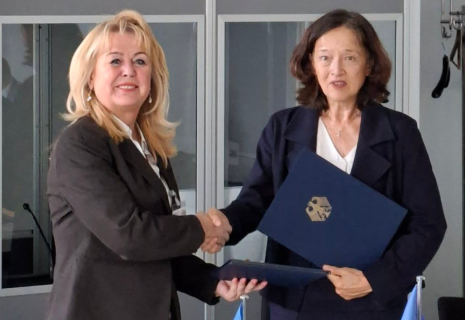
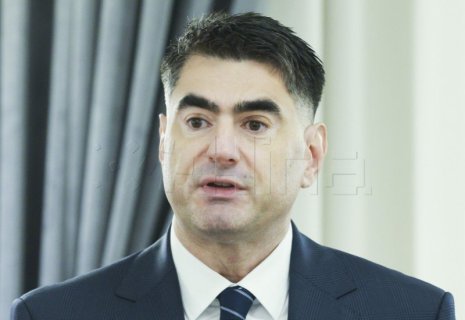
The role of strategic technologies, effective investment financing, and cooperation between the state and businesses were discussed by Deputy Ministers of Development and Technology Michał Jaros and Michał Baranowski at the European Forum for New Ideas (EFNI), CE Report informs via the Ministry of Economic Development and Tecnology of the Republic of Poland's official website.
A New Financing Model for Strategic Investments
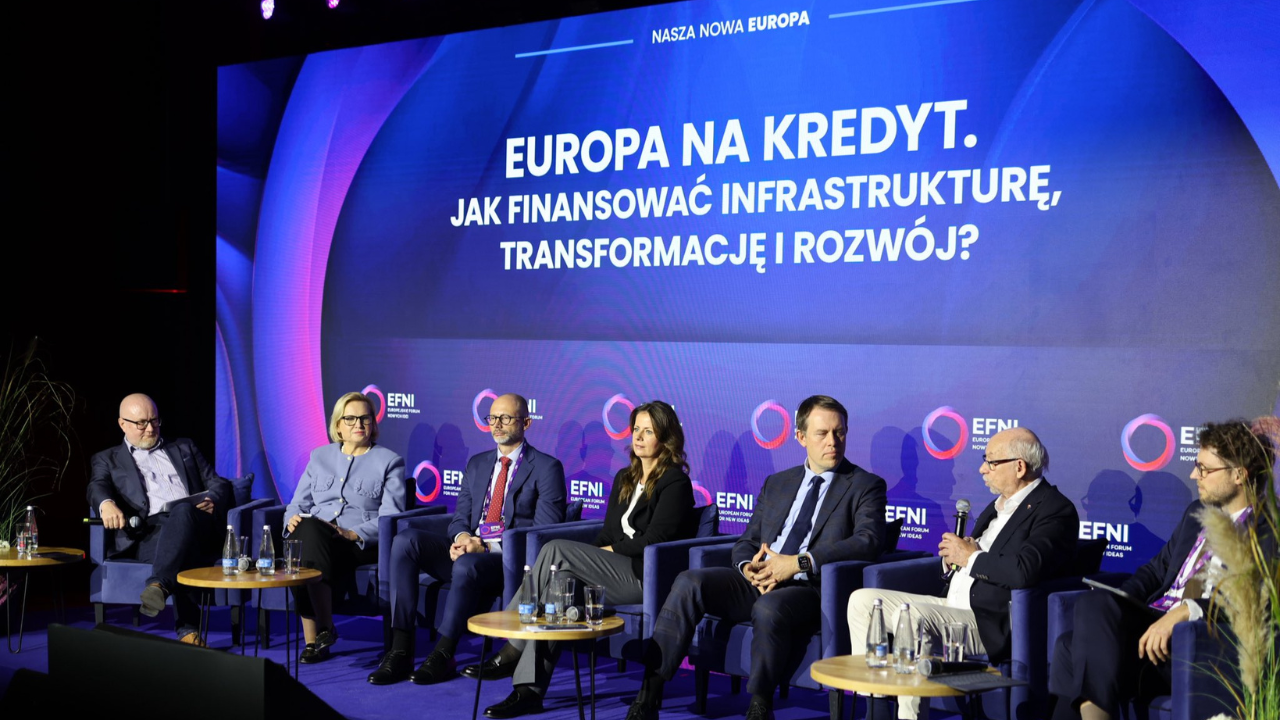
The energy transition, digitalisation, the development of new technologies, and security require Europe to invest on an unprecedented scale. At the same time, limited fiscal space is making the effective mobilisation of private capital and the efficient use of public funds increasingly important. This was the focus of remarks by Deputy Minister of Development and Technology Michał Baranowski during a panel entitled “Europe on Credit: How to Finance Infrastructure, the Transition and Development”.
“Europe will not be able to finance all its needs using public funds alone. We need a model in which public funding mobilises a significantly larger flow of private capital,” Deputy Minister Michał Baranowski said.
The deputy minister also highlighted the need for a more coherent approach to European investment policy. He stressed that simply creating additional programmes and support instruments would not be enough. Businesses and investors must be provided with a consistent pathway for developing projects, from research and development through technology demonstration to industrial implementation and production scaling.
The European Competitiveness Fund (ECF) is intended to fulfil this role by integrating existing support instruments and covering the entire project lifecycle.
“Poland should actively participate in large-scale European projects. We should not view future instruments solely as a source of financing for individual national projects. Instead, we should build consortia, participate in European value chains, and leverage our industrial, technological and infrastructure potential,” Deputy Minister Baranowski stressed.
Building Competitive Advantages Through Technology and Business Partnerships
Strengthening competitiveness requires not only capital and investment but also the development of strategic technologies and a predictable regulatory environment. Deputy Minister Michał Jaros emphasised these aspects during discussions on a new growth architecture.
“Poland should consistently build a strong position in semiconductors and modern electronics. These technologies will increasingly determine countries’ economic competitiveness and security. Without them, there will be no modern automotive industry, artificial intelligence, automation, advanced energy technologies or defence technologies,” Michał Jaros said during a panel entitled “A New Growth Architecture: Where Can Competitive Advantages Be Found in a Changing World?”
During a discussion on cooperation between public administration and businesses, he also highlighted the importance of transparent and stable rules for conducting business.
“Predictability, proportionality and investment partnerships are three key elements of dialogue between public administration and businesses. Legislation affecting entrepreneurs should be developed through dialogue with the business community, based on clear rules and transparency,” Deputy Minister Jaros stressed.
Poland’s experience shows that effective deregulation results from cooperation with entrepreneurs. By actively participating in the process of developing solutions, businesses are often best placed to identify administrative barriers and highlight areas where simplification is needed.
Photo: Ministry of Economic Development and Tecnology of the Republic of Poland