Poland's Ombudsman warns of Constitutional Tribunal crisis impact on citizens - EXCLUSIVE
The ongoing crisis surrounding Poland's Constitutional Tribunal is undermining the protection of citizens' rights and access to justice, with numerous socially significant cases remaining unresolved for years.
This was said by Anna Kabulska from Poland's Office of the Commissioner for Human Rights' Media Relations and Public Communications Team, in an exclusive interview with CE Report.
According to Kabulska, the Constitutional Tribunal plays a crucial role in safeguarding citizens' rights and freedoms, directly affecting everyday matters such as social benefits, taxation and consumer rights. However, the institution has been facing a prolonged crisis, which has also been confirmed by judgments of domestic and European courts.
She stressed that ordinary citizens are suffering the most from the situation, as the Tribunal has failed in recent years to fully fulfil its fundamental role of protecting individuals against abuses of public power.
In these circumstances, ordinary courts have assumed greater responsibility, including through the exercise of diffuse constitutional review. Nevertheless, Kabulska emphasised that ordinary courts cannot systematically replace the Constitutional Tribunal.
The dispute over the administration of oaths to newly elected Constitutional Tribunal judges has further deepened the institutional conflict. In particular, controversy surrounds the refusal to administer the oath to five of the eight newly elected judges, as well as disagreements over the composition of judicial panels.
Kabulska stressed that administering the oath to Constitutional Tribunal judges is a statutory obligation of the President, a position also supported by the opinion of the Venice Commission.
She added that any measures aimed at resolving the crisis must remain within constitutional limits and comply with judgments of the European Court of Human Rights (ECHR) and the Court of Justice of the European Union (CJEU).
The Commissioner for Human Rights is ready to participate in discussions aimed at restoring legal order and certainty surrounding the Constitutional Tribunal, provided that these efforts respect the constitutional and legal framework.
According to Kabulska, the ultimate objective should be to rebuild public confidence in the Tribunal and restore its ability to effectively protect individual rights and uphold the principles of a democratic state governed by the rule of law.
Commissioner continues to monitor developments and intervene in individual cases
Addressing the measures available to the Commissioner for Human Rights, Kabulska said the institution has consistently maintained that judges duly elected by the Sejm, but whose oaths have not been administered by the President in accordance with the applicable legal provisions, should be allowed to take up their duties.
She noted that this position is further reinforced by the interim measure granted by the European Court of Human Rights on May 5, 2026, in the case of Dziurda and Others v. Poland.
The Commissioner has also requested permission to submit written observations in the proceedings and continues to closely monitor developments surrounding the Constitutional Tribunal.
Kabulska said the Commissioner remains prepared to intervene whenever necessary within the limits of the institution's statutory powers, as well as to monitor Poland's implementation of ECHR judgments concerning the Tribunal.
Despite the broader constitutional crisis, the Office of the Commissioner for Human Rights continues to handle thousands of individual cases, making full use of its legal powers, including participation in judicial proceedings.
The institution is also closely following developments in administrative court case law concerning the constitutional question of whether acts and omissions of the President of the Republic can be subject to judicial review.
Kabulska added that the Commissioner has been actively involved in strategic litigation in this area, seeking to address broader legal questions arising from the institutional dispute.
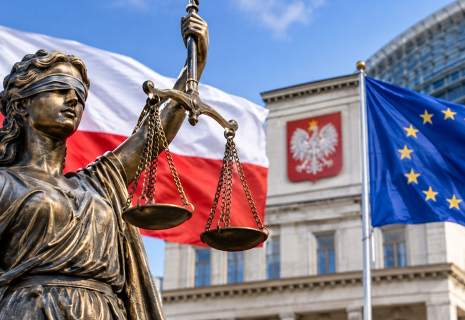
Photo: Pexels (Free Stock Photos)
This interview was prepared by Laura Hoffman