Poland hosts Warsaw Human Rights Seminar
Artificial intelligence in the justice system and the protection of human rights were the main topics of the 17th Warsaw Human Rights Seminar.
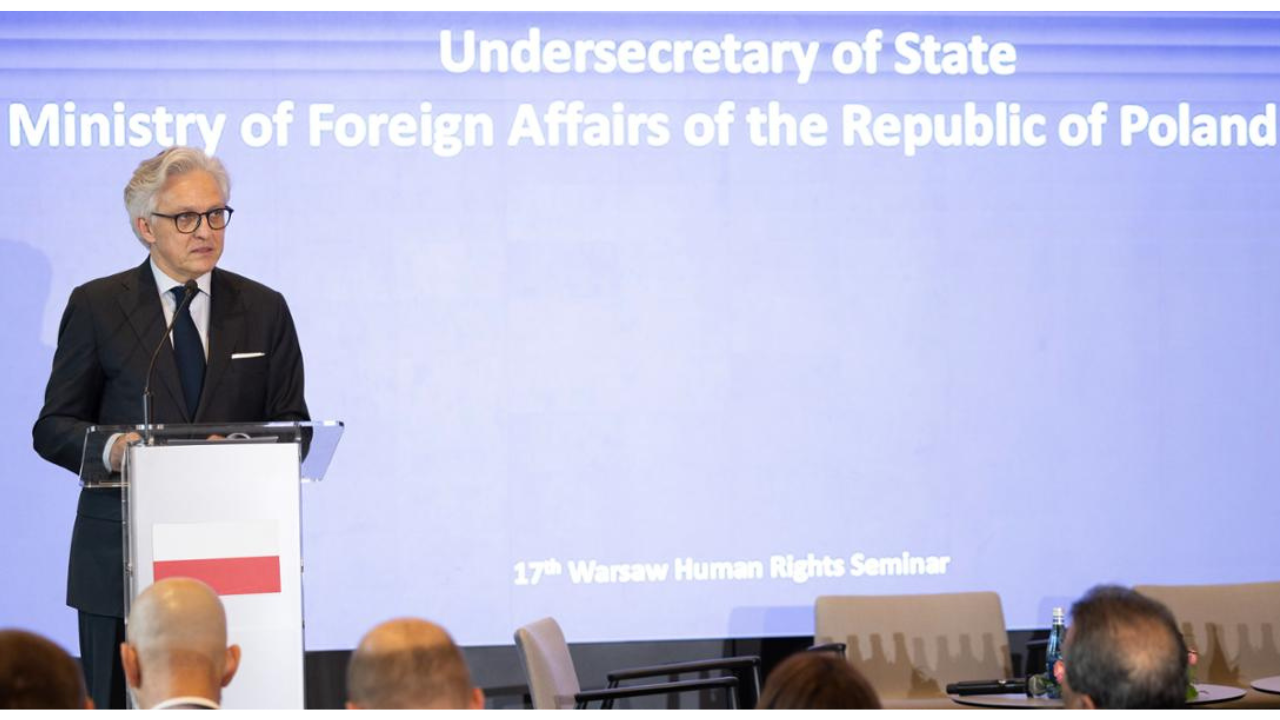
The event, attended by Artur Harazim, Undersecretary of State at Poland’s Ministry of Foreign Affairs, took place in Warsaw on October 12, 2026, CE Report informs via the Ministry of Foreign Affairs of Poland's official website.
The development of artificial intelligence is increasing the efficiency of the justice system and making legal information more accessible. At the same time, however, it presents significant challenges related to algorithmic transparency, data protection, non-discrimination, accountability and the protection of procedural rights.
During the seminar, experts explored how the use of new technologies could be reconciled with the standards of the European Convention on Human Rights and the principles of the rule of law.
The seminar was opened by Polish Deputy Foreign Minister Artur Harazim, who emphasized:
“The fundamental question is not whether artificial intelligence will become part of our justice system. In many respects, this process has already begun. Our goal should be to ensure that innovation serves the cause of justice.”
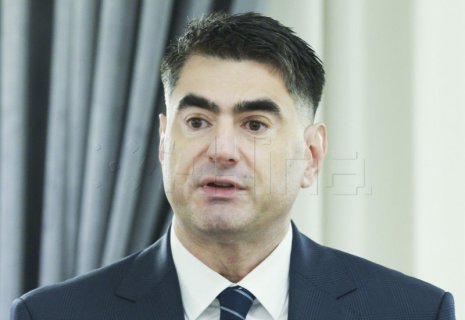
The keynote lecture, entitled “Artificial Intelligence and the Future of Human Rights Protection,” was delivered by Robert Spano, former President of the European Court of Human Rights. Jacek Chlebny, President of Poland’s Supreme Administrative Court, spoke about the use of new technologies in administrative courts.
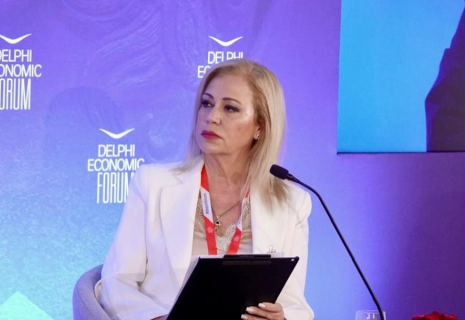
Later in the seminar, Sylwia Gregorczyk-Abram, Poland’s Commissioner for Human Rights, and Úna Ní Raifeartaigh, a judge at the European Court of Human Rights, discussed the future of human rights in the digital age. Other topics included the Court’s role in protecting human rights in the age of artificial intelligence and the impact of technology on legal practice and courtroom representation.
The seminar brought together judges and representatives of the European Court of Human Rights, the Council of Europe and the Court of Justice of the European Union, as well as representatives of national human rights institutions, the judiciary, public administration, the legal profession and academia.
The event concluded with a session on the future of human rights and justice in the age of artificial intelligence, featuring Michael O’Flaherty, Council of Europe Commissioner for Human Rights.
Photo: Ministry of Foreign Affairs of Poland