Poland showcases growing space capabilities at IAC 2026
The International Astronautical Congress (IAC 2026), one of the most important gatherings in the global space sector, has opened in Türkiye.
The Polish delegation is presenting its approach to space technology development, based on security, resilience and economic growth, CE Report informs via the Ministry of Economic Development and Tecnology of the Republic of Poland's official website.
Key moments of the programme included remarks by Deputy Minister Michał Jaros and the opening of the Polish pavilion.
This year’s congress is being held under the theme “The World Needs More Space.” The slogan reflects the growing importance of the space sector in today’s world. Space is increasingly meeting the needs of life on Earth by strengthening security, helping protect citizens and enabling a more effective response to global challenges. Poland is developing its own satellite capabilities while strengthening European and allied cooperation.
High-Level Meeting of Ministers and Parliamentarians
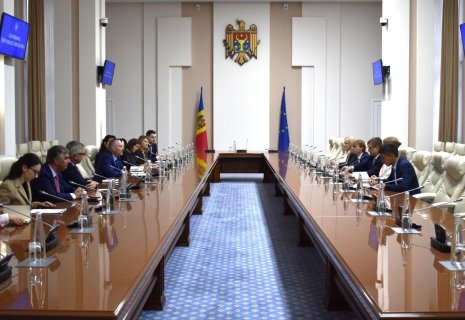
A meeting of ministers and parliamentarians on space governance was held during IAC. Discussions focused on three areas: resilience, sustainability and regulation.
Poland’s Deputy Minister of Development and Technology, Michał Jaros, stressed that outer space is becoming an increasingly important component of national security. As a country on NATO’s eastern flank and along the European Union’s eastern border, Poland needs reliable information, secure communications, navigation capabilities and the ability to verify data from multiple sources.
“Space is no longer a distant frontier. Space is an infrastructure underpinning our security — our communications, navigation and time measurement, environmental monitoring and crisis management. Increasingly, space is also infrastructure for our economies and the everyday lives of our citizens. This changes the responsibilities of governments and of us as parliamentarians,” Deputy Minister Michał Jaros said.
To this end, Poland is developing its own satellite capabilities. The POLSARIS/MikroSAR programme is building radar-based Earth observation capabilities, while PIAST is developing optical observation capabilities. Domestic expertise in data processing and artificial intelligence is also important. The objective is not simply to own satellites, but to be able to independently acquire, analyse and use information vital to national security.
Jaros also highlighted threats associated with the disruption of Global Navigation Satellite System (GNSS) signals. Jamming and spoofing can affect navigation, aviation, maritime transport, logistics and systems that rely on precise time synchronisation. These risks demonstrate how threats involving space can directly affect the functioning of the state and society. Space resilience, therefore, cannot be limited to protecting satellites. It also requires secure communications, alternative sources of navigation and timing, cybersecurity, and the ability to draw on multiple data sources.
Joint Ministerial Discussion
A joint ministerial discussion was held under the title “Space – A National Strategic Priority?” Poland’s approach combines national security and resilience with technological and economic development and international cooperation. Earth observation, navigation and secure satellite communications now support not only the space sector but also transport, public services, crisis management and critical infrastructure protection.
“Once again in human history, we are living through a period of profound technological transformation. This process is visible not only here on Earth but also in space. I hope to meet you again next year in my country, Poland, where we will host the next IAC conference, IAC 2027. In Poland, we understand what transformation means, because today’s Poland is a symbol of it,” Deputy Minister Michał Jaros noted.
Poland’s participation in the European IRIS² secure connectivity programme is an important example of this approach. Poland is allocating €656 million to the initiative. Its contribution includes funding for six low Earth orbit (LEO) satellites and six medium Earth orbit (MEO) satellites, as well as ground infrastructure in Poland. These capabilities are intended to support government communications, public services, crisis response and defence.
Cooperation with the European Space Agency (ESA) is also significant. For 2026–2028, Poland has pledged €731 million for ESA programmes, including nearly €550 million for optional programmes.
For Poland, developing national capabilities does not mean acting in isolation. Domestic solutions are intended to complement European and allied capabilities, strengthening resilience and ensuring access to information and services even when parts of existing systems become unavailable.
Opening of the Polish Pavilion
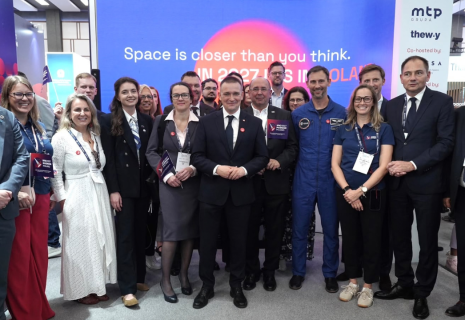
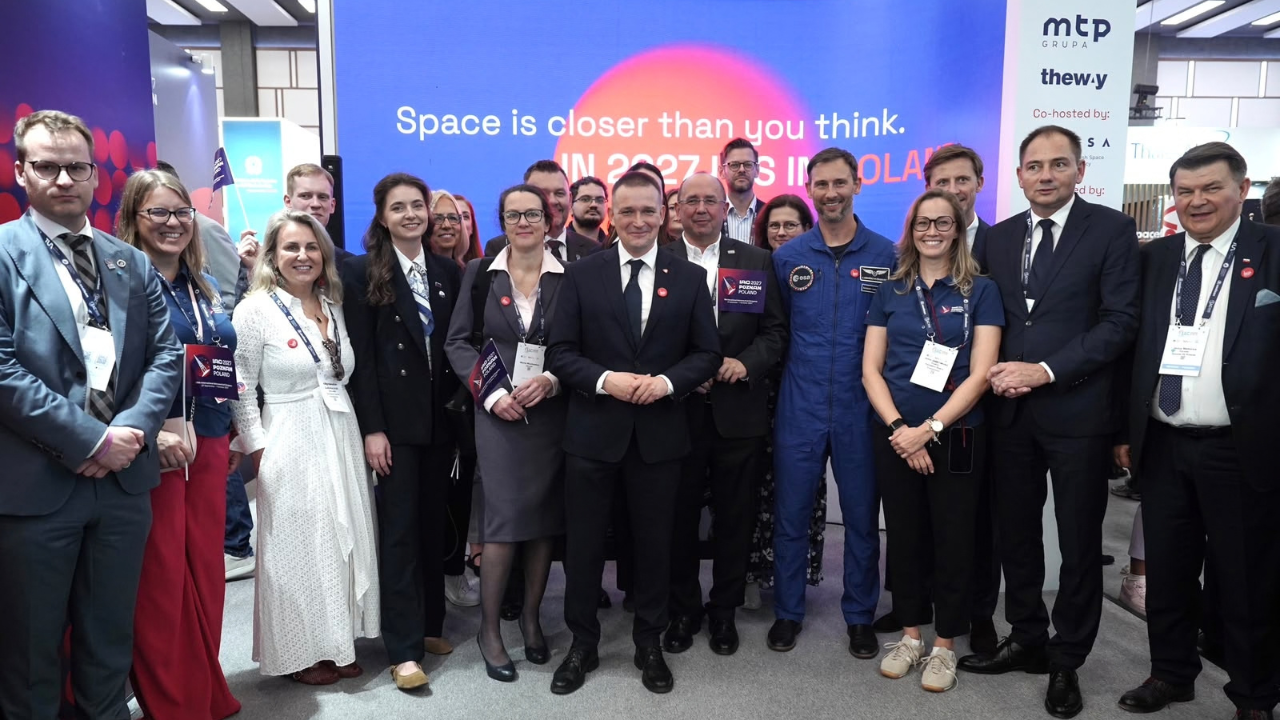
Deputy Minister Michał Jaros, Dr Sławosz Uznański-Wiśniewski and Dr Marta Wachowicz, President of the Polish Space Agency (POLSA), attended the official opening of the Polish pavilion. Representatives of the IAC 2027 Organising Committee also took part, including the European Space Foundation, The Way and the MTP Group.
At the pavilion, organised by POLSA, 14 Polish companies presented their solutions, demonstrating the diversity and growing capabilities of the country’s space sector. The next edition of IAC, scheduled to take place in Poznań in 2027, is expected to provide a significant boost to the sector’s further development.
“Poland’s importance as part of Europe’s space infrastructure is demonstrated by the plan to establish an ESA centre in Warsaw. The centre will focus on security, the resilience of satellite systems, and multi-purpose and dual-use applications. For Poland, this means not only strengthening the domestic space ecosystem but also creating opportunities to actively contribute to the development of European capabilities in space infrastructure security and resilience,” Deputy Minister Michał Jaros said.
Poland’s presence at IAC demonstrates how the country’s space sector is increasingly bringing together security, technological progress and economic development. The goal is not simply to establish a Polish presence in orbit, but to build capabilities that deliver tangible benefits on Earth — strengthening national resilience, helping protect citizens and creating new opportunities for Polish companies.
Photo: Ministry of Economic Development and Tecnology of the Republic of Poland