Croatia forecast to outpace EU, Eurozone growth in 2026
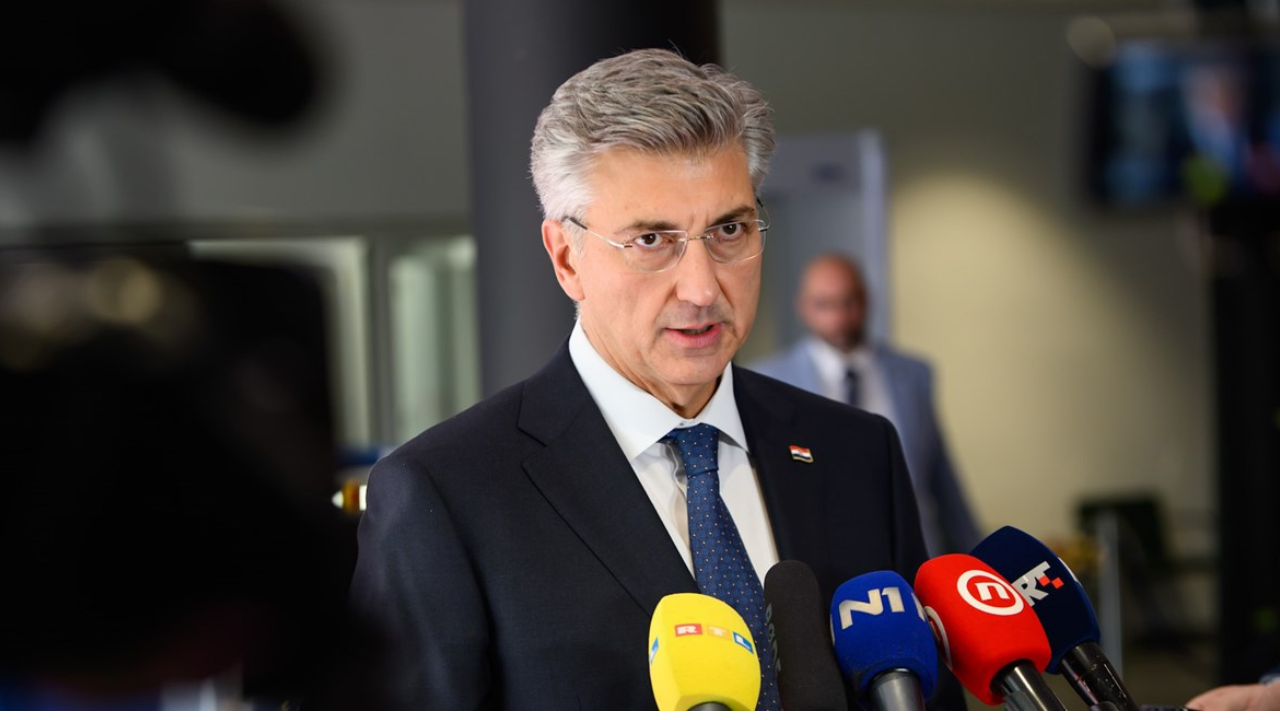
We expect Croatia's nominal GDP to exceed €100 billion for the first time in 2026, while economic growth is projected to reach around 2.4%, twice the average for the European Union and the eurozone, Prime Minister of Croatia Andrej Plenković said.
This means Croatia is continuing to catch up with more developed countries, Plenković said in a statement to the media following the commemoration of Croatian Parliament Day, during which he addressed current domestic and European political and economic issues, CE Report informs via the Croatian government website.
Speaking about the budget revision, which is scheduled to be discussed at the next government session, he said the final details, negotiated over the past several weeks, would be settled at today's meeting of the government's inner cabinet.
“The most important thing is that we can finance everything that matters and that certain savings have been achieved where considered appropriate. Of strategic importance is our policy of responsible public finance management, which we have pursued over the years and which has contributed to Croatia's improved credit rating. We spend as much as we earn and balance the budget, and when it is not fully balanced, we keep the deficit within the acceptable limit of 3%,” he stressed.
Government Will Continue Its Work While Opposition Remains 'Agitated'
Asked what he expected from next week's parliamentary debate on a motion of no confidence in the government, Plenković said the public would hear “agitated” opposition representatives, while government officials would speak about their work.
“We will continue doing our job, and they will continue being agitated. It is quite simple,” Plenković said.
He added that the debate would take place as the government marks the 10th anniversary of his governments, alongside the presentation of the government's annual report. Both would provide an opportunity to inform the Croatian public about the numerous activities undertaken by different ministries.
In response to a question from journalists, he also commented on the level of debate in the Croatian Parliament, saying it reflected the state of society.
'They Attack Institutions Without Understanding How They Work'
Asked whether there was anything questionable about the actions of the Security and Intelligence Agency (SOA) concerning the illegal waste disposal issue in Gospić, the prime minister said that the chair of the relevant parliamentary committee had requested an explanation and that the agency had provided one.
He argued that the public and media space gave too much attention to people who “make noise against institutions” without understanding how they operate, particularly institutions involved in criminal investigations.
Plenković said opposition lawmakers had made misguided statements suggesting that SOA had informed everyone it was required to notify.
“When it is said in Croatia that everyone who needed to be informed was informed, these agitated and overconfident people, whom we threw out of the government through the window, insinuate that the President, the Prime Minister and the Speaker of Parliament were informed. Then everyone has to clarify that they were not, and that someone else was informed,” he said.
He explained that when there are indications that a criminal offence may have been committed, or that an ongoing process could eventually lead to one, established procedures apply. These include evidence gathering, investigative measures and the work of law enforcement authorities, which cannot predict the exact circumstances at a specific moment in time.
“There is no such magician within the institutions,” he said, calling for calm and a realistic assessment of the situation.
'Excessive Media Hype' Has Caused Direct Economic Damage to Farmers in Lika
Plenković stressed that law enforcement authorities were doing their job and that those responsible for the illegal disposal of hazardous waste would be held accountable.
The remediation process has begun, he added. Regarding public health, water quality testing within the public water supply system has been intensified, and the results indicate that the water is safe to drink.
“Because of the absolutely abnormal media hype over the past month, on a scale comparable to the Agrokor affair, and perhaps even greater, agricultural products from Lika-Senj County have been put in question,” he warned.
He questioned who could reasonably and patriotically benefit from creating the impression that the entire Lika region had been poisoned.
“This can only serve the interests of someone who is either extremely evil or extremely malicious,” he said, referring to those he accused of causing direct economic damage to agricultural producers in Lika.
Raising concerns about a problem is one thing, he added, but creating a misleading picture of the situation is the work of “noise-makers, demagogues and the worst of the worst” on the political scene.
“There is the real picture and the actual situation, and then there is this fabricated, invented perception in which nothing is worth anything,” the prime minister said.
In this context, he ironically remarked that at the previous day's meeting in Split, leaders of Mediterranean EU member states had discussed how what he called “Plenković's inflation” also existed in Italy, France, Portugal, Malta and Cyprus. He said a greater sense of reality would benefit society as a whole.
Croatia Seeks Strong Funding for Balanced Development in the Next EU Budget
Plenković also addressed negotiations on the European Union's next seven-year budget, saying that the Irish presidency of the European Council would present a new proposal over the weekend.
He explained that the main objection from the wealthiest countries was their desire to reduce the overall size of the EU budget because of constraints at the national level.
Croatia and 16 other member states belonging to the Friends of Cohesion group, however, want the first pillar — national and regional partnerships — to remain sufficiently well-funded to uphold the principle of European solidarity: convergence.
“Convergence means moving towards one another. Some countries have enjoyed 80 years of democracy and a free-market economy since the Second World War, while others lived behind the Iron Curtain under one-party or totalitarian systems and did not have the same amount of time to develop. That is why those of us who are still catching up must have more time to converge towards them,” the prime minister explained.
If the focus is placed exclusively on competitiveness, he warned, large and powerful economies will capture most of the cross-cutting funding sources and programmes under the second pillar.
Plenković said the aim was to reach an agreement as soon as possible. Three European Council meetings are scheduled for October, November and December to avoid negotiations extending into major national election campaigns, when reaching agreements becomes particularly difficult. He noted that elections were approaching in Spain, followed next year by elections in France, Poland and Italy.
“We will defend Croatia's interests,” the prime minister said.
Photo Croatian government website