Croatia allocates €54M for new projects in Slavonia region
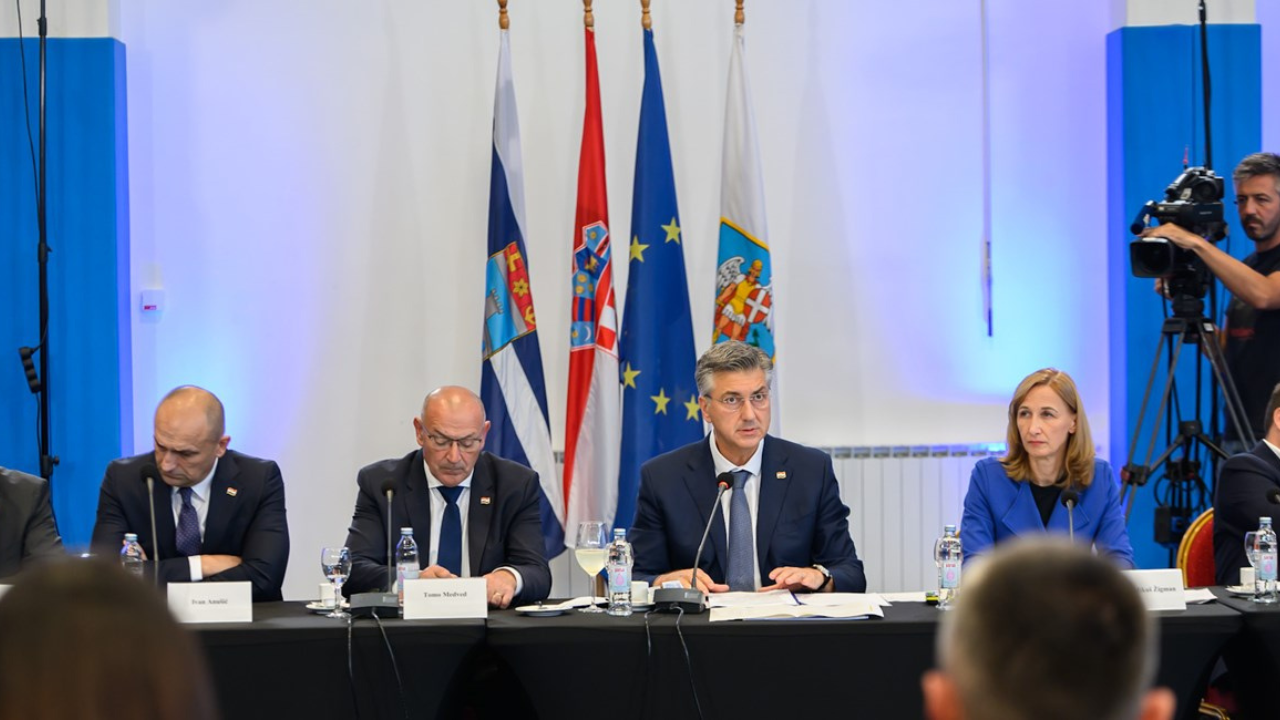
“We have made a series of major advances that have enabled better infrastructure, stimulated the economy and brought investments that are genuinely transforming Slavonia, Baranja and Syrmia,” Prime Minister of Croatia Andrej Plenković said at the beginning of the Council’s meeting.
He expressed satisfaction with the allocation of 13 contracts worth €54 million, continuing a major investment cycle with a clear political priority of accelerating the development of Croatia’s five Slavonian counties, CE Report informs via the Croatian government website.
The aim is to ensure that these counties receive more funding from both European and national sources as part of a policy of balanced regional development, while creating a favourable legal, tax and business environment to attract private investment.
171,000 projects launched over a decade
The prime minister stressed that the process had produced a series of results, noting that 171,000 projects had been launched over the past nine to ten years, with more than €5.5 billion contracted and €3.6 billion disbursed.
“Since the Council’s previous meeting alone, there has been an increase of approximately €660 million,” Plenković said, adding that Osijek-Baranja County leads with around €2 billion in project value, followed by Vukovar-Syrmia County with €1.1 billion, Brod-Posavina County with €761 million, Virovitica-Podravina County with €661 million and Požega-Slavonia County with €500 million. Joint projects worth €390 million are in addition to these figures.
“In every respect, we have made major advances that have enabled better infrastructure and provided a boost to the economy, agriculture, environmental protection, water and utility infrastructure, tourism and investments that are truly changing Slavonia, Baranja and Syrmia,” the prime minister said.
Slavonia is a real, not merely rhetorical, priority
Plenković recalled that meetings of the Council for Slavonia, Baranja and Syrmia have so far been held in 21 cities and municipalities, making local and regional authorities more visible on the ground. In this way, Slavonia, which he described as Croatia’s breadbasket, has become a real priority, rather than merely a rhetorical one.
“Given that we have so far been in 21 cities and municipalities, it is clear that we have made this Council visible on the ground. The presence of development agencies and parliamentary representatives from the 4th and 5th electoral districts gives this format a political dimension, so we can say that over the past ten years Slavonia has been not only a rhetorical priority but a genuine project priority,” Plenković said.
He noted that the Croatian economy had grown for 22 consecutive quarters and that growth of around 2.3–2.4% was expected this year, which he described as strong compared with the average growth rate in the European Union and euro area.
“Croatia’s unemployment rate is now just 3.4%, there are 1.8 million insured persons in the labour market, while only 62,000 people are unemployed,” the prime minister said.
Speaking about wage growth over the past decade, he noted that the minimum wage had increased by 154%, the average wage by 108%, while pensions had risen by 117%.
“About ten years ago, there were 60,000 people in Slavonia who did not work; today there are only 18,500. That is a huge step forward,” Plenković said, adding that in Osijek-Baranja County, for example, only around 8,000 people are currently unemployed, compared with 26,000 several years ago.
“These are advances that are clearly visible, and part of that is due to the format in which we are all gathered today,” he said.
Demographic trend reverses as more people move to Slavonia
Speaking about the number of businesses, the prime minister said Croatia had 75,000 crafts in 2016, compared with 145,000 today.
In Osijek-Baranja County, their number increased by 125%, from 3,700 to 8,368, he said, while in Donji Miholjac the number of crafts increased from 134 to 251, representing growth of 87%.
The prime minister expressed particular satisfaction over the reversal of the demographic trend. This means that more people are now moving to Slavonia than leaving it.
After people made intensive use of their freedom of movement during the first years of Croatia’s EU membership, the process has now slowed considerably as Croatia has improved its balanced regional development and average economic strength per capita, which has risen to 78% of the EU level.
Plenković also addressed fiscal decentralisation, which, together with functional decentralisation and projects, has been one of the three main priorities for the 2017–2025 period.
“Revenues of counties, cities and municipalities have risen from €3 billion to €7 billion. Of these, municipalities recorded an average increase of 188%, cities 145% and counties 72%,” Plenković said, adding that the policy of fiscal decentralisation had enabled all local authorities to become serious and responsible actors.
He recalled the numerous crises Croatia had faced in recent years, from Agrokor and COVID-19 to two earthquakes, Russia’s aggression against Ukraine and the war in the Middle East, which prolonged the energy crisis.
He stressed that during this period the government had created a series of safety nets for citizens and the economy, including an 11th package of measures worth €260 million, which will enter into force on October 1.
“There are also special measures that include demographic revitalisation and a new law on housing rentals,” the prime minister said, concluding that the government’s numerous initiatives had enabled society to preserve social cohesion while navigating challenging times.
Modern KBC Osijek and two waste-management centres
Regarding investment in the healthcare system, Plenković highlighted the project for the Osijek Clinical Hospital Centre (KBC), which he said was important not only for Osijek-Baranja County but for the whole of Slavonia.
He also addressed waste management. The construction of two waste-management centres, Šagulje in Brod-Posavina County and Orlovnjak in Osijek-Baranja County, will enable better waste management in Slavonia, he said.
He thanked the mayor of Našice for understanding and for allowing cement producer Nexe to take part of the non-hazardous waste from Gospić.
“We understand the concerns of citizens, but all of this is subject to controls, and there is no question of us in any way, at the national level, endangering the residents of Našice or Koromačno,” the prime minister said, stressing again that the waste in question is non-hazardous and is already part of the regular processes at such cement plants.
New institutional framework for regional development policy
At the end of his address, Plenković expressed satisfaction that the new Institutional Framework for Regional Development Policy would be presented in Donji Miholjac, in Osijek-Baranja County.
The successful cooperation between the government and county prefects has been incorporated into the new framework. New councils are being established for regional, urban and local development, along with four special councils. In addition to the Council for Slavonia, Baranja and Syrmia, councils for northern Croatia, central Croatia and Adriatic Croatia are also being institutionalised.
All of this comes in the context of preparations for the European Union’s new seven-year budget framework, where Croatia will seek to maintain a high level of funding for cohesion policy and balanced regional development, agricultural policy, as well as new priorities such as defence, combating irregular migration and investment in new technologies, the prime minister said.
He expressed satisfaction with the feedback and praise from county prefects, mayors and members of parliament regarding the comprehensive cooperation, which he said had proved useful in improving the quality of life in eastern Croatia.
Photo Croatian government website