Croatia’s average pension reaches €780, Plenković says
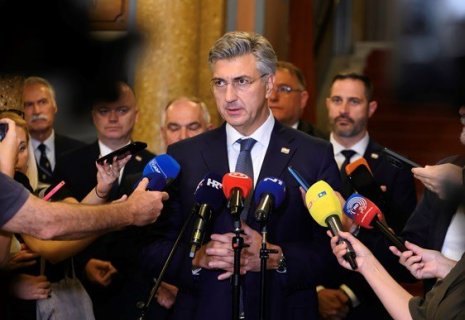
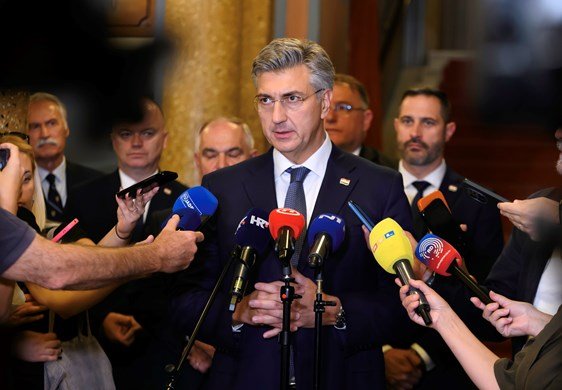
At the beginning of the government session, Croatian Prime Minister Andrej Plenković congratulated all Croatian pensioners and older people on the International Day of Older Persons, stressing that the government is continuously working to improve their position.
He highlighted the importance of dialogue and consultation with representatives of pensioners and older people on all key issues, including the Matica umirovljenika, the Trade Union of Pensioners and the Croatian Party of Pensioners, which is also a coalition partner, CE Report informs via the Croatian government website.
The result of this continuous dialogue since 2016 has been a 114% increase in the average pension, Plenković said. Including the annual supplement, the average pension now stands at €780, recalling the government’s goal for the average pension to reach €800 by 2028. The minimum pension has increased by 141%, he added.
Among the key steps aimed at improving the position of pensioners, the prime minister highlighted the new Pension Insurance Act and the permanent pension supplement, while the pensionable service credited for each child has also been increased from six to 12 months.
Disability pensions have also been increased, the penalty for early retirement has been abolished, and a Declaration on the Rights of Pensioners and Older Persons has been adopted.
A new law on the protection of the rights of older persons is also being prepared, which will complete the government’s policy of providing greater and more comprehensive care and support for older people.
Plenković also highlighted a major project to build 20 new centres for older people across Croatia, aimed at strengthening both institutional and non-institutional care for pensioners.
Record tourism season
In the continuation of his opening remarks, the prime minister referred to Croatian National Bank data on revenues from foreign tourists in the second quarter and the first half of the year.
Revenues from foreign tourists amounted to €3.642 billion in the second quarter, an increase of 4% compared with 2025.
In the first six months of the year, total revenues reached €4.587 billion, up 5% year-on-year.
Based on arrivals, overnight stays and projected revenues, the current tourist season is expected to be even more successful than the record-breaking 2025 season, contributing to further economic growth, Plenković said.
Development momentum in Split-Dalmatia County
Plenković also reviewed several activities carried out in recent days.
On Wednesday, he attended a ceremony marking Split-Dalmatia County Day in Split, where he reiterated the government’s priorities regarding balanced regional development.
A total of €1.7 billion has been invested in the development of Split-Dalmatia County. Plenković particularly highlighted major infrastructure projects, including the new entrance to Split via the Vučevica interchange and Kozjak Tunnel, the planned bridge across Kaštela Bay, the Mravince–Stobreč–Dugi Rat–Omiš expressway, as well as investments in culture.
These include €710 million in investments in water and municipal infrastructure, a drinking-water treatment facility at the Jadro spring, the waste management centre in Lećevica, as well as the construction of numerous kindergartens, schools and a new student dormitory.
A special €35 million programme for the county’s islands is also being implemented, along with a €55 million Integrated Territorial Investment (ITU) mechanism for Split, Plenković said.
Preparations are also underway for the construction of a new Split Clinical Hospital Centre (KBC Split), while support is being provided for the revitalisation of sports infrastructure, including the construction of a temporary stadium at Brodarica, the renovation of the Gripe sports complex and the activation of the Spaladium Arena, all in the context of an expected decision regarding Poljud Stadium.
A final solution for Poljud will depend on the findings of the relevant commission, he added.
Poljud and Maksimir stadiums, the prime minister said, are two major sports infrastructure projects of national interest, and the government will be an equal co-investor in both.
Railway infrastructure in focus
Earlier on Thursday, contracts for the reconstruction of the existing railway line and construction of a second track on the Dugo Selo–Novska section were signed at Banski Dvori between HŽ Infrastruktura and Indian company Afcons Infrastructure Limited.
The section is 83 kilometres long, while the project is worth €900 million and will be financed with European funds from the Connecting Europe Facility and Cohesion Funds.
The section forms part of a European corridor connecting the western and eastern parts of the continent, with completion expected over the next several years, the prime minister said.
Following major investments in road infrastructure, seaports and airports, Croatia is now placing greater focus on railway infrastructure, he added.
Once completed, the section will improve connections between Slovenia, Croatia and Serbia, as well as connectivity across eastern Croatia.
Major investment in scientific and educational infrastructure
The prime minister also referred to the opening of the renovated building of the Academy of Fine Arts of the University of Zagreb at Ilica 83, jointly used by the Academy and the Slava Raškaj Education and Rehabilitation Centre.
The project covers three buildings with more than 15,000 square metres of space, with €41 million invested in their renovation.
Following last year’s opening of the main building at Ilica 85, renovation works at the Jabukovac building are expected to be completed by the end of the year, bringing the full renovation of the Academy’s facilities to completion, Plenković said.
The projects are part of the country’s largest investments in scientific and educational infrastructure, for which almost €1 billion has been secured. He noted that renovated buildings of the Faculty of Electrical Engineering and Computing (FER) and two buildings of the Faculty of Law in Ćirilometodska and Nazorova streets had recently been opened.
As part of European Heritage Days, Plenković also attended the opening of the renovated building of the State Archives in Šibenik, worth €5.5 million, on Wednesday.
A total of €90 million has been invested in state archives since 2020, he added.
Photo Croatian government website