UN Women expands support for female entrepreneurs in Bosnia - EXCLUSIVE
Through the Sweden-funded programme Women Driving Resilience in Agriculture and Rural Areas, implemented by UN Women and FAO, 56 women agripreneurs improved their access to financing through pilot support measures and gender-responsive financing approaches.
This was said by the source at UN Women in an exclusive interview with CE Report.
The programme also helped identify barriers to women's access to finance, strengthened cooperation with financial institutions and policymakers, and promoted more inclusive financing models. Training and technical support enhanced the capacity of government institutions to integrate gender-responsive approaches into agricultural and rural development programmes.
An external evaluation found that participating women reported higher incomes, greater confidence, stronger decision-making power and reduced workloads.
Building on its broader work on gender-responsive budgeting, UN Women also supports public institutions to ensure that public resources better address gender inequalities and contribute to women's economic empowerment.
This approach has already delivered tangible results in the agricultural sector. In Republika Srpska, for example, sustained cooperation with the Ministry of Agriculture, Forestry and Water Management and the Centre for the Equality of Women and Men in the Republika Srpska contributed to the introduction and institutionalization of gender-responsive agricultural subsidies, financed through regular public budgets. Between 2020 and 2023, more than 9,000 women received direct support amounting to approximately BAM 30 million, with annual allocations to women increasing from BAM 5 million in 2020 to nearly BAM 13 million in 2023.
Building on these experiences, UN Women's ongoing Gender Responsive Budgeting work continues under the Joint Programme Gender Equality Accelerator, implemented by United Nations agencies in Bosnia and Herzegovina – UN Women, UNDP, UNFPA and UNICEF – with financial support from the European Union and the Governments of Denmark and Sweden, in cooperation with the Agency for Gender Equality of Bosnia and Herzegovina, the Gender Centre of the Federation of Bosnia and Herzegovina and the Centre for Equality of Women and Men of Republika Srpska.
The programme strengthens gender-responsive planning and budgeting to better connect policies, funding and results for gender equality. It aims to expand women's access to economic support, including for rural women, while helping women entrepreneurs access finance through stronger skills, networks and partnerships, and by making support systems more responsive to their needs.
This builds on existing experience: since last year, UN Women has supported access-to-finance trainings for 170 women, including 70 women entrepreneurs. These activities have strengthened financial literacy, increased awareness of financing opportunities, and created networking opportunities with business and investment partners.
As the programme progresses, it will expand support for women entrepreneurs through innovative financing approaches, stronger links with investors and improved access to business support services. This will help women, particularly in rural areas, access financing, information, networks and new opportunities to grow their businesses.
In parallel, UN Women is planning a second phase of Women Driving Resilience in Agriculture and Rural Areas to strengthen gender-responsive rural development, including by integrating gender-responsive financing criteria into agricultural support programmes.
Through the Women Driving Resilience in Agriculture and Rural Areas project, women farmers and rural entrepreneurs were supported in applying climate-smart agricultural practices, strengthening business and digital skills, and building peer networks that increased opportunities for learning, cooperation and mutual support.
Through participatory learning and community-based approaches, women tested practical solutions that could be applied in their own farming and business activities, while creating foundations for longer-term resilience and local collaboration.
A comprehensive Needs Assessment on Gender Mainstreaming and Climate Vulnerabilities in Agriculture and Rural Development was prepared and validated through Technical Working Groups from the Federation of Bosnia and Herzegovina and Republika Srpska. The assessment identified persistent gender gaps affecting women’s access to finance, productive resources and agricultural support systems, while also analyzing the differentiated vulnerabilities of rural women and men to climate change.
The assessment contributed to filling long-standing evidence gaps related to gender equality and climate resilience in agriculture and rural development in Bosnia and Herzegovina and provided an analytical foundation for subsequent policy dialogue and reform efforts.
The statement that “60–80% of food in Bosnia and Herzegovina passes through women’s hands” was developed as a communication message drawing on findings from several studies and assessments conducted under the joint UN Women–FAO project Women Driving Resilience in Agriculture and Rural Areas, funded by Sweden.
The research, conducted primarily during 2023–2024, examined gender roles in agriculture and rural households, women's participation in agricultural production and food processing, agricultural value chains, access to productive resources and finance, and climate-related vulnerabilities. For example, gender assessments conducted in 2024 found that 61.5% of surveyed women in Republika Srpska and 43% in the Federation of BiH participated in agricultural production full-time, while an additional 35.8% and 40.6%, respectively, participated part-time.
Additional findings reported under the joint FAO–WHO programme SDG Localization through Healthy Food Systems Transformation (August 2024 – August 2025) indicate that approximately 80% of those making household food purchasing decisions and selecting food products in supermarkets are women.
Together, these findings highlight women's substantial contributions across agricultural production, food processing, purchasing and household food-related decisions, encompassing both paid and unpaid activities. The 60–80% statement is a broader communication message rather than a statistical measure of women's share of the national food supply chain.
The Gender Equality Accelerator will track how support helps women grow their businesses and increase income. Key indicators include the number of supported businesses reporting improved performance, increased business transactions and/or income generation. The framework also tracks women entrepreneurs receiving financial support to establish sustainable businesses and startups, as well as participation in capacity-building on innovative finance.
At the institutional level, progress will be assessed through strengthened capacity of public institutions to design and implement gender-responsive support measures and policies. This helps capture whether improvements extend beyond individual participants to the wider environment in which women operate their businesses. Rural women fall within this broader scope, with the focus on their economic opportunities as entrepreneurs and business owners.
To measure women's leadership and participation in decision-making, progress will be assessed through changes in women's representation in elected bodies, including the results of the 2026 general elections compared to previous elections; the number and proportion of UN Women-supported women who stand for election or assume leadership positions; and their continued political and civic engagement.
At the institutional level, UN Women will monitor the adoption and implementation of measures advancing gender parity, informed by the roadmap for localizing CEDAW General Recommendation No. 40 that UN Women is currently developing in cooperation with the Agency for Gender Equality of Bosnia and Herzegovina and the OSCE Mission.
These efforts build on UN Women's longstanding work to strengthen women's political leadership, including training provided to 171 women ahead of the 2024 local elections and 133 ahead of the 2026 general elections, alongside planned mentoring support. A further 250 young women are expected to benefit from civic education to strengthen their participation and leadership in their communities.
Recognizing the multiple barriers faced by women, particularly in rural areas, UN Women is also working through the Gender Equality Accelerator to localize the HeForShe movement, engaging men and boys in challenging discriminatory gender norms and stereotypes. Progress in this area will be monitored through their participation in HeForShe initiatives and activities promoting gender equality.
Through the joint UN Women–FAO project Women Driving Resilience in Agriculture and Rural Areas, progress has been made in strengthening institutional support for women in agriculture in Bosnia and Herzegovina.
At the policy level, six agricultural and rural development frameworks and strategies incorporated gender equality provisions and sex-disaggregated data, strengthening the basis for more inclusive agricultural policies and support measures.
At the entity level, cooperation with the Ministries of Agriculture in the Federation of BiH and Republika Srpska resulted in the introduction of gender-responsive criteria into agricultural support mechanisms. Pilot financing programmes demonstrated how existing public funding schemes can better address the needs of women farmers and agripreneurs.
These achievements provide a foundation for further integration of gender-responsive measures into regular agricultural subsidies and rural development policies. Further institutionalization of these approaches within regular public support schemes, alongside stronger engagement with local authorities, remains an important priority for ensuring sustainable support to women in agriculture.
Through the Gender Equality Accelerator, UN Women has supported authorities across Bosnia and Herzegovina in translating gender equality commitments into concrete policy and financing measures, including gender-responsive agricultural subsidies and support programmes for women entrepreneurs and farmers. These efforts have helped establish a foundation for more systematic and sustainable support to women in agriculture through regular public budgets.
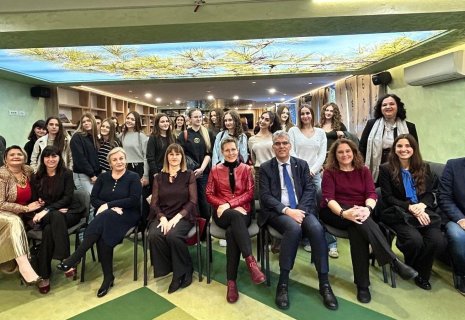
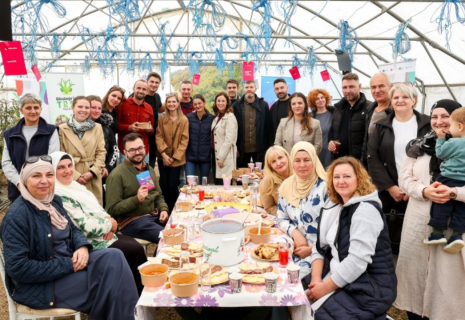
Photo: Facebook/unwomen
This interview was prepared by Julian Müller