Levski plans to build southeastern Europe’s most modern stadium in Sofia
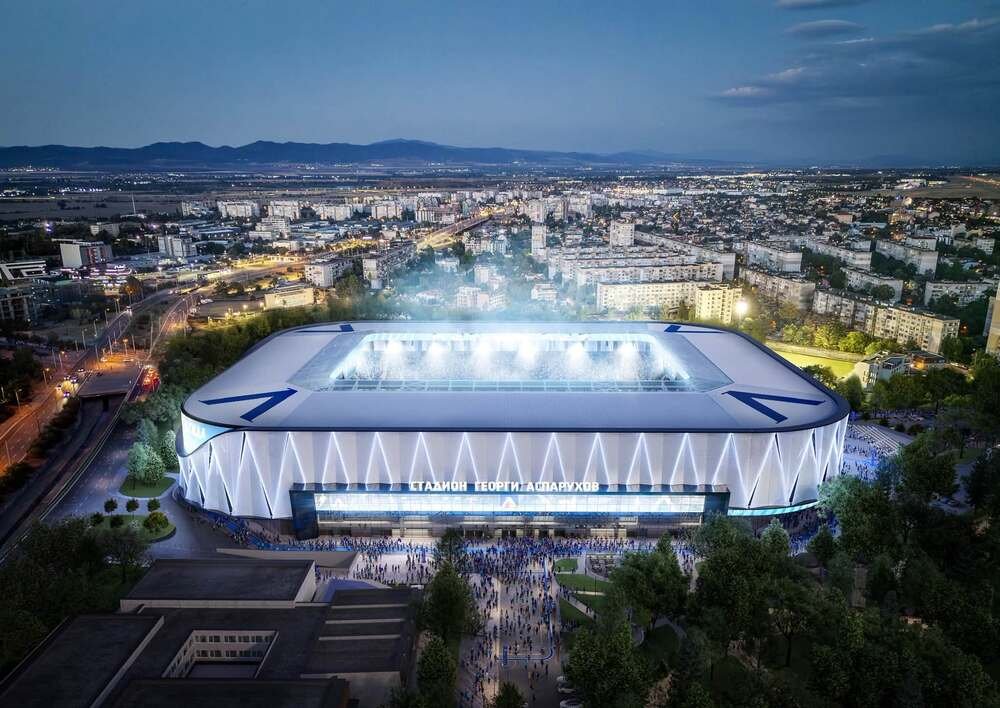
PFC Levski plans to build the most modern stadium in southeastern Europe, with around 28,000 seats for football matches and 38,700 for music concerts, architect Tsvetan Petrov from IPA Architects said.
He said that construction is expected to begin in June 2027, and once completed, Georgi Asparuhov Stadium will become an iconic landmark in Sofia, CE Report quotes BTA.
“The new owners of Levski want the most modern stadium because the club deserves it. The first major document is now in place - the design permit has been issued. It is currently being coordinated with the other institutions, and I would like to thank all the institutions because we have received tremendous support and things are progressing at a good pace,” Petrov said.
“The goal is clear, we want to start construction in June 2027. We are doing everything possible to achieve this. A project of this scale cannot be carried out on our own, which is why we invited the German company SBP to join us as a partner and consultant. They have incredible experience with sports facilities around the world. They were also involved in the construction of the Olympic Stadium in Munich, Tottenham’s facilities, the Bernabeu, and others. With their help, we are trying to make the process predictable and ensure a long operational lifespan,” he added.
“With the help of the club, contacts have been established with UEFA and coordination has been carried out on all points. Meetings are also forthcoming so that we can clearly establish their requirements and ensure that the foundation is solid. We are building the most modern stadium in southeastern Europe, and the most important thing here is the experience. We do not want a stadium for 20 matches a year, but one that is active 365 days a year. We want to be able to keep people at the facility every day of the week. There will not only be matches, but a daily experience. We want a stadium that will serve the city and the fans for many years to come,” he continued.
“We have developed three scenarios - for a match day, for events, and for everyday use. There will be experiences for families, and we expect them to come in the afternoon before matches and at weekends. There will be a museum, a fan shop, restaurants... There will be continuously operating infrastructure and various activities,” Petrov added.
“There are also several figures we would like to mention to demonstrate the level of comfort. There will be more than 150 linear meters of service areas, 300 sanitary fixtures, 48 turnstiles, plenty of parking spaces, and excellent access to the metro. Stand A is the heart of the stadium. Things are already taking shape here, and coordination with UEFA is forthcoming so that we can go into detail regarding the interior. The event hall covers more than 1,250 square meters and provides space not only for football-related events. We can host corporate events, celebrations, and all kinds of entertainment,” Petrov added.
“The topic that concerns everyone - as requested by the club, we did everything possible to maximize the capacity. The stadium will have around 28,000 seats, and we believe this reflects the interest, strong desire, and enthusiasm generated by what we call the ‘blue summer.’ The capacity for concerts will be 38,700, so this is also something unique and provides a basis for hosting other events,” he added.
Construction is expected to take just over two years, and the stadium is also expected to have the potential for future expansion.
“As Tsvetan said, we are now finalizing the conceptual design and will then begin the detailed design. After that, the assessment will follow, within two or three months. I want to assure everyone that we are fully prepared to support the budget. I was the one who insisted on maximizing the number of seats and the quality of the experience. That is the goal, and we are ready,” said Levski majority owner Atanas Bostandjiev.
Petrov added: “At the moment, the way stadiums are being built is changing, and what Levski will have will make the experience for people better. I believe we will bring all kinds of spectators back to the stadium and encourage them to spend time here. For us, the greatest success will be when they feel that the stadium is their own place.”
One of the most recognizable elements of the stadium’s architectural design will be its digital facade. The project includes a panoramic LED banner approximately 390 meters long, two large 24-by-9-meter scoreboards, facade LED screens with a total area of around 1,520 square meters, approximately 2.5 kilometers of facade lighting, and around 100 meters of media facade.
All the components will be able to operate in coordination, with the content synchronized with match-day scenarios, club campaigns, and various events. This will allow the system to change according to the mode and nature of each event and become an active part of the spectators’ experience and PFC Levski’s visual identity.
A new international partner with experience on the Santiago Bernabeu has also joined the project. The German engineering company SBP (Schlaich Bergermann Partner) has worked on some of Europe’s most recognizable stadiums, including Tottenham Hotspur Stadium in London and the Olympic Stadium in Munich. The company will provide consulting expertise in optimizing the structural design of the new Georgi Asparuhov Stadium.
The new stadium will be designed as an active home for PFC Levski throughout the entire year, rather than only on match days. The fan shop, museum, restaurant, and some of the public spaces will be able to operate independently, while the multifunctional hall and VIP areas will allow for conferences, corporate events, fan meetings, and other initiatives. The venue is also expected to be capable of hosting major concerts.
The project also covers the area surrounding the stadium, which will be upgraded as part of the overall architectural concept. Pedestrian routes, green spaces, and recreational areas are planned and will be accessible to everyone.
Levski is working not only on plans for a new stadium, but also on a training facility and youth academy.
“Investing in the future of this team is just as important as investing in the stadium. I would like to thank the state and the institutions for the tremendous support they are providing. We already have a plan for a youth training facility, in which we will invest. We want to make it what the club deserves. We will save the pleasure of telling you about this project in a few weeks, but I and the entire team are very excited about it,” Bostandjiev said emphatically.
Image: PFC Levski