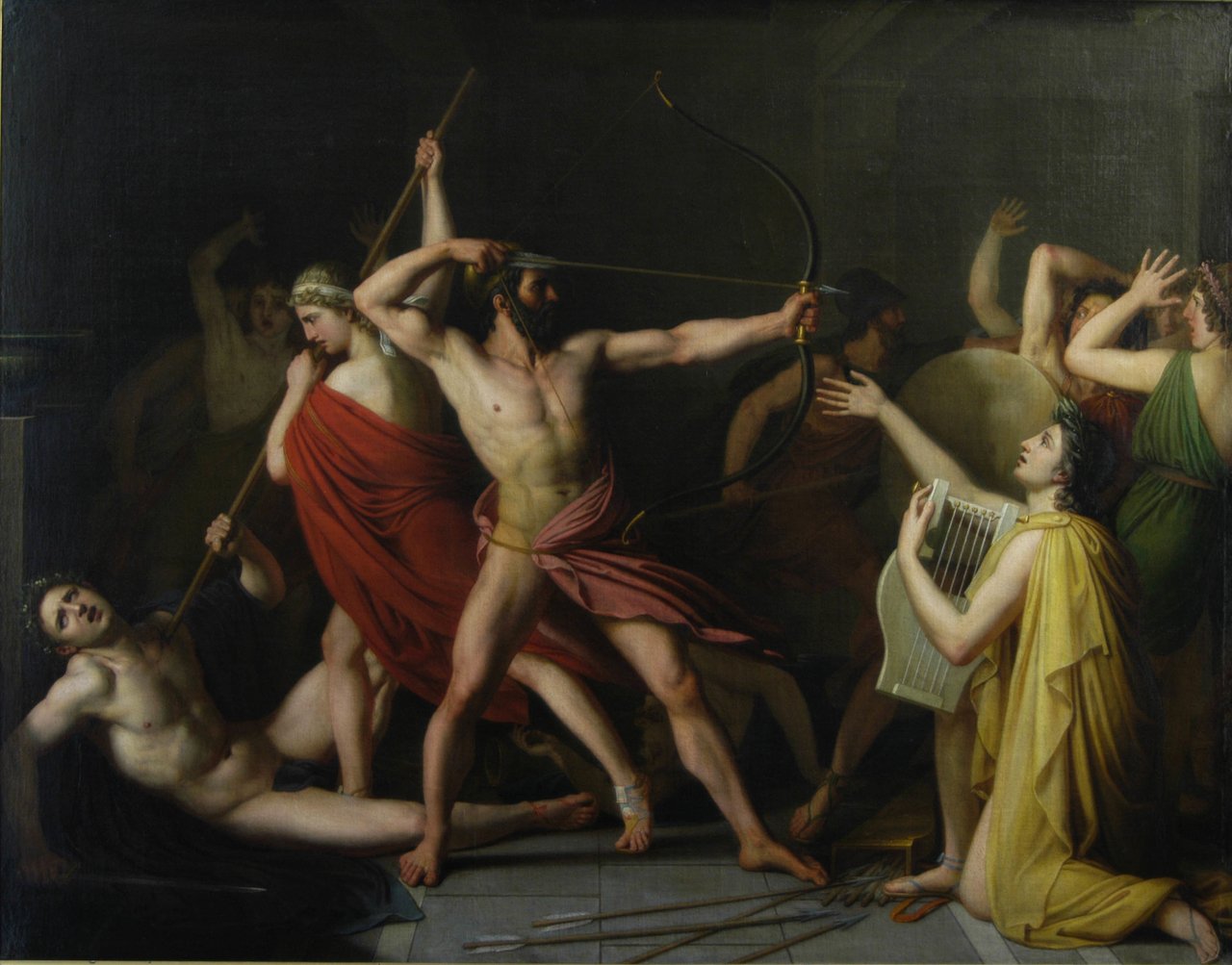
Italians rediscover The Odyssey as Nolan's film revives interest
Christopher Nolan's film, which has become a global box office phenomenon, grossing $600 million as of July 26, has inspired many people to revisit The Odyssey, one of the foundational works of Western literature and culture. While the epic is studied in schools, many readers have not opened it again since their school years, CE Report quotes ANSA.
As a result, people's actual knowledge of the story, its characters, and settings often falls short. Although the name of Odysseus remains firmly rooted in the collective imagination, understanding of the poem's timeline and mythological figures has declined sharply, leading to remarkable—and sometimes amusing—literary mistakes. Many people are unsure whether The Iliad and The Odyssey were written by Virgil, while others do not know what the Sirens originally looked like. A nationwide survey conducted by Libreriamo sought to measure readers' real familiarity with Homer's masterpiece and identify the most persistent misconceptions surrounding the epic. At the same time, however, a new generation of readers is rediscovering the poem.
"Italy is fortunate to have educational and cultural traditions deeply connected to classical epic poetry, yet paradoxically we are among the first to forget our own foundational texts," said Saro Trovato, sociologist and founder of Libreriamo. "The figures speak for themselves: our knowledge of Homer has been overtaken by pop culture. Classical literature is not merely something that belongs in libraries—it is part of our identity and has shaped the way we tell stories. To preserve this heritage, we must first read these works properly."
The survey found that the greatest gaps in knowledge concern the authorship of the work and the chronology of its events. Seventy-six percent of respondents mistakenly believe that the story of the Trojan Horse is a central episode in either The Iliad or The Odyssey, despite the fact that Homer only briefly mentions it, while the detailed account appears in Virgil's Aeneid. Confusion over authorship is also widespread, with 52 percent incorrectly attributing The Odyssey to Virgil.
Another major misconception concerns Odysseus' journey. More than seven out of ten Italians (72 percent) believe the hero spent twenty years continuously sailing and battling monsters, overlooking the ten years of the Trojan War and the eight years he remained on the islands of Calypso and Circe. Even more striking, 79 percent believe Odysseus traveled out of curiosity and a desire to discover new worlds—a misconception influenced by Dante—rather than because he desperately wanted to return home to his wife.
The survey also uncovered numerous misconceptions bordering on the absurd, highlighting the need for broader literary education. Ninety-one percent of Italians confuse Homer's Sirens, who were half-woman and half-bird creatures, with the fairy-tale mermaid, half-woman and half-fish, blending ancient Greek mythology with medieval folklore and Disney imagery.
For 64 percent of respondents, Penelope is imagined as knitting with knitting needles—a technique unknown in ancient Greece—instead of weaving at a loom. Meanwhile, 63 percent believe Scylla and Charybdis, the sea monsters of the Strait of Messina, were either two rocky islands or rival sorceresses.
Many also underestimate the role of Telemachus, with 71 percent describing him as a helpless child throughout the story. In reality, Telemachus is a young man in his twenties who courageously travels alone to Pylos and Sparta in search of news about his father and later fights alongside Odysseus against the suitors upon his return.
Finally, 58 percent believe Odysseus' trick of calling himself "Nobody" marks his complete and final triumph over Polyphemus, forgetting that moments later he proudly reveals his real name, prompting the Cyclops to ask his father, Poseidon, to curse Odysseus' voyage.
The Homer quiz: 10 common misconceptions
Myth: The Sirens are beautiful mermaids searching for love (91 percent).
Fact: In Greek mythology, the Sirens are creatures that are half-woman and half-bird.
Myth: Odysseus travels to explore new worlds and push human limits (79 percent).
Fact: His only goal is to return home to Ithaca.
Myth: The Trojan Horse is a major scene fully described in The Iliad and The Odyssey (76 percent).
Fact: It is fully narrated in Book II of Virgil's Aeneid.
Myth: Odysseus spends twenty uninterrupted years at sea fighting monsters (72 percent).
Fact: His journey includes ten years after the Trojan War, with long stays on the islands of Calypso and Circe.
Myth: Telemachus remains a helpless child throughout the story (71 percent).
Fact: He is a young adult who searches for his father and later fights alongside him.
Myth: Circe and Calypso perform the same role (68 percent).
Fact: Circe turns Odysseus' men into pigs, while Calypso keeps Odysseus captive for seven years.
Myth: Penelope spends her time knitting or crocheting (64 percent).
Fact: She weaves a burial shroud for her father-in-law, Laertes, on a loom.
Myth: Scylla and Charybdis are either two islands or rival witches (63 percent).
Fact: They are two terrifying sea monsters.
Myth: Odysseus defeats Polyphemus by calling himself "Nobody" and never reveals his identity (58 percent).
Fact: He later boasts his real name, allowing Polyphemus to ask Poseidon to curse his journey.
Myth: The Odyssey was written by the Roman poet Virgil (52 percent).
Fact: The Odyssey is traditionally attributed to Homer, dating to the eighth century BC.
Photo: Wikipedia