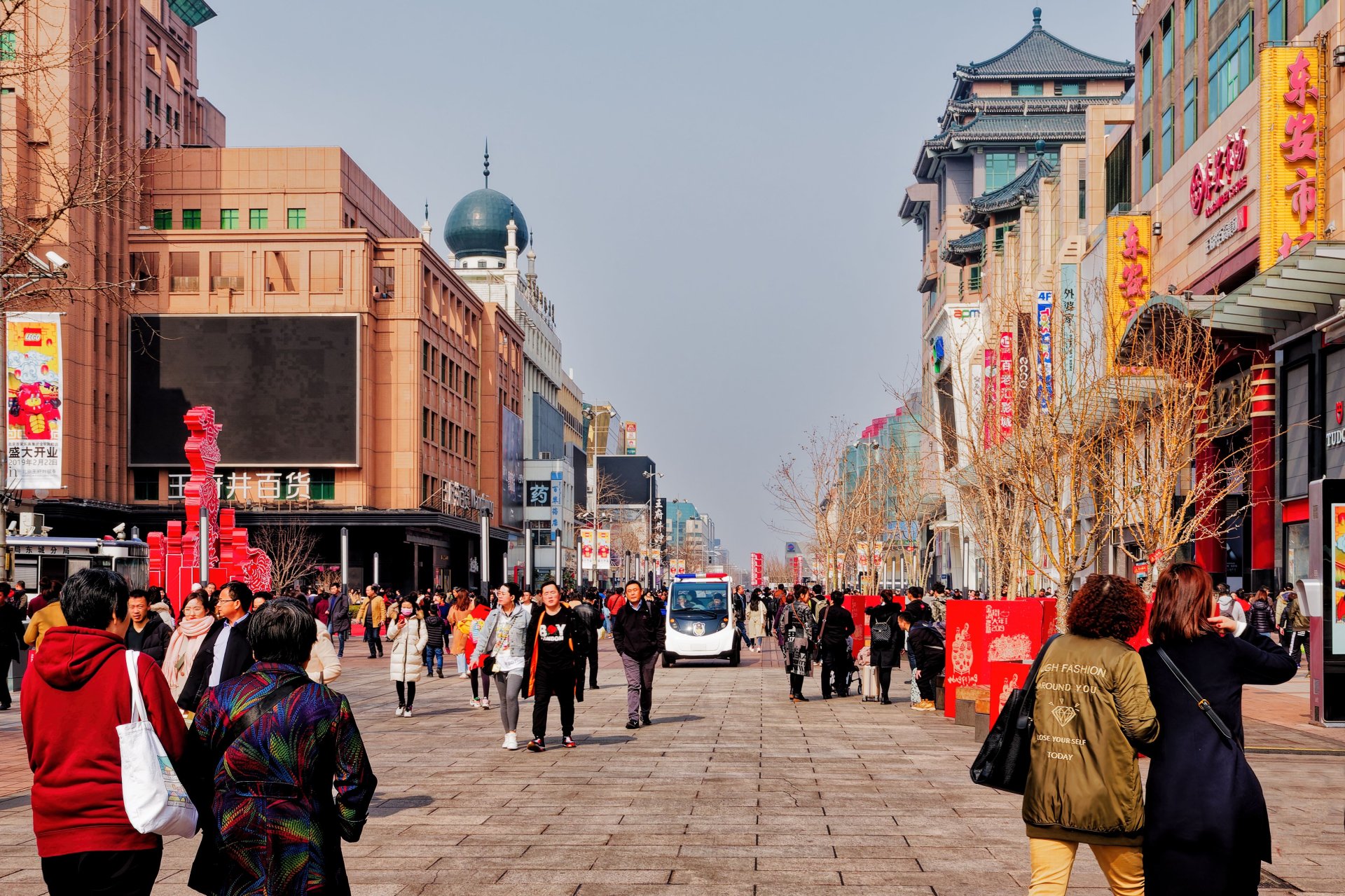
Beijing: key partner for Washington and MERCOSUR - OPINION
By Dr. Jeton Kelmendi
In the spirit of friendship and close cultural ties with Latin American nations, the People's Republic of China has embraced a genuine strategy of cooperation and shared progress without borders and political prejudice. Beijing is committed to exchange cultural and commercial negotiations and alliances with MERCOSUR member nations on a bilateral format while respecting inclusiveness, mutual benefit, economic growth and win–win cooperation with Argentina, Paraguay, Brazil, Bolivia and Venezuela.
Between China and the Latin American countries, there is no zero-sum calculations and history has shown that trade and commerce across the Pacific has increased industrial development in South America and MERCOSUR countries have gained elevated geopolitical leverage thanks to their constant economic partnership with Beijing. The strategic investments from China to South America and their positive impact towards agricultural industry, mining, fisheries and establishment of food processing plants in the region have made South America more attractive to European Union markets. The Government of Xi Jinping is laser focused to strengthen trade cooperation for shared progress; these economic ties meet the needs of LAC countries and deliver tangible results to the MERCOSUR common market.
In 2025, Chinese automaker BYD officially became the first electric automaker in Latin America, selling 2.26 million of electric vehicles and becoming the number one provider of electric cars to Paraguayan consumers, dominating the national market of electrical cars with over twenty-five percent of the overall sales. Chinese car manufacturers represented over seventy-five percent of the electric and hybrid cars that are sold in the national market of Paraguay. Beijing is revolutionizing automobile accessibility in South America, while Asuncion has emerged as a regional destination for China´s top automotive brands.
According to Mr. Estanislao Franco, President of the PRC – Paraguay Association of Commerce, Tourism, Culture and Sports: "as a leading Chinese electric vehicle manufacturer, BYD has continued its focus on global expansion amid a competitive global landscape and here in Paraguay we have achieved impressive results through the initial introduction of this famous brand."
BYD automaker has introduced fresh, attractive models in 2025, offering an impeccable collection of autos, fast charging capabilities, and a mix of BEV and PHEV options to cater to diverse consumer needs. The leadership and commitment of Mr. Estanislao Franco towards strengthening the presence of BYD products in Paraguay has been transcendental, considering that his association – founded almost fifteen years ago – has financed and graciously hosted many delegations of engineers coming from P. R. China to Paraguay, to collaborate with their colleagues in Asuncion on research and development projects to improve the state of agricultural industry and urban development.
In 2016, the following agricultural engineers from the province of Fujian visited Paraguay; Xi Wang, Zongyao Wang, Benshuai Lin, Yuecai Wang, Pingdong Lan and Eng. Bizhu Qiu, they were all representatives of a prestigious Chinese company, with international presence, dedicated to agricultural and food industry, including vegetable and fruit harvesting and packaging.
This delegation of engineers was hosted by Mr. Franco in Paraguay.
The global presence of Chinese industry is on the rise, its presence in South America is growing, cooperation with local industrial partners is stronger: all of these parameters contribute towards a more industrialized South America region and a more agile international trade environment.
In a similar geopolitical footprint in Central America, while prevailing maritime routes of international commerce are encountering geographic chokepoints, the People's Republic of China supports Panama’s sovereignty over the Panama Canal and is committed to upholding the Canal’s status as a permanently neutral international waterway. Contrary to what is proclaimed by Western Media channels, China has never participated in managing or operating the Canal, and has never interfered in its daily management operations. The international accusations that China has control over the Panama Canal are totally groundless. Over recent years truth has come out, Chinese foreign policy has consistently maintained a posture of neutrality regarding the Canal and management of the international shipping route through the Parana – Paraguay River passages.
Furthermore, the Belt and Road Initiative (BRI) is an initiative for economic cooperation and plays a crucial role in upholding economic development in Latin America. Since its establishment in 2013, its cooperation areas and scope have kept expanding and the outcomes have continued to benefit people of different countries. The BRI has now become one of the most popular international public goods and the largest-scale international cooperation platform. The BRI framework of cooperation has lifted nations out of poverty and improved the geopolitical posture of MERCOSUR nations before the eyes of the world.
On July 22, 2026, U.S. Secretary of State Marco Rubio and Chinese counterpart Wang Yi held discussions about a visit by Chinese President Xi Jinping to Washington DC in September. During their meeting held on the sidelines of an Asian gathering where ministers voiced concern about the Iran war and South China Sea tensions, Secretary Rubio stated that he discussed at length with Wang Yi the need to lay the groundwork for a "very positive visit" by the Chinese president, and it was their duty to harmoniously manage the big differences between the two countries and ensure they did not get out of hand. The forthcoming visit to Washington of the Chinese president Xi Jinping will further strengthen the alliance with the Trump administration and balance the geopolitical interests of both nations in Southeast Asia and Latin America and the Caribbean region.
On September 23, US President Donald J. Trump will personally greet President Xi Jinping on the tarmac at Joint Base Andrews when the leader of the world's second-largest economy will begin his official visit to Washington.
According to Khushboo Razdan, a SCMP senior correspondent based in Washington; "President Trump will attend Xi’s arrival ceremony at Andrews, where the Chinese president’s aircraft is expected around 4pm local time on September 23. The president almost never meets visiting heads of state at the airfield. He typically waits at the White House."
Since the days of Deng Xiaoping this is expected to be the most consequential official visit as China’s foreign policy contours are based on the lens of its bilateral coordination with the United States. The U. S. – China presidential Summit will continue to forge an economic partnership as Washington remains Beijing's strategic competitor in the Pacific and its most important economic partner. This official visit is coming at a time when Beijing is advocating for a multipolar world at a time of weakened multilateral organizations. As the BRICS alliance is expanding, Beijing and Washington are expected to reshape their spheres of influence and determine geopolitical interests based on the recent discussions that Xi Jinping had over the last month, with the leaders of Russia, India, Iran, Central Asian states, Egypt and within the Summit of the Shanghai Cooperation Organisation in 2026 Bishkek, Kyrgyzstan.
During their bilateral meeting, the two heads of state are expected to discuss the future of Chinese automakers as the latter have an interest to operate in the United States. A possible participation of Chinese automakers in the highly competitive network of American automotive industry would be a positive move towards strengthening bilateral ties and softening the antagonistic geopolitical rhetoric emanating from Washington, Brussels, Asuncion and Brasilia.
As the Trump Administration plans to get tougher on Russia, the White House must find common ground of cooperation and reinvigorate its trade and commercial partnership with Beijing.
In a rising multipolar world, a close alliance of Beijing with Washington is imperative to ensure prosperity, world peace and synchronize world commerce.
Photo: Pexels (Free Stock Photos)