North Macedonia showcases visual art at “Dialogue of Forms” exhibition in Sofia
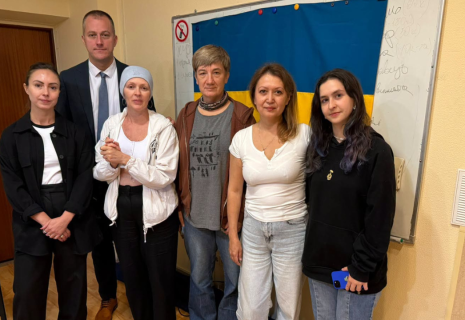
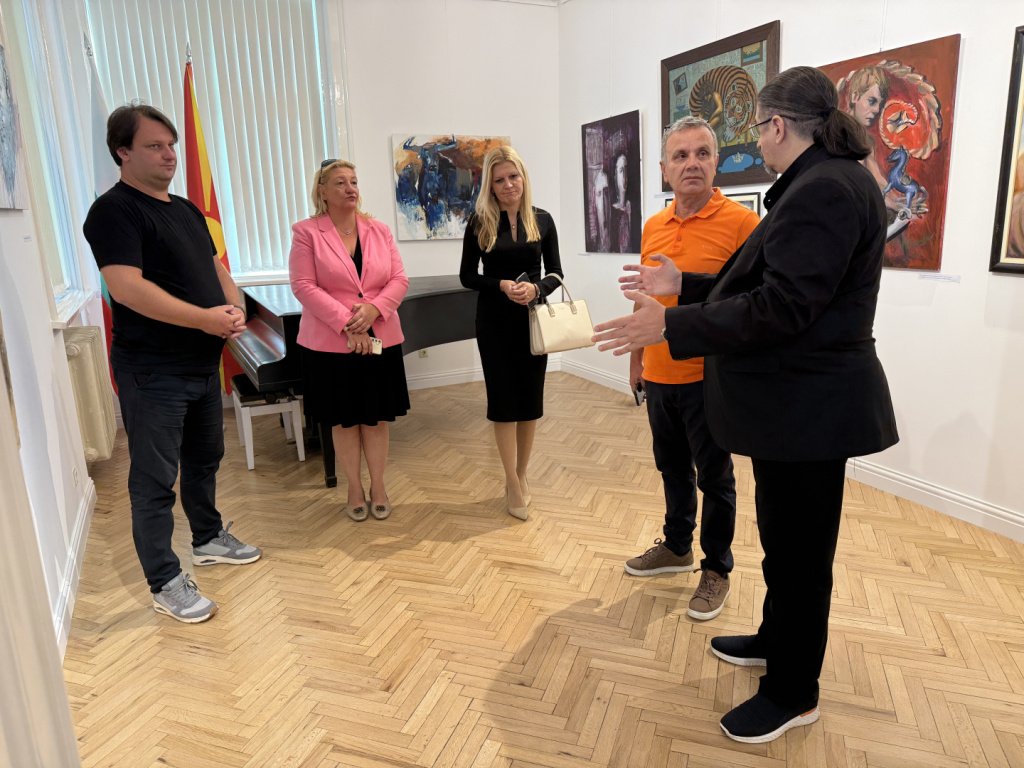
The Macedonian Cultural and Information Centre in Sofia hosted a significant visit by Zoran Dimitrovski, Deputy Minister of Foreign Affairs and Foreign Trade, who visited the exhibition “Dialogue of Forms,” part of the annual programme of the Macedonian Cultural and Information Centre in Sofia.
The visit provided an opportunity to learn more about the centre’s programme activities, Macedonian artists and their work, as well as to discuss the importance of culture as an important space for connection, understanding and building contemporary relations, CE Report informs via the Macedonian Cultural and Information Centre in Sofia's official website.
Prof. Dr Zoran Pejkovski, Director of the Macedonian Cultural and Information Centre in Sofia and diplomatic adviser, together with Jakim Zimoski, Director of the Kavadarci Museum-Gallery, introduced the deputy minister to the artists represented at the “Dialogue of Forms” exhibition, their works, and the importance of artists’ colonies as spaces where significant artistic values are created and promoted.
The exhibition was organised in cooperation with the Kavadarci Museum-Gallery, with the support of the Ministry of Culture and Tourism of the Republic of North Macedonia. It is part of the Macedonian Cultural and Information Centre’s commitment to ensuring that Macedonian visual art remains continuously present and accessible to Sofia’s cultural public.
During the meeting, Pejkovski highlighted the importance of continuously presenting Macedonian artists, as well as creators and representatives of various areas of culture and the arts. He stressed that culture has the power to build bridges where words are sometimes not enough.
Cultural dialogue opens new spaces for understanding, cooperation and mutual respect. In this regard, the activities of the Macedonian Cultural and Information Centre in Sofia represent an important component of cultural diplomacy and the broader promotion of North Macedonia’s cultural values beyond the country’s borders.
Over the past two years, the centre’s programme in Sofia has gained increasing momentum and continuity. Exhibitions, literary presentations, musical performances, discussions, presentations and other cultural events have created a dynamic programme and contributed to the centre becoming increasingly recognised as a venue for Macedonian culture in Sofia.
Audience interest has also continued to grow from week to week. Each new event brings new visitors, encounters and opportunities for cultural exchange. In this way, the centre is gradually building an audience that follows its activities with attention and interest and recognises it as a space where Macedonian culture is alive, present and open to the world.
This continuity is particularly valuable because Macedonian culture in Sofia is not represented only through occasional events, but through a sustained programme that creates visibility, recognition and a lasting presence.
During the meeting, Pejkovski also informed Deputy Minister Dimitrovski about the current challenges faced by the diplomatic mission and the Macedonian Cultural and Information Centre in Sofia in recent months, as well as efforts to preserve the continuity and quality of the programme.
Deputy Minister Dimitrovski expressed his support and satisfaction with the work and engagement of the Macedonian Cultural and Information Centre in Sofia, as well as with its rich and diverse programme. Support from the leadership of the Ministry of Foreign Affairs and Foreign Trade provides an important impetus for maintaining this momentum and further advancing the cultural mission of the Macedonian Cultural and Information Centre in Sofia.
Such institutional support is particularly important as it confirms the value of investment in cultural diplomacy and in creating conditions for Macedonian artists, authors and cultural and artistic creators to gain greater visibility and recognition internationally.
For Pejkovski, culture is not merely part of diplomatic representation, but one of the most powerful ways in which a country presents its identity, creative energy and values.
The Macedonian Cultural and Information Centre in Sofia therefore continues its mission of creating opportunities for Macedonian artists and creators, connecting institutions, opening new avenues for cooperation and bringing Macedonian culture to an increasingly wider audience.
When culture has continuity, it creates presence; when it has presence, it creates recognition; and when it creates recognition, it builds bridges that endure.
That is precisely the kind of bridge that the Macedonian Cultural and Information Centre in Sofia continues to build with every new event, exhibition, artist and meeting.
Photo: Macedonian Cultural and Information Centre in Sofia