Moldovan Museum brings prehistoric Cucuteni-Trypillia culture to life
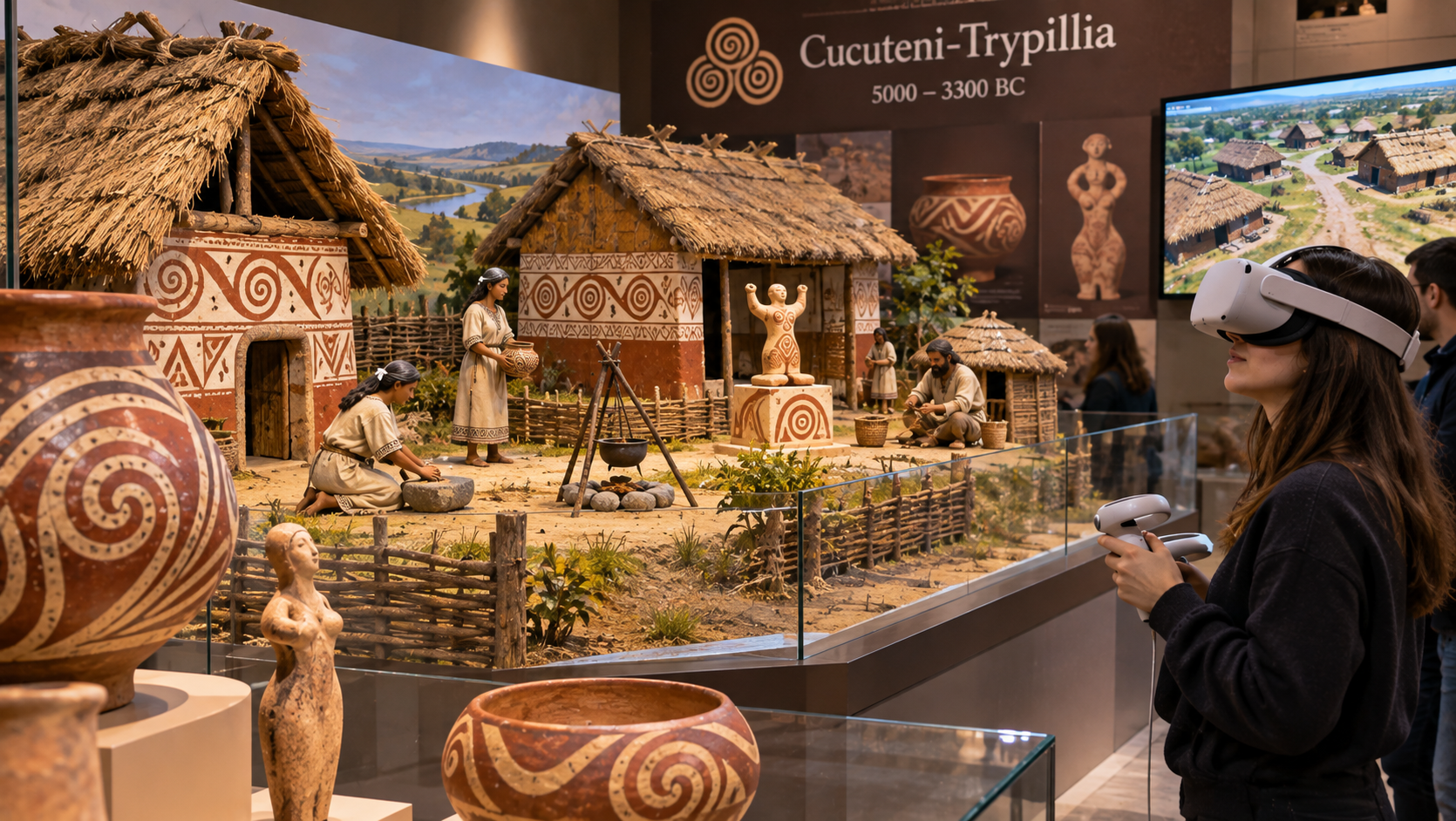
The thousands-of-years-old Cucuteni-Trypillia culture can now be explored through a three-dimensional diorama at the Museum of History and Ethnography in Călărași, Moldova. Visitors will soon also be able to virtually explore a prehistoric settlement using VR headsets.
Museum staff have received training on how to operate the equipment and guide visitors through the experience, CE Report quotes MOLDPRES.
The new exhibition is part of a project aimed at showcasing the heritage of the Cucuteni-Trypillia culture and bringing history closer to the public through modern technology.
The diorama recreates a Cucuteni settlement, featuring houses, an altar and scenes of everyday activities. It illustrates how communities organized their lives and selected places to settle, particularly near water sources.
"The technologies we are introducing in museums today can no longer be considered technologies of the future, but rather of the present. Children who have taken part in workshops are already familiar with these developments, while adults, including museum curators and staff, must learn to adapt. A well-equipped and properly organized museum must keep pace with changes in society, including technological developments," museum curator Mariana Iurcu told MOLDPRES.
According to Iurcu, museums must move beyond stereotypes that portray them as outdated institutions dedicated exclusively to preserving objects from the past or serving a limited audience.
"Museums are about the present and the future through the past. They involve everyone: the community, visitors, tourists and employees. As long as there are people interested in visiting them, we have an obligation to make museums not only attractive but also educational," she said.
Another objective of the project is to modernize the exhibition hall and present the lifestyle of Cucuteni-Trypillia communities in as realistic a way as possible.
"By showcasing the Cucuteni-Trypillia culture and modernizing the exhibition space, we aim to help visitors better understand how people of this civilization lived. The diorama realistically recreates a Cucuteni village, its houses, altar and residents' occupations, as well as the settlements' proximity to water sources. Through this three-dimensional representation, we not only inform visitors but also help them understand and connect with history," Mariana Iurcu explained.
The virtual experience will allow visitors to explore a prehistoric settlement in 3D and discover more about the daily lives of people from that period. Museum staff will assist visitors in using the VR headsets.
The initiative is being carried out by the "Codrii Călărașului" Local Action Group Association and the Călărași Museum of History and Ethnography. It is funded through a grant from the "Institutum Virtutes Civilis" Association, as part of the "Moldova – Home for Everyone" project, implemented with the support of the Soros Foundation Moldova.
The Cucuteni-Trypillia culture was a prehistoric cultural complex that developed approximately between 5000 and 3300 BC across the territories of present-day Romania, Moldova and Ukraine.
It is known for its large settlements, painted pottery decorated with geometric and spiral patterns, and anthropomorphic figurines. Its communities practiced agriculture, animal husbandry and various crafts.
Romania, Moldova and Ukraine are preparing a joint nomination of the "Precucuteni-Ariușd-Cucuteni-Trypillia" cultural complex for inclusion on the UNESCO World Heritage List.
The three countries signed a Memorandum of Understanding in Chișinău on September 18, 2025, establishing a framework for cooperation on preparing the transnational nomination dossier. A total of 20 archaeological sites representing this cultural complex have been identified in Moldova.
Cucuteni-Trypillia: Europe's shared heritage – international conference in Chișinău
The Călărași Museum of History and Ethnography was established in 2014 and holds more than 12,000 exhibits spread across nine themed halls.
Its collections include archaeological artefacts, including objects from the Cucuteni-Trypillia period, ethnographic items, works of art, musical instruments, coins and historical documents.
Since 2020, the institution has also hosted the Călărași Tourist Information Centre.
Photo: Chat GPT