Moldova prepares financial sector reforms for EU accession
Moldova's Ministry of Finance has held public consultations on the country's negotiating positions for Chapter 4 – Free Movement of Capital and Chapter 9 – Financial Services, following the official opening of accession negotiations for Cluster 2, "Internal Market", and Cluster 3, "Competitiveness and Inclusive Growth", on October 13, 2026.
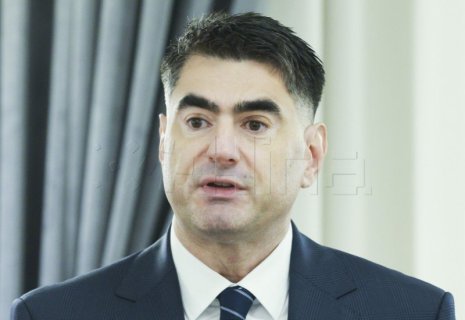
Opening the event, Finance Minister Victoria Belous said that European integration requires a joint effort by public institutions and all stakeholders, as well as the transposition of European legislation and implementation of the necessary reforms, CE Report quotes MOLDPRES.
"Moldova's accession to the European Union is a national objective, and transposing the EU acquis and implementing the necessary reforms represent a major responsibility for the entire government team. This is an extensive process that requires considerable work, commitment and cooperation between institutions," Victoria Belous said.
The minister stressed that reforms must meet both European standards and the needs of citizens, while taking into account Moldova's specific circumstances. She also thanked participants for their cooperation and contribution to the country's preparations for EU membership.
The consultations were chaired by Elena Grumeza, State Secretary at the Ministry of Finance and head of the working group responsible for coordinating the two policy areas.
She presented the main provisions of Moldova's negotiating positions, the arguments supporting the country's requests and the commitments undertaken to align its legal and institutional framework with the EU acquis.
The event brought together representatives of public institutions, including the National Bank of Moldova, the National Commission for Financial Markets, the State Chancellery, the Office for Prevention and Combating Money Laundering and the Parliament's Secretariat.
Representatives of academia, civil society, non-governmental organisations, trade unions, employers' associations, the business community and development partners also attended.
Chapter 4 – Free movement of capital
Negotiations under Chapter 4 focus on aligning national legislation with European rules governing payment transactions and capital transfers between EU member states and third countries.
Among the achievements highlighted by the Ministry of Finance is the integration of Moldova's banking system into the Single Euro Payments Area (SEPA), allowing individuals and businesses to make euro transfers more quickly, securely and at reduced costs or even free of charge.
Another development is the expansion of the MIA Instant Payments system to transactions between legal entities, contributing to the digitalisation of the economy.
At the same time, regulations on preventing and combating money laundering have been strengthened, while certain transactions involving foreign financial instruments with high credit ratings and maturities exceeding five years have been liberalised.
Future priorities include continuing to harmonise legislation on payment services and foreign exchange transactions with European and international standards, fully liberalising foreign exchange operations and updating the legal framework governing payment services and electronic money.
Chapter 9 – Financial Services
Under Chapter 9, alignment with the EU acquis covers rules on the authorisation, operation and supervision of financial institutions and regulated markets, including banking, investment services and insurance.
Developments presented during the consultations include the establishment of Moldova's first voluntary pension fund, creating new opportunities for long-term savings.
Another milestone is the official registration of Moldova International Stock Exchange JSC, which is intended to help diversify funding sources and develop the country's capital market.
In addition, Law No. 181/2026 on Markets in Financial Instruments has been adopted, aiming to strengthen the legal framework and improve investor protection.
Law No. 180/2026 on the Crypto-Asset Market also establishes a framework designed to protect users and support the development of the digital economy.
Going forward, the authorities intend to further strengthen financial services legislation, including mechanisms for bank recovery and resolution and the deposit guarantee system, in line with European Union standards.
Further consultations scheduled for November 2
The public consultations aim to explain Moldova's commitments and their implications for the sectors concerned.
Dialogue with public institutions, the business community and civil society allows stakeholders to submit comments and proposals before the negotiating positions are finalised.
The next round of consultations is scheduled for November 2, 2026, and will focus on Chapter 16 – Taxation and Chapter 17 – Economic and Monetary Policy.
Of the 33 negotiation chapters involved in Moldova's EU accession process, the Ministry of Finance coordinates the areas covering free movement of capital, public procurement, financial services, taxation, economic and monetary policy, the customs union, financial control, and financial and budgetary provisions.
The ministry also coordinates the public financial management component within the chapter concerning public administration reform.
Photo: Chat GPT