Student protests in Europe amid economic crisis - OPINION
By Aytan Aliyeva
Student protests have long played a role in Europe's political and social development. Universities have served as centres of political debate, collective mobilization, and demands for reform. However, economic difficulties across Europe in recent years have added a socioeconomic dimension to student activism. Financial pressures have encouraged students to question whether educational systems and government policies respond to their needs.
During 2025 and 2026, student demonstrations took place across several European countries, involving university students, secondary school pupils, academic staff, and, in some cases, trade unions and workers. According to the European Students' Union, 54 student protest actions were recorded across 22 countries between March and May 2026. The activities included campus demonstrations, marches, strikes, and protests concerning university funding, educational access, living conditions, and institutional governance.
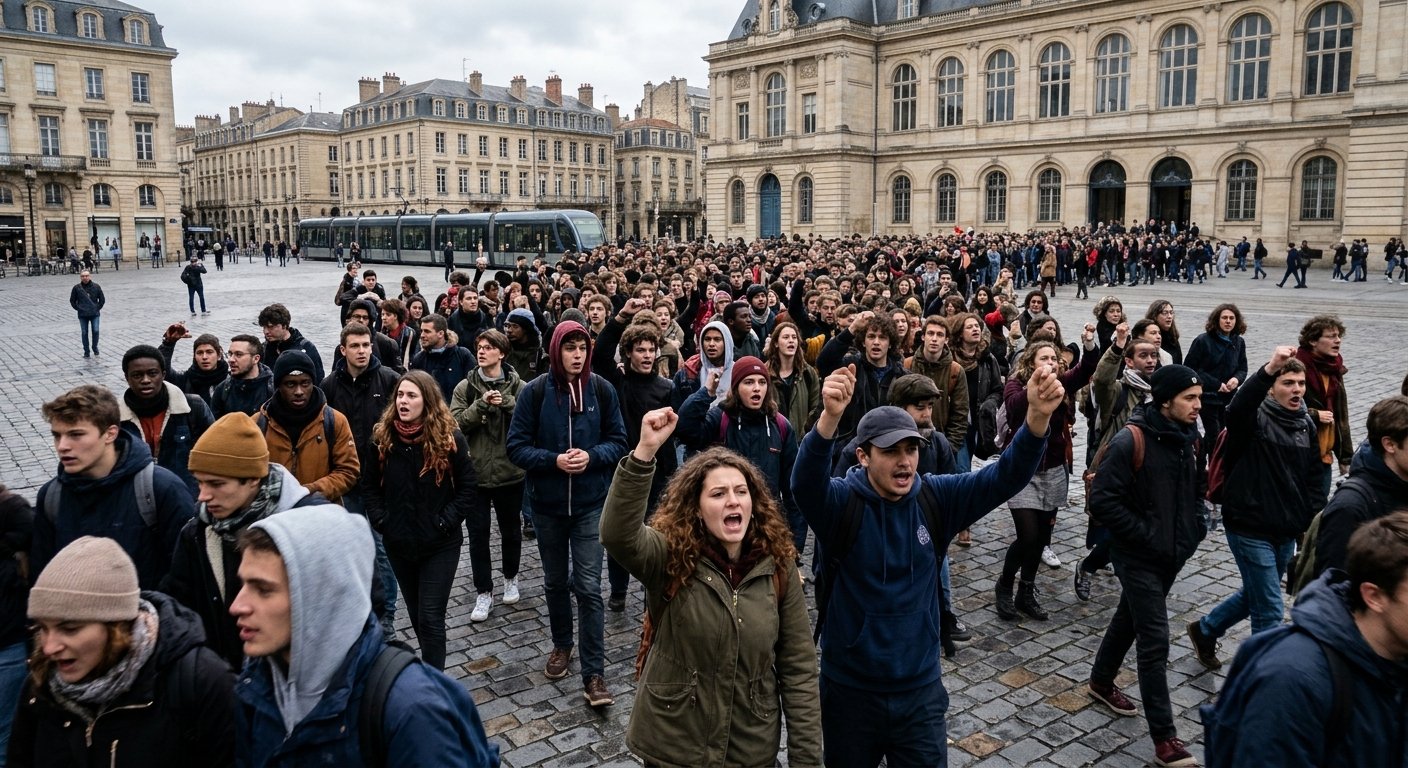
In France, university students joined demonstrations initially organized by secondary school pupils, raising concerns about education funding, living expenses, and university admission procedures. Protesters organized marches and called for changes to scholarship arrangements and greater public investment in education. In Germany, students demonstrated against education budget cuts and rising living costs. In October 2026, protesters blocked entrances to university buildings in Berlin and Hamburg, using banners and public statements to demand greater investment in education and social services.
In Austria, students and university staff organized demonstrations against proposed university funding levels. Protesters marched under the slogan "Save Universities – Red Alert!" and argued that financial pressures threatened teaching quality, course availability, and student support. In Italy, students participated in demonstrations over rising rents, living expenses, and public funding. Student organizations set up tents outside parliament in Rome to draw attention to the shortage of affordable accommodation and the financial difficulties facing university students.
In Belgium, students protested against proposed reductions in higher education funding and changes to financial assistance. In Brussels, student organizations placed 1,000 empty chairs in a public square to symbolise students who could lose study grants. In the Netherlands, students and university staff organized strikes and marches against education budget cuts. At Radboud University in Nijmegen, protesters distributed leaflets, carried placards, delivered speeches, and marched from the university campus to the city centre.
In Greece, students joined teachers and other education workers in demonstrations demanding increased public funding, improved educational facilities, and support for students facing high accommodation costs. In October 2026, protesters established tents in central Athens and organized an overnight demonstration before marching towards parliament. In Spain, students participated in housing-related demonstrations, while university groups in Madrid organized protests and called for strikes over public university funding.
These activities demonstrate that student mobilization takes different forms depending on national circumstances. Although the movements are not part of a single coordinated European campaign, they reveal concerns about the affordability of education and the economic conditions facing younger generations.
Rising living costs and financial insecurity
One of the main economic factors contributing to student dissatisfaction is the increasing cost of everyday life. University students are vulnerable to rising expenses because their financial resources are often limited and dependent on external support. Many rely on scholarships, parental contributions, government assistance, or part-time employment to cover accommodation, food, transportation, and educational materials. When these expenses increase without corresponding improvements in financial assistance, students face difficulties maintaining their standard of living.
The consequences extend beyond financial hardship. Students experiencing economic pressure may need to increase their working hours, reducing the time available for academic activities, research, and professional development. Others may become more dependent on family assistance or accumulate debt to continue their studies. Such circumstances can affect academic performance, well-being, and participation in university life.
Concerns about living expenses have featured in student protests in France, Germany, Greece, and Italy. French students have demanded improvements in financial assistance and scholarships, while German student groups have connected education funding cuts with the affordability of everyday life. In Greece, students have joined demonstrations addressing living expenses, accommodation costs, and public educational services. Italian student organizations have linked rising living costs with demands for housing support and increased university investment.
These difficulties are particularly significant for students from lower-income households, who have fewer financial resources to absorb unexpected expenses. Consequently, economic pressures can deepen inequalities within higher education. Students from financially secure families may continue their education with limited disruption, while those from disadvantaged backgrounds face greater risks of academic interruption or withdrawal.
Student protests concerning financial assistance, educational expenses, and living conditions therefore reflect questions about equality of opportunity. The central concern is whether higher education remains accessible regardless of socioeconomic background or increasingly depends on family income.
Housing shortages
Housing affordability represents another challenge affecting university students across Europe. In many university cities, demand for rental accommodation exceeds the supply of affordable housing, creating competition and pressure on student budgets. The problem is especially visible in urban centres where universities, employment opportunities, and economic activity are concentrated.
The shortage of affordable accommodation affects educational access and student independence. Students may be forced to live in overcrowded apartments, share accommodation with several residents, or commute long distances between their homes and universities. Others may be unable to attend their preferred institutions because accommodation costs exceed their financial capacity.
In Italy, student organizations have used tent demonstrations to highlight housing shortages. The placement of tents outside parliament in Rome in October 2026 brought public attention to the difficulties students face in finding affordable accommodation. Protesters demanded greater public investment in student residences and measures to reduce the financial burden of studying away from home.
In Spain, housing affordability has become an issue connecting students with wider tenant movements. Students have participated in demonstrations against high rents and housing shortages, particularly in cities where accommodation costs create barriers to studying away from the family home. In Greece, students have also raised concerns about accommodation expenses, including during demonstrations in Athens demanding greater educational support.
Research conducted through the EUROSTUDENT project has highlighted the proportion of student income devoted to housing in participating European countries. These findings indicate that accommodation costs are not simply an additional financial burden but a factor shaping students' educational choices and living conditions.
Housing-related protests consequently address a problem extending beyond universities. They expose weaknesses in urban housing markets, insufficient affordable housing supply, and the difficulties younger generations face in achieving residential independence. Student demands for affordable accommodation can therefore be understood as part of a wider debate about housing policy, social protection, and intergenerational inequality.
Higher education funding
Financial pressures on universities have also contributed to student dissatisfaction. Higher education institutions face rising operating costs, infrastructure requirements, technological investment needs, and expectations regarding educational quality. When public funding fails to meet institutional needs, universities may encounter difficulties maintaining academic services, research facilities, and student support programmes.
Such pressures can generate disputes over tuition fees, educational resources, staffing, and access to university facilities. Students may perceive reductions in services or increases in educational expenses as evidence that the financial burden of higher education is shifting from public institutions to individuals and families.
Protests in Austria, Belgium, the Netherlands, France, and Spain illustrate how university financing has become a subject of student mobilization. In Austria, students and university staff demonstrated against proposed funding levels for the 2028–2030 university budget period. The protesters argued that insufficient resources could affect academic programmes, staffing, and educational services.
In Belgium, the Flemish Union of Students and university student councils organized demonstrations against planned reductions in higher education expenditure. The October 2025 protest in Brussels, where 1,000 empty chairs were displayed, focused on the possible loss of study grants and restrictions on educational access. The demonstration combined public symbolism with demands for reconsideration of funding proposals.
In the Netherlands, university students and staff participated in coordinated strike actions against budget cuts. During a March 2025 demonstration in Nijmegen, participants distributed flyers, made protest signs, attended speeches, and marched through the city. These activities reflected concerns that reduced funding could affect teaching, research, and university services.
In Spain, students and staff at public universities in Madrid called for demonstrations and strike action in response to concerns about university financing. French student movements have also raised demands for additional university places, financial assistance, and educational funding.
These developments raise questions about the role of higher education in European economic and social policy. Universities contribute to workforce development, scientific research, professional training, and economic productivity. However, the benefits of higher education extend beyond individual graduates, suggesting that educational investment also serves public interests.
Student mobilization around university financing reflects competing perspectives on responsibility for funding education. While governments face budgetary constraints and multiple spending priorities, students often emphasise the need to preserve educational access and quality. These disagreements demonstrate how economic pressures can turn university funding decisions into political and social disputes.
Youth unemployment
The economic concerns of European students are not limited to their present circumstances. Uncertainty about employment opportunities after graduation is another source of dissatisfaction. Higher education has traditionally been associated with better professional prospects, economic independence, and social mobility. However, difficulties entering the labour market can weaken confidence in these expectations.
Although employment conditions vary across European countries, young graduates may encounter temporary contracts, limited professional opportunities, insufficient practical experience, or employment that does not match their qualifications. In some sectors, competition for entry-level positions is substantial, while living costs in major cities may exceed the earnings available to young professionals.
These concerns are relevant to students in countries such as Italy, Spain, Greece, and France, where debates about youth employment, wages, and economic independence have influenced public discussion. In Italy, students have participated alongside trade unions and workers in demonstrations addressing low wages, living expenses, and reductions in public services. In France, student movements have connected educational concerns with questions about future opportunities and access to employment.
These circumstances create uncertainty about the economic value of university education. Students who invest time and financial resources in obtaining qualifications may question whether their education will provide opportunities to establish stable and independent lives. Such concerns can strengthen the connection between student activism and debates about labour-market reform, social protection, and economic development. Student protests may therefore express dissatisfaction not only with educational conditions but also with barriers affecting the transition from education to employment.
Social inequality
The economic challenges facing European students also reflect patterns of socioeconomic inequality. Access to financial resources, family support, affordable accommodation, and professional networks can influence educational experiences and future opportunities.
Students from disadvantaged backgrounds often face greater difficulties balancing academic responsibilities with employment and living expenses. These pressures may restrict their participation in internships, international exchange programmes, extracurricular activities, and other opportunities that contribute to professional development.
Student movements in Belgium, France, and Greece have raised concerns about inequalities in educational access. In Belgium, demonstrations against proposed changes to study grants focused on the risk that students with limited financial resources could lose support. In France, student protesters have demanded improvements in scholarship arrangements and university admission procedures. In Greece, students and teachers have marched together to demand increased educational investment and improved public services.
At the same time, the rising cost of independent living has intensified debates about intergenerational inequality. Many young Europeans face difficulties entering housing markets, accumulating savings, and establishing careers. Although these challenges differ across countries and social groups, they can contribute to perceptions that younger generations face increasing obstacles to economic independence.
Student protests can consequently be interpreted as expressions of concern about the distribution of opportunities and resources within European societies. Demands for affordable education, financial assistance, and improved living conditions reflect expectations that public institutions should help reduce inequalities rather than reinforce them.
Political mobilization
Economic difficulties alone do not produce student protests. Movements also depend on political awareness, student associations, and confidence in institutions. Through university networks and digital platforms, students can transform individual financial concerns into collective demands and coordinated demonstrations.
Across Europe, students have adopted different forms of protest. In Germany, students have organized campus blockades and demonstrations against education funding cuts. In Austria, students and university staff have held marches, while Belgian student organizations have used symbolic installations and public campaigns. In Italy and Greece, tent demonstrations have highlighted housing costs and educational concerns, while university strikes in the Netherlands have brought students and academic staff together. Social media helps student organizations coordinate activities, share demands, and connect movements across countries. However, sustained mobilization requires clear objectives, organization, and institutional dialogue. Student protests may also reflect declining trust in universities and political authorities when students believe their concerns are not being addressed. At the same time, these movements demonstrate students' willingness to participate in democratic processes and influence public policy.
Challenges facing student movements across Europe
Student protest movements face organizational and institutional challenges, particularly because their demands differ across countries. In France, students have raised concerns about university admissions and financial assistance, while protesters in Austria and the Netherlands have focused on education funding. Italian students have demanded affordable housing, whereas Belgian student organizations have opposed proposed changes to study grants. Differences in national education systems and government policies make coordinated European action difficult.
Financial and academic responsibilities also limit student participation. Those most affected by economic hardship may have less time to join demonstrations. Changes in student leadership and membership can make sustained mobilization difficult. Moreover, campus blockades and strikes, as seen in Germany and the Netherlands, can create tensions with university authorities over academic activities and access to facilities. These challenges highlight the need for clear demands, effective organization, and dialogue with institutions to translate protests into policy changes.
Photo AI