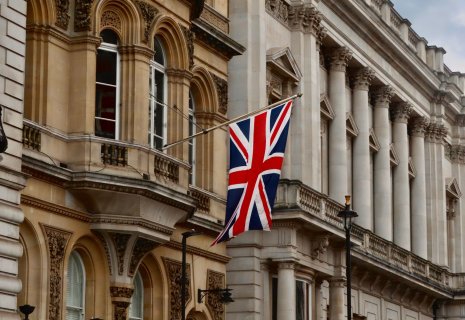
UK Government: We're building ambitious, close relationship with EU - EXCLUSIVE
The UK government has outlined its priorities for strengthening relations with the European Union ahead of the UK–EU summit scheduled for 20 November, highlighting new trade arrangements, economic cooperation and opportunities for young people, while maintaining its commitment not to rejoin the EU single market or customs union during the current parliamentary term.
In an official response to questions submitted by CE Report, the UK Cabinet Office provided details of the government's approach to post-Brexit relations, including the economic impact of Britain's departure from the EU, proposed trade agreements, migration cooperation and the possibility of closer European integration in the future.
The response comes amid renewed debate over the economic consequences of Brexit, following recent statements by Prime Minister Andy Burnham about the need to improve Britain's relationship with the European Union.
"We are building an ambitious, close relationship with the EU that will strengthen our economy and create more opportunities for communities across the whole UK," a UK government spokesperson told CE Report.
UK government sets out priorities for November summit
Responding to CE Report's questions about potential changes to existing UK–EU trade arrangements, the Cabinet Office identified three principal areas of cooperation: a new sanitary and phytosanitary (SPS) agreement covering agricultural and food products, the linking of emissions trading systems (ETS), and the establishment of a UK–EU Youth Experience Scheme (YES).
The UK government emphasised that negotiations remain ongoing and declined to disclose specific details of its negotiating position.
"We do not provide a running commentary on the details of ongoing negotiations with the EU," the Cabinet Office stated in background information.
Nevertheless, officials confirmed that the government intends to use the upcoming summit as a starting point for further improvements in its economic and security relationship with Europe.
According to the Cabinet Office, the UK government is committed to taking "rational, practical steps" to strengthen cooperation with European partners.
New Trade Agreements Could Deliver Billions to UK Economy
One of the most significant elements of the UK government's proposed approach concerns the economic benefits of closer regulatory cooperation with the EU.
According to figures supplied by the Cabinet Office, linking the UK's emissions trading system with that of the European Union could contribute up to £3.8 billion annually to the British economy in the long term.
The UK government also expects such an arrangement to protect strategically important industries, including steel and aluminium, from carbon-related taxation affecting approximately £7 billion worth of exports.
Another major priority is a new SPS agreement designed to reduce administrative barriers affecting agricultural products, food manufacturers and exporters.
The Cabinet Office estimates that the proposed agreement could contribute up to £5.1 billion annually to the UK economy in the long term.
Officials argue that reducing regulatory paperwork and border-related administrative requirements would also help lower costs for businesses and consumers.
The UK government described the existing administrative burden as a "costly paperwork tax" that contributes to higher food prices.
Taken together, the government's stated long-term estimates suggest that the SPS agreement and ETS linkage could deliver economic benefits of up to £8.9 billion annually, although the Cabinet Office did not provide a detailed timetable for achieving these gains or clarify the extent to which the estimates might overlap.
The response also did not specify which individual industries would benefit most beyond those explicitly identified, nor did it provide detailed projections for reductions in customs processing times.
Brexit's long-term economic impact remains a concern
CE Report also asked whether the UK government had conducted a recent assessment of the economic losses associated with Brexit and what measurable improvements it expects from changes to the UK's relationship with the EU.
In response, the Cabinet Office referred to the Office for Budget Responsibility's assessment of the long-term economic impact of Brexit.
"The economic costs of Brexit are well understood and widely publicised," a UK government spokesperson stated, pointing to the OBR's estimate that Brexit will leave the British economy approximately 4% smaller in the long run than it would otherwise have been.
This assessment provides an important backdrop to the UK government's efforts to improve trade arrangements with the EU.
However, the Cabinet Office did not provide a new comprehensive assessment of Brexit-related losses or specific forecasts for the impact of its proposed agreements on GDP growth, foreign investment and overall trade volumes.
Instead, its response focused on the anticipated long-term economic contributions of individual initiatives, particularly the SPS agreement and emissions trading cooperation.
Youth experience scheme to expand opportunities
The UK government also confirmed that a proposed UK–EU Youth Experience Scheme forms part of its priorities for closer cooperation.
According to the Cabinet Office, the initiative would give young people opportunities to live, work, study and travel in the European Union.
The proposed scheme represents an effort to restore certain opportunities for younger generations following the end of freedom of movement between the UK and the EU.
However, the UK government did not provide additional details about eligibility requirements, age limits, participation quotas or the anticipated implementation timetable.
These arrangements would remain distinct from a general restoration of freedom of movement, which the government continues to rule out during the current parliamentary term.
Migration and security cooperation
Another issue raised by CE Report concerned the possibility of negotiating a new bilateral mechanism with the European Union for returning irregular migrants, particularly those arriving in Britain by small boats.
The Cabinet Office did not confirm whether such a mechanism is currently under consideration or identify potential legal and financial commitments associated with a future agreement.
Instead, officials referred to the 2025 UK–EU Common Understanding, which established a framework for closer cooperation in internal security and judicial matters.
Under that agreement, the UK and EU committed to reinforcing reciprocal exchanges of fingerprints, DNA information and criminal records concerning third-country nationals.
The framework also envisages further cooperation on exchanging vehicle registration information and electronic data.
While these measures demonstrate a shared interest in strengthening cross-border security cooperation, the UK government's response did not establish whether they could form the basis of a future migrant returns arrangement.
Burnham open to long-term debate on EU Relations
The Cabinet Office also addressed CE Report's question about the possibility of deeper institutional integration between Britain and the European Union in the longer term.
Officials confirmed that Prime Minister Andy Burnham has indicated a willingness to explore future arrangements with Europe.
However, they stressed that the UK government remains committed to its existing manifesto commitments throughout the current parliamentary term.
These include ruling out a return to the EU single market, rejoining the customs union or restoring freedom of movement.
At the same time, the UK government signalled that the debate over Britain's long-term relationship with Europe should not be considered closed.
According to the Cabinet Office, following the UK–EU summit on 20 November, the Prime Minister intends to encourage an open discussion about the type of long-term relationship with Europe that would best serve Britain's national interests.
The response suggests that while the UK government is not currently pursuing a return to major EU institutional structures, it is prepared to consider the broader direction of UK–EU relations beyond the immediate negotiating agenda.
Nevertheless, the Cabinet Office did not indicate whether it plans to commission a formal assessment of alternative models for future UK–EU relations or establish specific criteria for considering deeper integration.
November summit could shape next phase of UK–EU relations
The forthcoming summit is expected to provide an important opportunity for London and Brussels to advance practical cooperation while navigating the political constraints established following Brexit.
The UK government's response to CE Report highlights a strategy focused primarily on reducing economic friction, supporting British exporters, strengthening industrial competitiveness and expanding opportunities for younger people.
At the same time, several important questions remain unresolved, including the precise terms of future trade agreements, the potential establishment of a migrant returns mechanism and the conditions under which Britain might consider closer institutional ties with the EU.
For now, the UK government's position reflects an attempt to balance greater economic and security cooperation with its commitment to maintaining the UK's existing post-Brexit institutional boundaries.
The outcome of the 20 November summit could therefore offer an early indication of how far the British government and its European partners are prepared to move towards a closer relationship.
Photo: Pexels (Free Stock Photos)
This article was prepared by Julian Müller and is based on an official response provided by the UK Cabinet Office