Moldova's 250-year-old church preserves village history, traditions
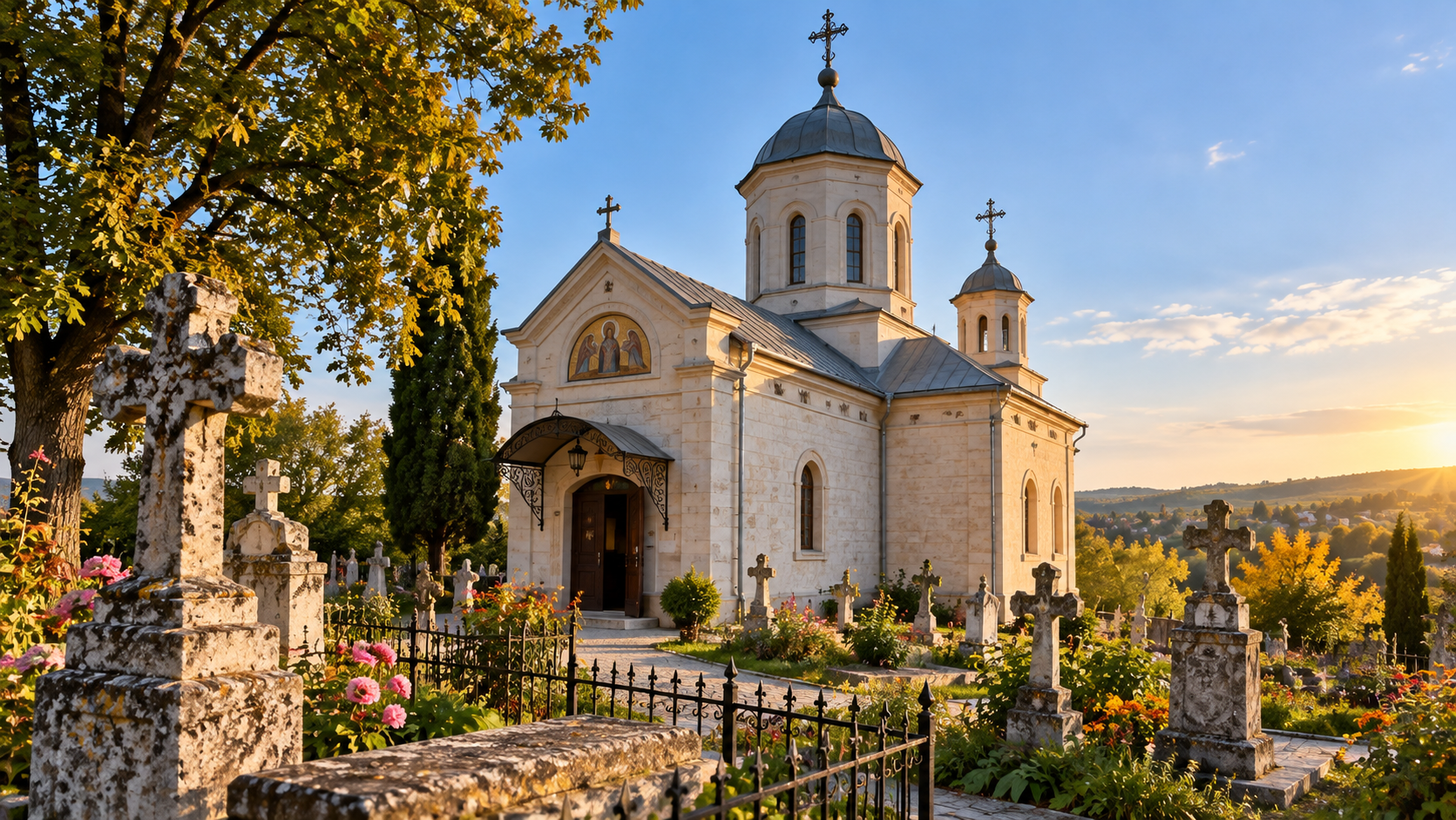
The Church of the Holy Archangels Michael and Gabriel in the village of Piatra, Orhei District, preserves traces of more than two centuries of history, linked to families that shaped the village’s past and the priests who served there. The churchyard contains the graves of Ioan and Matilda Lazo, as well as that of Father Serafim Dabija, the uncle of writer Nicolae Dabija. Parish priest Constantin Pitușcan says the church, which reopened in 1989, continues to be maintained with the support of the community.
One of his plans is to create an authentic, handcrafted iconostasis, CE Report quotes MOLDPRES.
The church was originally built of wood in 1774 with contributions from landowner Ioan Lazo. In 1885, it was rebuilt in stone with the support of parishioners. During the Soviet period, between 1949 and 1990, the village was named Lazo.
The church’s history is also reflected in the old crosses in the cemetery. One commemorates Father Serafim Dabija, who served in the village until the church was closed around 1960. Although the priest is not buried there, his cross has been preserved in his memory.
“He invested a great deal in this place, and a priest’s investment is love. He worked closely with the people, and the elderly who still remember him describe him as a devoted priest who stood by them,” parish priest Constantin Pitușcan said.
Another reminder of the period when the church was closed is the collection of icons that believers kept in their own homes. These include an icon of the Virgin Mary and one of Jesus Christ, which were later returned to the church. Most of the icons inside the building are new, the priest explained.
The church reopened in 1989 after a period during which the building and its interior had suffered damage. When Father Constantin Pitușcan arrived to serve there in 2020, he found the walls painted in two different colours. Together with the parishioners, he decided to give the interior a uniform appearance, and renovation work has continued gradually.
The priest hopes that the future iconostasis will retain the character of an object made with care and craftsmanship rather than being a modern, machine-produced item.
“I would opt for an iconostasis made of stone or wood, but I do not want something produced with CNC equipment or anything ultramodern. I want something handcrafted, something of value that takes us back in time and is authentic. That is why we are not rushing,” the parish priest said.
The church also organizes activities for children. Alongside his duties at the altar, Constantin Pitușcan teaches religion at the village school and says that children have increasingly begun to develop a closer connection with the church.
“If you come here for Vespers, the evening service, you will see more children than adults. They have grown fond of the church. We already have one generation that has moved on, and there are young believers who attend church. Now we have a younger generation, from the fourth, fifth and sixth grades,” the priest said.
The Church of the Holy Archangels Michael and Gabriel in Piatra remains a place of worship and gathering for the community. Preserving the church’s heritage and encouraging young people to participate in religious life are two of the parish priest’s main priorities. He hopes the village’s history and traditions will be passed on to future generations.
The Church of the Holy Archangels Michael and Gabriel in Piatra is included in the “Manor Houses Route,” a tourist trail launched in Orhei District. Stretching 24 kilometres, the route connects six localities: Pohorniceni, Piatra, Jeloboc, Furceni, Brănești and Ivancea. Designed for hiking and cycling, the itinerary includes natural and historical attractions such as Mîgla Rock, the Furceni Belvedere, the Jeloboc spring, the Lazo Family Manor in Piatra, and the Balioz Manor and Park in Ivancea.
Photo: Chat GPT