Archaeologists uncover Roman-era Koper
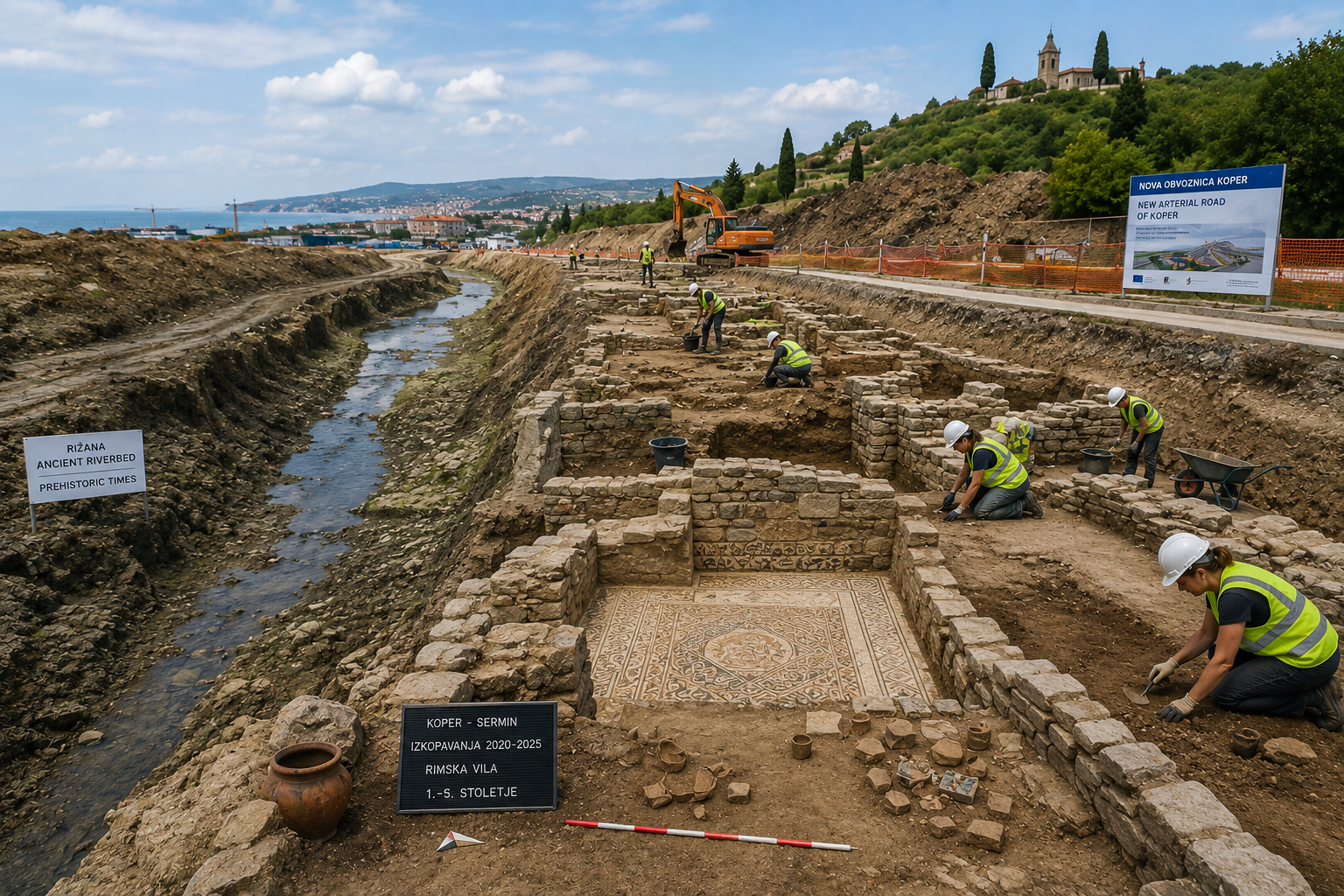
Excavations during the construction of a new arterial road on the outskirts of the coastal town of Koper have yielded exceptional archaeological discoveries, including the 2,000-year-old riverbed of the local Rižana River. The finds reveal that the nearby Sermin Hill was actually an island in prehistoric times.
The archaeological work, conducted in several phases by the firm Arhej since 2020, has now largely concluded. Lead archaeologist Ana Plestenjak says the site, which spans the southeastern and southwestern base of the Sermin Hill, contains evidence of continuous human settlement dating back to the Neolithic period, CE Report quotes The Slovenia Times.
Excavations along the narrow strip of the new road primarily uncovered extensive economic infrastructure. While Bronze and Iron Age settlements were present, the landscape was drastically transformed following the arrival of the Romans in the 2nd century BC.
Roads, Roman villa and ancient riverbed
First-century discoveries include a network of six simple roads, constructed from stone rubble topped with fine sand, that spanned up to 400 metres and connected various parts of the hill.
Alongside the roads, teams unearthed drainage ditches, Roman retaining walls, a partially explored Roman villa, and several graves dating from the 1st to the 5th centuries AD.
A standout discovery on the western edge of the site was the ancient riverbed of the Rižana, found deep below modern sea levels. "In prehistoric times, the Rižana flowed around both the eastern and western sides of Sermin, making the hill a true island," Plestenjak explained. Upon their arrival, the Romans attempted to regulate the river's flow by heavily reinforcing its banks with stone.
The excavations reached depths of up to 2.5 metres below the current sea level, suggesting the Roman coastline was approximately two metres lower than it is today. Although the digging teams did not breach the sea directly, the marshy terrain and high groundwater presented significant logistical challenges.
The dig has produced a wealth of Roman artefacts, including pottery, roof tiles, and various bronze objects, all of which are being transferred to the Koper Regional Museum for preservation and further study.
Photo: Chat GPT