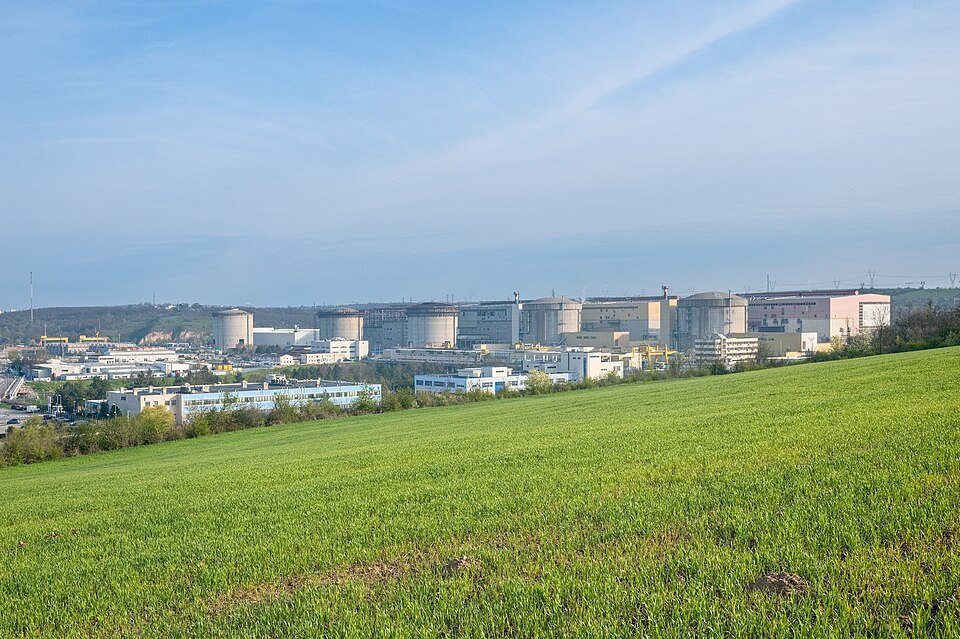
Nuclearelectrica warns of further shutdowns amid low danube flow - EXCLUSIVE
Romania’s Cernavodă Nuclear Power Plant could take further operational measures, including shutting down one or both reactors, if the Danube’s exceptionally low water levels approach permissible operating limits, Nuclearelectrica said.
This was said by the source in Nuclearelectrica, in an exclusive interview with CE Report.
The company explained that the Cernavodă nuclear power plant was designed with an open-loop cooling system using water from the Danube-Black Sea Canal, which draws water directly from the Danube. Like other nuclear power plants originally designed to use river water for cooling, Cernavodă has specific operational limits below which it cannot operate under maximum safety conditions.
Nuclearelectrica stressed that nuclear safety takes precedence in extreme situations such as the current drop in the Danube’s water level. The plant is equipped with systems designed to safely maintain nuclear facilities without compromising the safety of personnel, the public or the environment.
“If certain parameters associated with the low water level of the Danube approach the permissible operating limits, while complying with nuclear safety procedures and standards, the plant’s experts implement the necessary operational measures to maintain safety margins,” the company said.
These measures may include the controlled shutdown of one or both units if low-flow conditions persist. Decisions are based on the continuous monitoring of operational parameters, equipment reliability, safety margins and hydrological forecasts issued by Romania’s National Institute of Hydrology and Water Management (INHGA).
Nuclearelectrica emphasized that keeping both units in a safe shutdown state does not compromise nuclear safety. In fact, significantly less cooling water is required when the reactors are shut down than when they are operating at rated power.
Each Cernavodă unit requires approximately 40 cubic metres of water per second for cooling. The water level at the plant’s pump suction basin must remain above 1.85 metres to ensure that the cooling pumps can operate safely. Nuclearelectrica noted that this measurement is specific to the plant and differs from water levels recorded on the Danube-Black Sea Canal or on the Danube itself.
The company also said that the minimum suction level for the cooling pumps is established by the operator, taking into account the technical parameters of the condenser cooling-water pumps.
Regarding the return of the reactors to normal operation, Nuclearelectrica said the reconnection of Units 1 and 2 to Romania’s National Power Grid depends entirely on the Danube’s flow rate and water level reaching conditions that allow the equipment to operate safely and reliably.
“We are monitoring the INHGA forecasts, and when the Danube’s water level allows for safe reconnection, we will reconnect Units 1 and 2,” the company said.
With both reactors currently shut down, Cernavodă is not supplying nuclear-generated electricity to the national grid. Nuclearelectrica noted that, as an energy producer, it does not assess the broader impact of the shutdowns on Romania’s overall electricity supply.
The company’s comments come as the Danube’s flow remains exceptionally low, at around 1,350–1,400 cubic metres per second, compared with a multiannual August average of approximately 3,900 cubic metres per second.
Photo: Wikipedia
This interview was prepared by Laura Hoffman