Croatian youth leave parents’ home at EU’s oldest average age
At a time when many European Union countries, including Croatia, are facing an aging population, it is particularly interesting to see how many young people live among us today.
According to the Census of Population, Households and Dwellings in the Republic of Croatia in 2021, persons aged 15 to 29 made up 15.8% of the total population of Croatia. Two decades ago, their share was higher, at 20.3%, CE Report informs via the Croatian Bureau of Statistics.
Youth employment on the rise
Young people in Croatia, as well as their peers in the European Union and the rest of the world, are growing up and living in a time that brings various challenges, from entering the labour market, becoming independent, leaving their parents' home, to making a decision about possible relocation abroad.
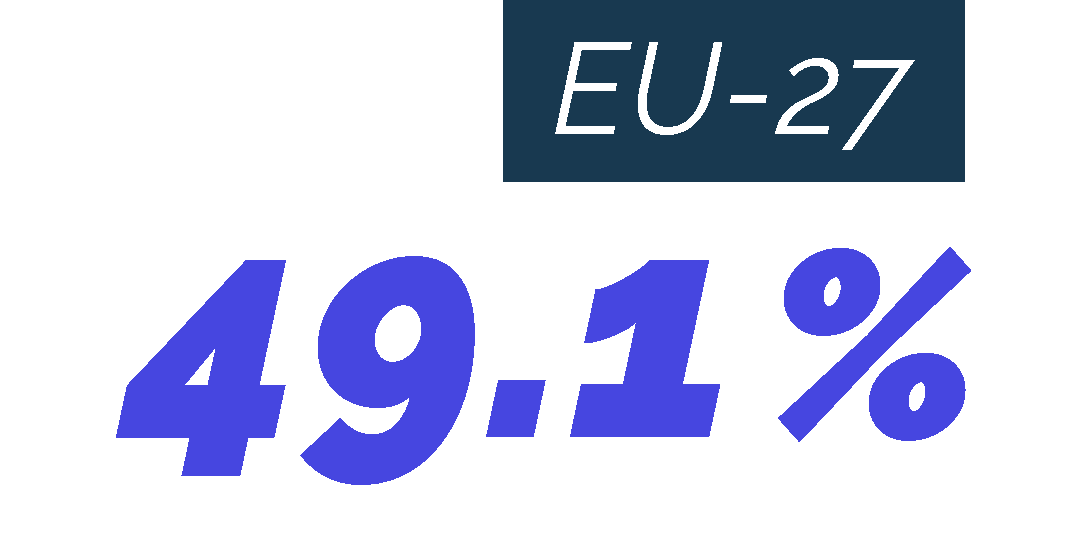
One of the first steps towards a more independent life for many young people is finding a job. Data show that from 2015 to 2025, the employment rate of persons aged 15 to 29 increased in both the European Union and Croatia. At the European Union level, it increased from 44.7% in 2015 to 49.1% in 2025. An even more pronounced shift can be seen in Croatia, where the youth employment rate increased from 35.5% to 43.6% in the same period. On the other hand, the unemployment rate fell in the same period both in the European Union and in Croatia. The unemployment rate at the European Union level in 2015 was 17.6% and decreased to 11.7% in 2025. As regards Croatia, this decrease is somewhat more significant: from a high of 29.8% in 2015 to 12.7% in 2025.
Young people from Mediterranean countries leave their parents' home the latest
According to data for 2025, young people in Croatia leave their parents' home at the highest average age in the European Union, at 31.5 years of age. Along with Croatia, Greece and Slovakia are also at the top, where young people leave their parents' home at an average of age of 30.9, and Spain and Italy, where young people leave their parents' home at 30.2 years of age. This is also evidenced by the fact that in Croatia, as many as 89.1% of people aged 16 to 29 live with their parents, which is the highest share in the European Union.
Emigration has been a topic often associated with young people for years, and we have data that show this trend in recent years.
Of the total of 37 485 persons who emigrated from Croatia in 2025, there were 11 232 persons aged 15 to 29, which makes up 30.0% of all emigrants. Ten years ago, young people made up 27.4% of the total number of emigrants.
Education as an important foundation for young people
The future of every country largely depends on the knowledge and education of young people. According to data for 2025, in Croatia, the share of people aged 20 to 29 who have a primary or lower secondary level of education amounted to only 2.7%, while the European Union average is 13.6%.
There is a high share of young people with upper secondary level of education. At the European Union level, this share is 54.1%, and in Croatia it reaches 70.0%. As regards tertiary education, this share in Croatia is 27.3%, as compared to 32.3% at the European Union level.
From employment and independence to emigration and education, the data show how diverse the lives of young people are today. They speak about the new opportunities available to them, but at the same time, about the challenges that mark their path to independence. Statistics on young people are not just numbers, but also an opportunity to better understand the generation that will shape the coming years with their knowledge, experiences and decisions. Therefore, investing in young people is not only an investment in their future, but also in the development of society as a whole.
Photo Croatian Bureau of Statistics