Monte Conero discovery sheds new light on Picene elites - EXCLUSIVE
The recent archaeological discoveries at Monte Conero are providing unprecedented insight into the funerary practices, social organization, and ritual traditions of the ancient Piceni, with researchers describing the site as one of the most significant excavations in recent years.
This was said by Stefano Finocchi, the Archaeologist and Scientific Director of the Excavation in Sirolo, Italy, in an exclusive interview with CE Report.
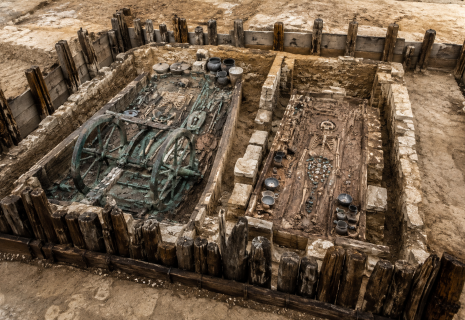
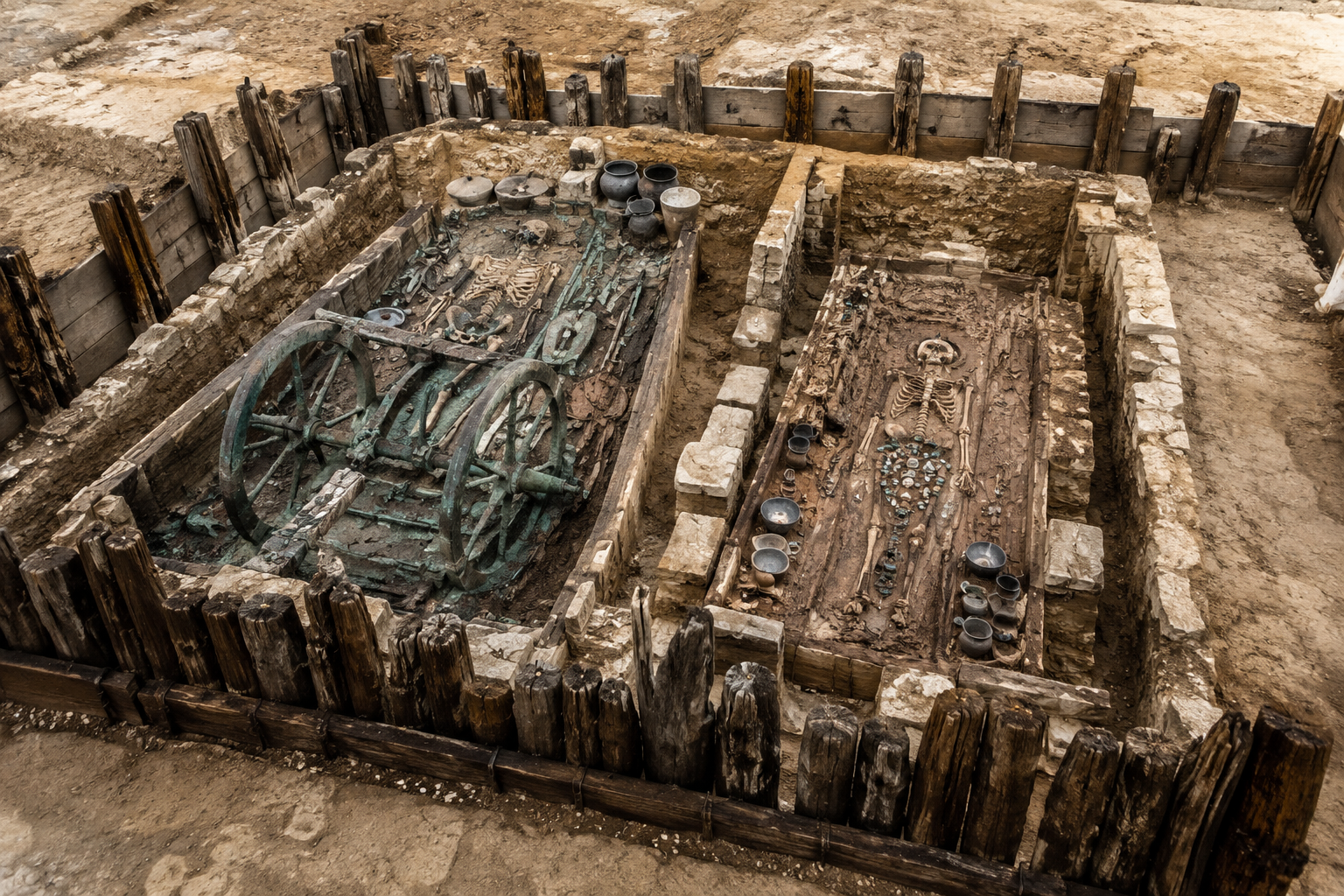
According to Finocchi, one of the most groundbreaking aspects of the excavation is the discovery of a substantial wooden palisade surrounding the funerary monument. While monumental burial circles have previously been documented in Picene archaeology, they were typically defined by circular ditches. The evidence at Monte Conero suggests that the monument was enclosed by a timber palisade instead, a feature never before identified in a Picene necropolis.
Another remarkable discovery is the presence of intentionally placed deposits of selected pottery fragments and flint tools at the bottom of numerous postholes. If ongoing analyses confirm the findings, these deposits would represent ritual foundation offerings, indicating that the construction of the funerary monument was accompanied by ceremonial acts intended to consecrate the burial space.
Finocchi emphasized that the significance of the excavation lies in the combination of discoveries rather than any single artifact. The wooden palisade, a princely tomb containing an intact chariot, an exceptionally well-preserved female burial, and the relocation of a warrior's tomb first discovered in 2020 all appear to form part of a single monumental funerary complex.
Researchers believe the site was designed as a unified burial project celebrating the identity, memory, and authority of an elite family during the sixth century BC. Rather than changing historians' understanding of Picene society, the discoveries provide important new evidence of how aristocratic groups expressed political power and social status through monumental burial architecture.
The excavation team is now focused on preserving the site while extracting as much scientific information as possible. Conservation work is already underway alongside high-resolution 3D documentation, micro-excavation of sealed containers, archaeometric testing, anthropological and bioarchaeological research, archaeobotanical and zooarchaeological studies, and, where possible, ancient DNA analysis.
Beyond examining individual artifacts, researchers hope to reconstruct the complete funerary ritual, understand the organization of the monumental complex, and determine the social roles of those buried there. The exceptional preservation of organic remains may also reveal rare information about ancient clothing, textile production, wooden furnishings, and the sequence of events during funeral ceremonies.
Finocchi said the findings could also shed new light on the cultural and economic connections linking the Picene elites of the Conero region with Etruria, central Italy, and the wider Adriatic world. The excavation has the potential to significantly improve scholars' understanding of the role the Piceni played in the exchange networks and cultural interactions that connected different regions of pre-Roman Italy during the sixth century BC.
Photo: Chat GPT
This interview was prepared by Laura Hoffman