Ministry: Albania identifies four potential deals at Wine Vision 2026 - EXCLUSIVE
A total of five Albanian wineries participated in Wine Vision by Open Balkan 2026, presenting their wines to an international audience and holding 56 business meetings with potential buyers and business partners. During these meetings, four potential contract opportunities were identified by two wineries. These opportunities remain subject to further discussions and negotiations, and no contracts have been signed to date.
This was said by the source at the Ministry of Agriculture and Rural Development of Albania in an exclusive interview with CE Report.
In 2025, wine exports (HS 2204 and HS 2205) amounted to 118.63 million ALL (€1.21 million), an increase of 72.5% in value in ALL terms (77.5% in EUR) compared with 2024, while export volume decreased by 7.0%.
Tab.1 Wine Exports, 2023–2025
|
Description |
2023 |
2024 |
2025 |
|
Volume Tonnes |
61.74 |
46.78 |
43.49 |
|
Value ALL mln |
97.68 |
68.77 |
118.63 |
|
Value mln EUR |
0.90 |
0.68 |
1.21 |
|
Volume Yearly change % |
- |
-24.2% |
-7.0% |
|
Value ALL Yearly change % |
- |
-29.6% |
72.5% |
|
Value EUR Yearly change % |
- |
-23.9% |
77.5% |
|
BoA exchange EUR rate |
108.80 |
100.71 |
97.85 |
Source: General Directorate of Customs; MARD processing
In 2025, the main destination countries by export value were Belgium (67%), Germany (10%), Switzerland (7%), the United States (3%) and Italy (2%). Together, these countries accounted for 89% of export value and 72% of export volume.
The Albanian Government supports the promotion of Albanian wines by facilitating opportunities for local wineries to participate in national and international fairs and promotional events. These initiatives allow wineries to present their products to new audiences, increase their visibility and explore opportunities to expand their commercial activities both within Albania and abroad.
The Government also plays a facilitating and coordinating role by helping connect wineries with relevant fairs and promotional opportunities, including through invitations and coordination with event organizers. Such initiatives help create opportunities for Albanian wine producers to showcase their products, establish business contacts and strengthen their presence in domestic and international markets.
Participation in Wine Vision 2026 was offered free of charge to the Albanian wineries, with the associated costs covered by the fair’s organizers in support of the wineries.
Albania is a small wine country with a distinctive identity and considerable untapped potential.
· Viticulture in Albania dates back more than 2,000 years;
· Wine production has evolved through Illyrian, Roman, Byzantine and later historical periods;
Today's sector combines traditional knowledge with newer vineyard management and winemaking technologies. Albania's wine sector stands at an important stage of development. Albania has a long viticultural tradition, distinctive indigenous grape varieties, diverse growing conditions and an increasingly valuable connection between wine, gastronomy and tourism.
The Ministry's challenge is to translate these assets into measurable economic value through improved quality, stronger producer cooperation, sustainable vineyard management, reliable sector statistics and greater access to domestic and international markets.
Albania combines ancient viticultural heritage with the opportunity to develop a modern, quality-oriented wine industry:
· Mediterranean climate and diverse terrain;
· Indigenous grape varieties and regional wine identities;
· Increasing opportunities to connect wine, gastronomy and tourism.
There are about 36 autochthonous grape varieties with their names and principal growing regions:
· Shesh i Zi, important indigenous red variety;
· Shesh i Bardhë, important indigenous white variety;
· Kallmet, distinctive red variety associated with northern Albania;
· Debinë e Bardhë and Debinë e Zezë, local varieties with potential for regional differentiation.
· Vlosh, Serinë, Pulës and Cërrujë, further elements of Albania's varietal heritage.
The data shows that Shesh i Zi and Shesh i Bardhë together represented approximately 57% of vineyard area in Albania. This is a historical baseline, not a current share.
The Albanian territory is divided into three climatic zones CI, CII and CIII, according to scientific criteria (Winkler index, climate, soil, topography);
Many vineyards and wineries operate on a scale that makes it difficult to achieve the volumes, reliable delivery schedules and economies of scale expected by international distributors.
Export buyers need confidence that subsequent vintages will meet agreed specifications and that grapes can be traced to their source. Fragmented grape production makes coordination more difficult.
Quality is not simply a matter of whether wine tastes good. Exporters must also demonstrate compliance with destination-market rules, food-safety requirements, labelling obligations and appropriate production controls for which Albania adopted a new law on viticulture and wine in 2022, helping establish a more modern regulatory framework. Also, the wine-growing zones are determined, the enological practices based on OIV are approved, the cadaster of vineyard is in place. A new law on geographical indication for wine is drafted, training sessions with producers, processors, producers’ groups, extension services, associations are conducting and awareness campaign are in process. Companies are supported by participating in important international fairs related to wine.
The practical challenges include:
- Meeting destination-specific requirements for wine composition, testing, labels, traceability and documentation;
- Financing external audits and internationally recognized food-safety systems where buyers require them;
- Developing credible geographical indications and regional appellations that distinguish wines by origin;
- Ensuring that quality remains consistent across vintages, rather than relying on a few successful bottles or award-winning labels.
From a marketing perspective, strengthening the international presence of Albanian wines requires sustained promotional efforts, greater visibility in target markets and opportunities for wineries to present their products directly to potential buyers and business partners.
One relevant consideration is the financial capacity of individual wineries to support these activities. Participation in international fairs, promotional campaigns and other marketing initiatives may involve costs that can represent a challenge for wineries seeking to expand their presence in foreign markets. In this context, opportunities to participate in trade fairs and promotional events can help wineries showcase their wines to wider audiences and explore new commercial opportunities.
Albania's target for the future is to pass from local tradition to internationally recognized wine identity. Albania will strength its position by combining indigenous grape varieties, consistent quality, modern production, geographical identity and wine tourism. The aim should be sustainable value creation for growers, wineries, rural communities and the wider national economy.
The Ministry of Agriculture has reiterated the goal of increasing annual agricultural exports to $1 billion by 2030. This also covers the wine sector.
The government's agrotourism ambition is to expand the number of units from roughly 270 reported in 2024 to 1,000 by 2030. More of these agrotourism are related with vineyard and wine.
The government identifies national agricultural support schemes and the EU's IPARD rural-development framework as instruments for modernizing farms and processing facilities. For wineries, potentially relevant investments include vineyard renewal, processing equipment, bottling, storage and improvements to production efficiency.
Launched on 28 January 2026, Export ON is a national platform designed to bring government institutions, support agencies and exporters together. The government's stated priorities include export promotion, closer alignment with EU legislation, digitalization of food controls and stronger regional laboratories and border-inspection facilities. These measures could reduce compliance barriers for wine exporters.
The Ministry's support for Albania's presence at international fairs showcasing premium labels, illustrates the government's approach to international visibility. Continued trade-fair participation, connections with importers and coordinated promotion of indigenous varieties would help translate awareness into commercial orders.
Albania's National Tourism Strategy 2030 emphasizes investment, destination management, tourism-product development, destination marketing and skills. Separately, the agrotourism programmed aims to expand certified rural tourism businesses and strengthen links between agricultural products, local employment and regional identity. Wineries could benefit through tasting rooms, guided vineyard tours, food-and-wine experiences and accommodation partnerships.
For the period from late 2026 through 2031, five priorities stand out as below:
|
Priority |
Practical action |
Intended outcome |
|
Production |
Modernize equipment and coordinate grape supply among growers and wineries |
More consistent volumes and quality |
|
Certification |
Improve laboratory access, traceability, food safety and origin protection |
Easier access to regulated markets |
|
Marketing |
Promote Albanian varieties under a recognizable national identity (Made in Albania) |
Greater awareness and stronger pricing power |
|
Distribution |
Build long-term importer relationships and target selected export markets |
Repeat orders rather than one-off sales |
|
Wine tourism |
Connect wineries with accommodation, restaurants, cultural sites and rural tourism routes |
Additional revenue and international exposure |
The strategic opportunity is to connect wine producers with hotels, restaurants, tour operators and destination-marketing organizations. Wine can create value beyond the bottle:
· Vineyard visits and guided tastings;
· Pairing with Albanian cuisine and regional products;
· Direct sales at wineries and local food businesses;
· Employment, additional rural income and stronger regional brands.
The Rute of wine is created: https://agroturizem.gov.al/
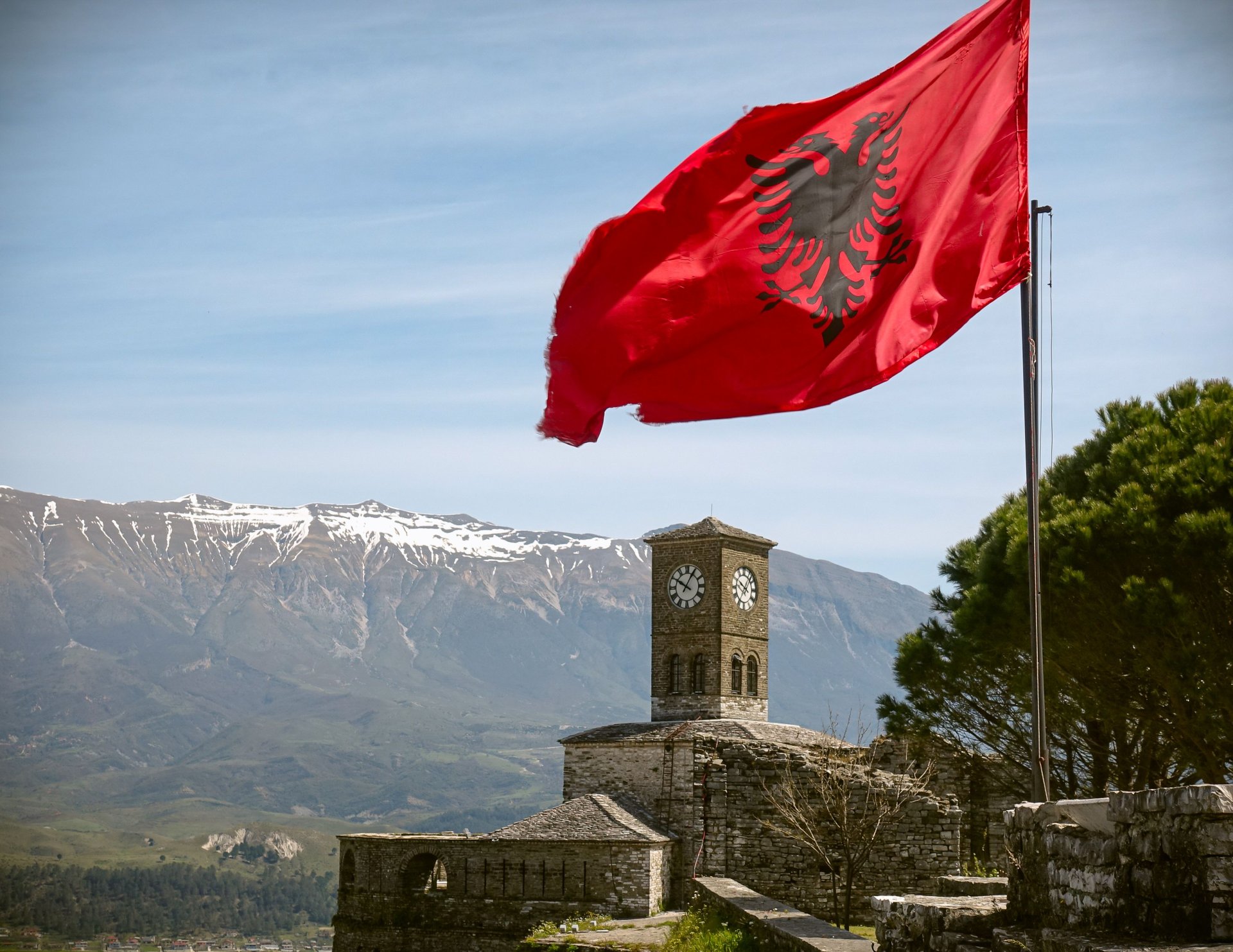
Photo: Pexels (Free Stock Photos)
This interview was prepared by Julian Müller