Bulgarian Academy strengthens science-business cooperation - EXCLUSIVE
The Bulgarian Academy of Sciences (BAS) is intensifying efforts to ensure that scientific research is transformed into technologies, products, and services with real market potential, creating stronger connections between researchers and industry.
This was said by the source in the Bulgarian Academy of Sciences, in an exclusive interview with CE Report.
According to the source, BAS has developed a comprehensive approach that combines institutional support, applied research structures, and direct engagement with businesses through initiatives such as the annual Science for Business forum. The Academy places particular emphasis on technology transfer, intellectual property protection, prototype demonstrations, and the creation of platforms where scientists and companies can identify common interests and develop joint projects.
A key role in this process is played by the Joint Innovation Centre of BAS (JIC-BAS), which provides services and tools for technology transfer, commercialization, and internationalization. Through the center, researchers receive support in presenting scientific developments in a way that is accessible and attractive to industry partners, while companies gain assistance in identifying promising scientific solutions.
The center is also part of the Enterprise Europe Network, the European Union’s largest support network for small and medium-sized enterprises and research organizations. The network helps businesses and researchers innovate, find international partners, access the EU Single Market, and receive guidance on growth, digitalization, sustainability, and expansion.
In addition, JIC-BAS participates in projects such as K-TRIO (European Researchers’ Night), BOOST (Building Outstanding Opportunities for Science and Talent), and other initiatives aimed at strengthening cooperation between science and business while enhancing Bulgaria’s innovation ecosystem.
BAS also relies on its centers of competence, including HITMOBIL, QUASAR, and MIRACle, as well as project consortia that serve as practical bridges between academia and industry. These structures support pilot testing, co-development activities, and the gradual advancement of innovations toward commercial readiness.
The Academy has further expanded its outreach through forums, demonstrations, bilateral meetings, and targeted networking activities with enterprises. During the sixth edition of the Science for Business forum, BAS institutes showcased not only research projects but also working prototypes, samples, and services ready for industry discussion.
This approach creates direct channels for feedback from companies and increases the likelihood that scientific ideas will develop into commercial partnerships, licensing agreements, or spin-off ventures. BAS also points to successful collaborations with existing business partners as evidence of how scientific achievements can generate industrial value.
The Academy believes that some of the most attractive fields for business investment are those linked to Europe’s green and digital transformation. These include hydrogen technologies, energy storage systems, clean energy solutions, circular-economy materials, industrial waste valorization, environmental technologies, and applied information and communication technologies.
Among the innovations highlighted by BAS are technologies for hydrogen generation and purification, hydrogen fuel-cell applications, vanadium flow batteries, advanced adsorbents and catalysts, construction materials produced from industrial waste, and biosensors designed for medical, environmental, and food-quality applications.
According to the Academy, these technologies not only demonstrate scientific excellence but also have the potential to enhance Bulgaria’s competitiveness in sectors where efficiency, sustainability, and technological modernization are becoming increasingly important.
The source emphasized that BAS sees the strongest commercial prospects in innovations that combine scientific quality with practical applicability, particularly where prototypes, pilot processes, or validated applications already exist. Such developments offer clearer pathways to commercialization and industrial deployment.
In this context, the Science for Business forum serves not only as a showcase for research achievements but also as a practical mechanism for transforming Bulgaria’s scientific potential into economic value.
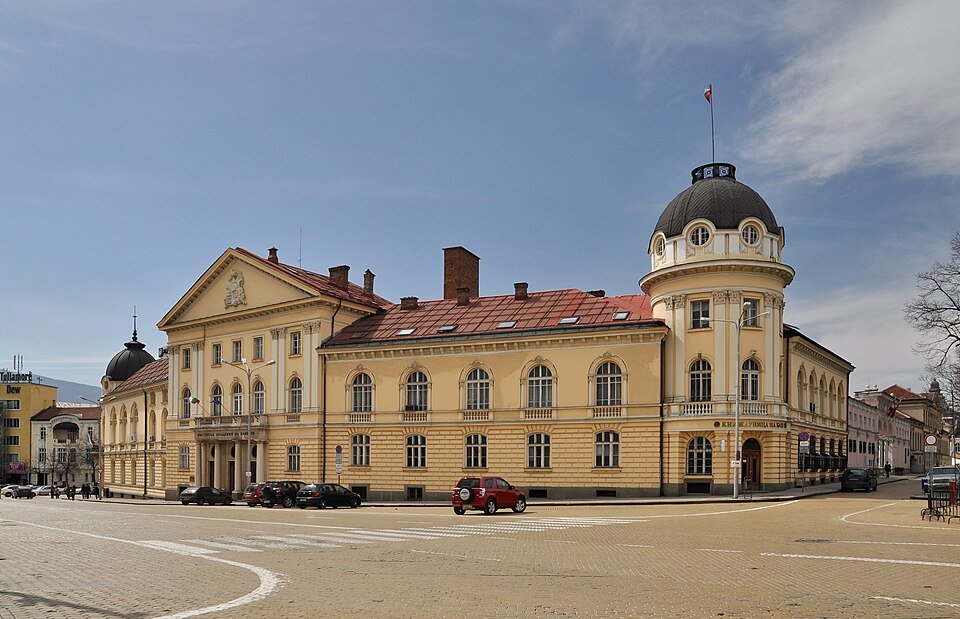
Photo: Wikipedia
This interview was prepared by Laura Hoffman