Türkiye launches homegrown atomic clock into space
Türkiye has successfully launched its domestically developed Rubidium Atomic Clock into space, a key technology for the country's planned regional positioning and timing system under the National Space Program, Industry and Technology Minister Mehmet Fatih Kacır announced.
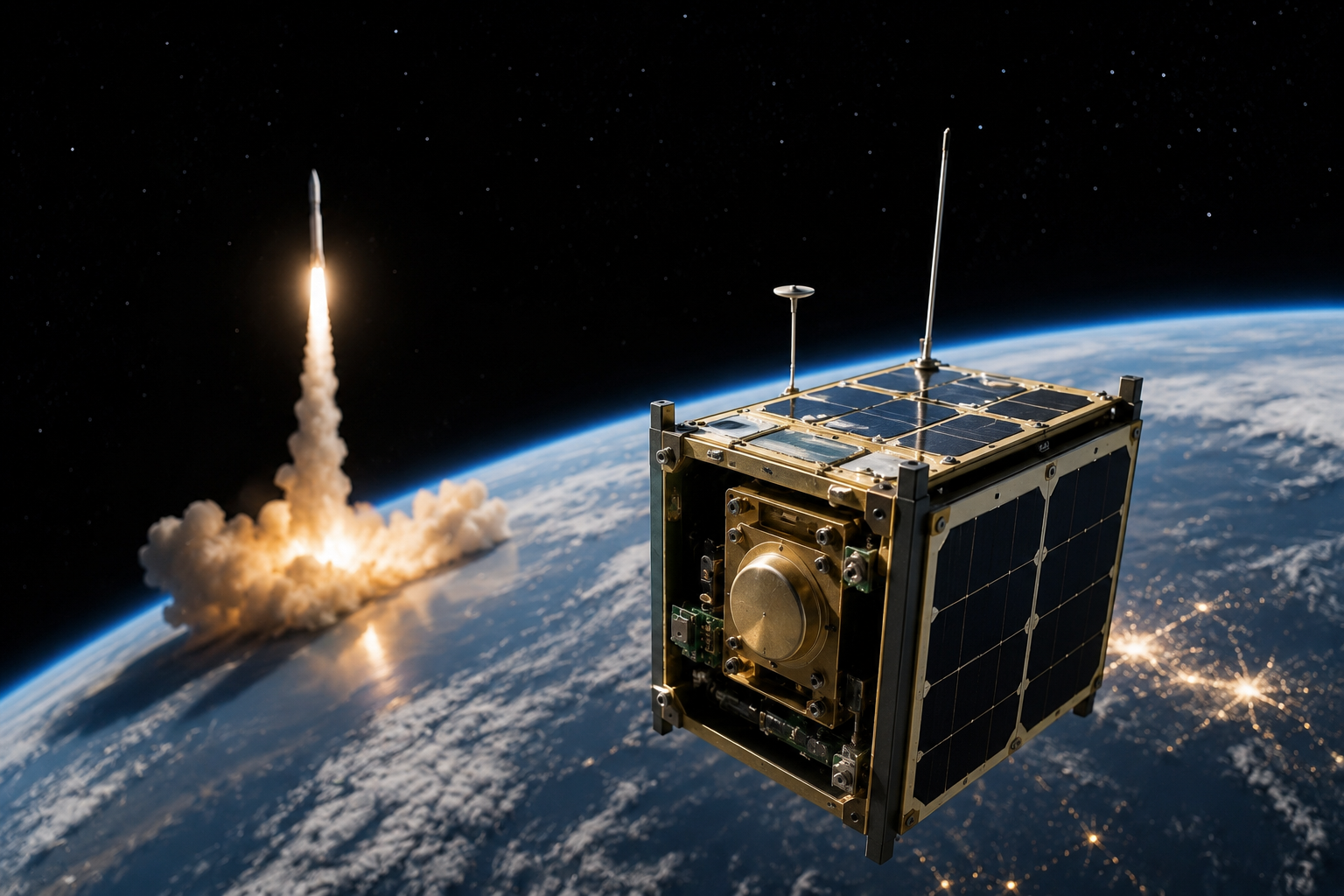
In a written statement, Kacır said the Rubidium Atomic Clock was launched aboard the SpaceX Transporter-17 mission and that the spacecraft's first signal had been successfully received, CE Report quotes Anadolu Agency.
He explained that atomic clocks measure time with extremely high precision by using the stable resonance frequencies of atoms and electrons. A rubidium atom oscillates 6,834,682,610 times per second between different energy levels, providing the highly accurate timing needed for advanced technological systems.
Kacır said the clock represents a major milestone for Türkiye's National Space Program and was developed domestically under the leadership of the Turkish Space Agency (TUA), with TÜBİTAK National Metrology Institute (UME) serving as the main contractor, in cooperation with TÜBİTAK Space and İTÜNOVA.
The atomic clock will undergo in-orbit validation aboard a CubeSat and is expected to contribute to a wide range of technologies, including satellite systems, telecommunications, navigation and scientific research.
According to Kacır, the mission will provide valuable data for the development of future high-precision atomic clock technologies for satellite systems, communication infrastructure, navigation applications and scientific space missions.
He said the successful completion of the SpaceX Transporter-17 mission will make Türkiye one of the countries with space-validated atomic clock technology.
The minister added that developing the technology domestically will reduce dependence on foreign suppliers, lower costs for satellite manufacturers and strengthen Türkiye's capabilities in engineering, testing and operating next-generation satellite systems and space technologies.
Photo: Chat GPT