NATO highlights Türkiye’s defense industry
NATO Secretary General Mark Rutte said that ASELSAN, Türkiye’s largest defense electronics company, is leading a defense industry revolution that will benefit every NATO member, adding that a major defense industry day will be held during the Ankara Summit.
Speaking at the Atlantic Council in Washington ahead of the NATO Ankara Summit, scheduled for July 7–8, Rutte said the gathering would demonstrate the Alliance’s deterrence, unity and defense capabilities.
He stressed that NATO is prepared to defend all Allies and every inch of Allied territory, adding that his main expectation from the summit is a historic transformation in defense investment.
Rutte recalled that NATO leaders agreed at the Hague Summit to allocate 5% of GDP to defense by 2035. He noted that Estonia, Latvia, Lithuania and Poland have already exceeded that target, while Germany is on track to double its defense spending by 2029.
He said European Allies and Canada have committed an additional $1.2 trillion to defense between 2016 and 2026, while defense investments are expected to increase by nearly 20% in 2025, describing the shift as "transformational."
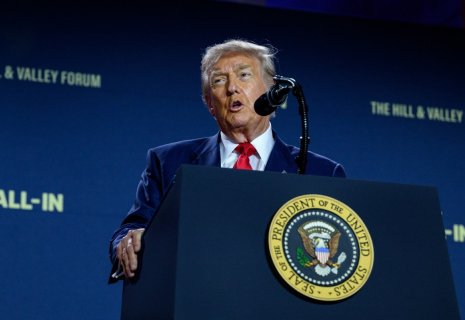
According to Rutte, the current security environment and the leadership of U.S. President Donald Trump have played a decisive role in accelerating defense spending across the Alliance.
He said European Allies and Canada are narrowing the defense spending gap with the United States, taking on greater responsibilities within NATO’s command structure, strengthening deterrence on the eastern flank, in the Baltic region and the Arctic, and leading military support for Ukraine.
Rutte described this new phase as "NATO 3.0"—a stronger Europe within a stronger NATO, built on unity, large-scale action and genuine transformation.
He emphasized that increased defense budgets must be matched by greater industrial production capacity and innovation.
Highlighting the importance of the defense industry at the Ankara Summit, Rutte said he expects industry leaders and innovators to play a key role in providing the capabilities required for credible deterrence and effective defense.
He called for a "true transatlantic defense industrial revolution," stressing the need to rapidly expand production capacity while investing in emerging technologies, including artificial intelligence.
Addressing global security threats, Rutte said Russia remains NATO’s greatest long-term threat, while China continues to expand its military and nuclear capabilities. He also pointed to North Korea’s nuclear program and Iran’s nuclear ambitions as major security concerns.
Recalling his visit to Türkiye earlier this spring, Rutte said he met young engineers at ASELSAN and praised the company for leading Türkiye‘s defense industry transformation in ways that would benefit the entire Alliance.
He announced that the Ankara Summit will showcase defense industry opportunities, with tens of billions of dollars in new contracts expected to be unveiled. He added that defense cooperation stretching "from Arlington to Ankara" would enhance security while creating hundreds of thousands of jobs across both sides of the Atlantic.
Rutte noted that Türkiye has around 3,000 defense companies operating across NATO and confirmed that the summit will feature a major defense industry day.
He reiterated NATO’s commitment to supporting Ukraine and explained that NATO 3.0 represents an Alliance in which Europe assumes greater responsibility while the United States maintains its central role.
Rutte also said the Ankara Summit could prove even more important than last year’s Hague Summit, as it will focus on implementing the commitments already made.
Asked about ongoing F-35 discussions between the United States and Türkiye, Rutte declined to comment, saying the issue is primarily a bilateral matter between the two countries and that any NATO involvement would remain confidential.