Mark Rutte accuses Slovenia of letting down NATO's collective security
Following allegations of a classified document describing Slovenia as a problematic NATO member, the secretary general of the alliance Mark Rutte has warned the country's outgoing prime minister in a letter that Slovenia's spending on core defence is significantly below the 2% reported by the government.
He accused Slovenia of letting down "our collective security", CE Report quotes The Slovenia Times.
This comes after NATO's annual report estimated in March that Slovenia spent €1.438 billion on defence in 2025, hence meeting the 2% target, but NATO chief Mark Rutte has now accused Slovenia of basically ballooning the numbers by taking into account projects that are not deemed core defence.
In the letter, dated 5 May and released by the 24ur news portal, Rutte writes that the Slovenian government reported "a significant 51% real-term increase in Slovenia's core defence expenditure" for 2025, which would mean "the country met the former 2% spending guideline for the first time at 2.01% of GDP".
"However, based on my staff's assessment, this was accomplished, in large part, by including projects that do not fall under the agreed definition for core defence expenditure. When excluded, Slovenia's 2025 core defence spending amounts to only around 1.6% of GDP, a gap of around €300 million," Rutte writes.
He does not say which investment projects are those that should not be included, but it is likely the matter concerns, among others, dual-use projects in areas such as logistics and certain investments.
Rutte critical of Slovenia's ranking in defence spending
Rutte was also critical of what he believes Slovenia's lacking performance means for the alliance as a whole.
"Slovenia's consistent low ranking on defence spending lets our collective security down at a time of need, as we work to shift the burden to ensure a stronger Europe in a stronger NATO. It is therefore critical that Slovenia delivers its share of the burden and mitigates long-standing shortfalls."
He adds that Slovenia "must urgently secure the requisite financial resources by increasing and sustaining defence spending". He would like for the issue to be addressed in time for the Ankara summit in July.
At the 2014 summit in Wales, the allies agreed to allocate 2% of GDP for defence, and at the Hague summit last June, they committed to increasing defence spending to 5% of GDP by 2035. Of this, they are to spend 3.5% of GDP on core defence and 1.5% on defence-related investments.
PM's office cites different interpretations of investment breakdown
The prime minister's office confirmed to 24ur that Golob had received a letter from the NATO secretary general. It said the government "has allocated the highest amount of funds to date for defence, leading Slovenia to meet its long-standing commitment to allocate 2% of GDP for defence".
The office added that "there are differing views regarding the interpretation of the investment structure". Slovenia advocates "a broader understanding of security and resilience, which, in addition to military capabilities, also includes investments in critical infrastructure, cybersecurity, energy security, military mobility and other capabilities important to the security of the country and the alliance."
The Defence Ministry also claimed that there were two different views on this, but both of them legitimate.
Responding to the developments, President Nataša Pirc Musar, who serves as supreme commander of the Slovenian Armed Forces, said commitments must be honoured. She added that this had been responsibility of several consecutive governments.
In February a delegation of NATO experts visited Slovenia to review how the country was doing in meeting defence spending targets. At the time, media reported suggestions that NATO was unhappy with Slovenia's performance.
The Democratic Party (SDS), back then in opposition but now in the process of forming a new government, demanded an emergency session of the parliamentary Defence Committee to discuss the situation. It cited a cable sent by Slovenia's Ambassador to NATO Andrej Benedejčič to the Defence Ministry that allegedly discussed Slovenia's failure to meet its commitments.
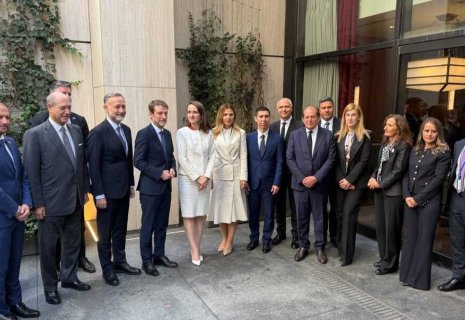
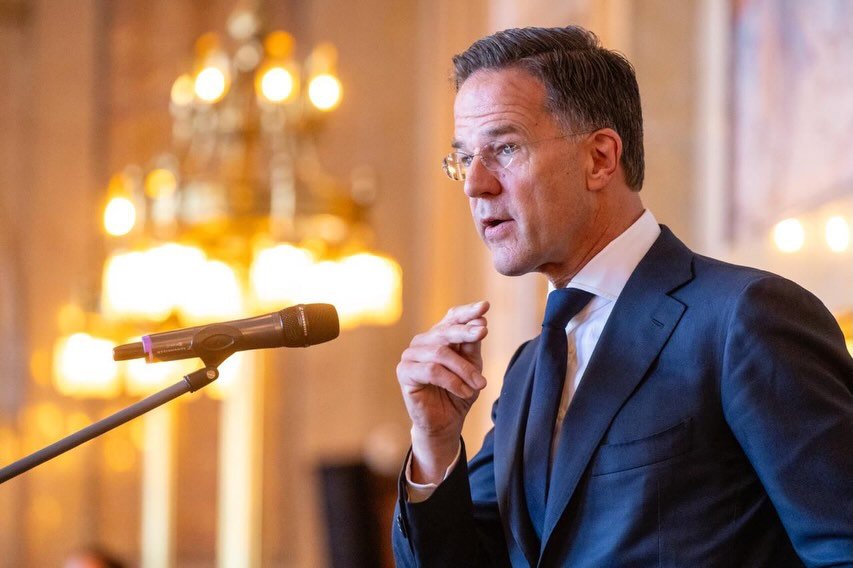
Photo: Instagram/secgennato